After decades of being maligned and overlooked, New Zealand crime writing is flourishing right now. But I want more.
Back in July, I wrote about five Kiwi crime authors I'd love to see come back to the page.
New Zealand crime writing appears on the rise right now - with lots of great writers and a real diversity of storytelling. We could do with more local readers giving our local authors a go and buying their books (as Ruth Todd noted at the recent Ngaio Marsh Award ceremony, our NZ writers are often more appreciated abroad than at home, which is sad), but hopefully that will come in time.
It's been great in recent times to see the likes of Paul Thomas and Joan Druett bring back their marvellous characters Tito Ihaka and Wiki Coffin, after long hiatuses, as well as authors from other genres, such as Barbara Ewing, Tina Shaw, and Julie Thomas, turning to crime. All good things. But what about the other writers we want to come back, as the Kiwi crime wave continues to swell?
In July I pointed the finger at Vanda Symon, Alix Bosco, Stella Duffy, Zirk van den Berg, and Chad Taylor. Five fantastic criminal masterminds who've gone too straight. Come back to the dark side! (Read that in your best James Earl Jones voice if required.) Today, I extend the net, capturing five more superb storytellers who've criminally denied us their novel-writing talents in recent times.
So here's the second part of my top 10 New Zealand writers I'd love to see return to writing tales of murder, mystery, and mayhem. With a little twist or two (this is a mystery blog, after all).
Now, I had intended to provide this part deux a little earlier, but y'know what they saw about good intentions. Roads to hell. The Ngaio Marsh Award, fatherhood, and many other things put me on my own hiatus. But I've come out of it now. And so should these rascally writers!!
Here's the second five:
6. NEIL CROSS
Three years ago, the New Zealand crime fiction community gathered for the WORD Christchurch festival, with crime debates, author panels, and the presentation of the third-ever Ngaio Marsh Award. Transplanted Brit Neil Cross, a man of dark mind and much talent, had been a finalist in all three years of the award, and that night saw him deservedly take home the trophy for the outstanding Luther: The Calling.
And how has he repaid this outpouring of love for his crime novel writing? By skedaddling off into TV and movie land.
Okay, okay, Cross is a hell of a screenwriter. And his Ngaio-winning book was of course a prequel novel to the exceptional, Edgar and Golden Globe-winning TV cop drama Luther, starring Idris Elba, that Cross created, writes, and produces. We're ecstatic there's another instalment, a Christmas special, coming out soon. And we know that Cross has been frantic with movies and television the past four years, from Doctor Who episodes to writing horror flicks for Guillermo del Toro to the John Malkovich-starring Crossbones. Let alone all the other rumoured projects that we maybe-maybe not should/shouldn't talk about. Shush.
But, selfishly, I want more Neil Cross novels. At least one more. Another John Luther tale would be terrific, or a dark and lyrical and chilling standalone, ala Captured. You know, the one where the crazy artist protagonist abducts and chains someone up til they get what they want.
Sounds like a good plan for Mr Cross himself...
7. ANDREA JUTSON
Much like Neil Cross, young Auckland author Andrea Jutson created some truly memorable characters and some striking crime storytelling that veered dark and spooky, then she disappeared. Though she's been MIA even longer...
I first read Jutson when I was starting out on the crime reviewer gig in 2008. Along with Paul Cleave and Vanda Symon, she formed a new wave of young and talented Kiwi writers penning crime tales every bit as good as the overseas authors Kiwi readers buy in droves. I was impressed by Jutson's book that year, The Darkness Looking Back, and also its predecessor, Senseless (2005), which introduced reluctant psychic James Paxton.
I'm not a massive paranormal fan, but I really enjoyed Jutson's Paxton tales, which reminded me a little of the TV shows Medium or Ghost Whisperer, if they were transplanted to suburban Auckland. A great mix of mystery with some paranormal sprinkled in, without overwhelming the crime and personal storylines. Jutson's books got good reviews on publication, with the Sunday Star-Times comparing her to Ruth Rendell and Jeffrey Deaver, but there haven't been any more since.
Jutson is a fine writer, so it's a real shame that she hasn't (as far as I'm aware) published any other crime novels. I really liked the way she used a skeptical Auckland police detective and a reluctant psychic as foils to each other, along with several other intriguing characters, telling a gripping mystery tale while also evoking a good sense of modern-day Auckland, people and place. She nicely captured the team dynamics, gallows humour and piss-taking among police colleagues that some authors avoid (while focusing on drama and rivalries), and mixed dark and light very well.
Last I heard, and it was a while ago, Jutson was continuing to write, and was working on books for younger readers along with some non-Paxton crime novels. Whether it's a new crime novel, or a resurrection of the fascinating James Paxton, I do hope we see more from Jutson at some point...
8. MICHAEL WALL
In New Zealand, it seems the popular narrative when it comes to world-class local crime writing is that there was Ngaio Marsh in the Golden Age and post-war era, then Paul Thomas in the 1990s, then a group of fantastic authors of the past decade (Cleave, Symon, Bosco, Richardson, Sanders, Cross, McIlvanney, Malane et al) putting out multiple books.
It's not that simple. Leaving aside the likes of Dorothy Eden, Elizabeth Messenger, and Laurie Mantell of Marsh's latter years, there were also other talented Kiwi crime and thriller writers striding along beside Paul Thomas in the 1990s.
Michael Wall is a fine example. A former press officer for the Prime Minister, as well as an ad man and Deputy Chair of the Tourism Board, Wall crafted some great thrillers that still read very well twenty years later. I was very impressed by Friendly Fire (1998), which I read a few years ago after finding a copy in a secondhand store. In a review for NZLawyer for New Zealand Book Month, I called it the best political thriller I'd read in years, set right in our own seemingly benign democracy.
I've also heard great things about Museum Street, Wall's earlier political thriller. My fellow Ngaio Marsh Award judge, Bernard Carpinter (now the crime critic for the New Zealand Listener), called Wall's first two thrillers "racy, stylish, funny and quite Kiwi" in a 2003 review of a later tale in New Zealand Books. Earlier this year I read The Cassino Legacy, Wall's third thriller, while back visiting family in New Zealand (I'd found that at a Sunday market booksale), and really enjoyed it too. More international in scope, but gripping, if veering a little towards the Alistair MacLean enjoyable but suspend your disbelief style I loved as a teenager.
It's been nearly 15 years since Wall published a thriller, after five good to great books. It's like he's disappeared into the crime writers' witness protection programme - I couldn't even find a good photo of him, despite his former media-centric life in Parliament and advertising. I understand he continues to live on a farm in the lovely Wairarapa region north of Wellington, which Paul Thomas now also calls home. Perhaps Wall can take a leaf out of Thomas's book, and come back to crime after a similarly long absence. They made for a great duo in the 1990s, and it's time to bring back the band!
9. RACHEL LANG & JAMES GRIFFIN
The Bonnie & Clyde of New Zealand television writing. With their well-told tales of lovable law-breakers, and knack for pacy plotting and character-focused stories, Lang & Griffin are without doubt among our country's finest crime writers.
Together they've written and racked up awards and acclaim for several crime and mystery-centric television series, including Outrageous Fortune, The Blue Rose, and The Brokenwood Mysteries. They have a great knack for mixing action, character, and humour. Oh... hang on, isn't this meant to be an article about crime novelists who need to come back to crime? Told you to expect a twist or two.
Leaving aside that I initially thought it might have been Lang or Griffin and Lang together behind the Ngaio Marsh Award-winning Alix Bosco (until former All Blacks trialist, playwright and screenwriter Greg McGee later revealed himself as the literary femme fatale), this is an article about criminal minds, writers who bend and break the rules. So I'm doing the same.
Lang and Griffin know how to tell a damned good story, and they both have a knack for crime and mystery tales on screen. Could they transfer this to a crime novel? Well there are plenty of example of crime writers who've done so: the likes of Dennis Lehane and George Pelecanos wrote for The Wire as well as penning award-winning crime novels. Our own Alix Bosco/Greg McGee and Donna Malane began with screen stories before turning to the page. Neil Cross balanced both for a while, and will do so again in future (right Neil? Don't make me get out the whips and chains...)
So yes, I'd love to see Lang and Griffin gave a crack at transferring their superb screenwriting skills into a cool New Zealand crime novel. Who knows how they might twist things...
10. DAME NGAIO MARSH
If we're going to bring Kiwi crime writers back to the page to join our modern wave of talented tellers of murder ans mystery tales, could we conclude with anyone other than the doyenne of New Zealand noir herself, Dame Ngaio?
Oh, you see a flaw in my plan, right? For after a long lifetime lived on her own terms, entertaining and delighting millions on both the page and the stage (including 32 classic murder mysteries starring gentlemanly Inspector Roderick Alleyn), Dame Ngaio bid a final adieu back in 1982.
But you've only got to take a look around to see that death doesn't conquer all, when it comes to writers. Not only do the books they've gifted us remain, which we can read and enjoy long after they themselves have gone, but the memorable characters they've created linger in our consciousness, and sometimes, grow beyond the author themselves.
In recent times we've seen iconic crime characters like Lisbeth Salander and Hercule Poirot both resurrected by new authors, and there has of course been a long line of talented writers bringing us brand new James Bond tales over the decades. Recently, former Ngaio Marsh Award judge Mike Ripley, an award-winning British comic crime writer, was tasked with writing new tales featuring Margery Allingham's beloved Albert Campion. Could a writer to do the same with Ngaio's Alleyn?
More than thirty years after her death, and eighty years after she first published a murder mystery, Ngaio Marsh remains in print and beloved by readers around the world. Could a new writer, perhaps a talented Kiwi, give us a brand new Inspector Alleyn tale, a la Sophie Hannah and Mike Ripley with Dame Ngaio's fellow Queens of Crime's famous and long-dead characters? What do you think?
I hope you've enjoyed this op-ed piece - I'd love to hear your thoughts on the writers I've featured in the two parts (read the first part here), or other New Zealand or international crime writers you want to return to the page. Thanks for reading.
Showing posts with label column. Show all posts
Thursday, October 22, 2015
Thursday, October 8, 2015
Ten Tastes of Dame Ngaio Marsh
As some of you will know, I run a crime writing award named after Dame Ngaio Marsh, one of the four Queens of Crime of the Golden Age of Detective Fiction. Marsh famously wrote 32 novels featuring Inspector Roderick Alleyn, which have been roundly praised for her stylish writing, comic touches, and particular flair for settings and characters with depth. Although Marsh may not have rivalled her fellow Dame Agatha Christie, as a puzzling plot wizard, Marsh is considered to have elevated the detective fiction of the time, bringing in 'rounder, fuller' aspects of the novelist craft to the popular crime genre.
Back in the day she was called "the finest writer in the English language of the pure classical whodunnit", and the New York Times said that "in Ngaio Marsh's ironic and witty hands the mystery novel can be literature". Here on Crime Watch we've reviewed ten of Dame Ngaio's 32 detective novels so far, so today I thought I'd bring those novels and reviews together in one post - ten tastes of Dame Ngaio, if you will. If you are interested in reviewing any of the other 22 of her novels for Crime Watch, please do get in touch.
Ten Tastes of Dame Ngaio
A MAN LAY DEAD (1934)
Ngaio Marsh and Inspector Alleyn both made their debuts in this murder mystery which has plenty of the hallmarks of a classic cosy. A group of people gather in an English country estate for a weekend of leisure and fun. While playing a popular parlour game (Murder), a real murder is committed. Inspector Alleyn arrives at the estate following the death, and must sift through all the evidence, accounts, motives and alibis to unmask the culprit.
"This is not Detective Inspector Roderick Alleyn's first murder case, although it is Ngaio Marsh's first novel," says Kerrie Smith in her review. "Alleyn is already a seasoned detective, with a reputation for thorough and careful sleuthing. His reputation precedes him."
Australian crime critic Smith notes that Marsh's debut was very British in tone and style, with no hint of Marsh's antipodean origins. Another interesting aspect is the hint of 'the Russian threat', given the novel was written in the early 1930s. But overall Marsh's debut is most important for introducing and establishing the character of Roderick Alleyn, who would be the backbone of a series that ran for half a century, was adapted for radio and television, and remains in print.
"In essence what Marsh does in this first novel is establish some of the characteristics which will become Alleyn's "signature" in subsequent novels," says Smith. "Alleyn does not appear as the other characters expect a detective to be. He is tall, cultured, detached, thorough, and objective. He professes to have a poor memory and keeps a small note book of important facts, with an alphabetical index. We learn that Alleyn is an Oxford man who initially became a diplomat, before turning to policing. He likes to inspect things first hand, and likes to reconstruct events until he gets them right. He may also lay traps for suspects. In A MAN LAY DEAD he decides one of the characters is innocent, and then uses him as his "Watson", not only involving him in some of the sleuthing, but also as a sounding board for his deductions. Thus we see the action often through two sets of eyes, both Alleyn's and the other characters."
You can read Smith's full review here.
THE NURSING HOME MURDER (1935)
As Ngaio Marsh settled into her groove as a mystery novelist, this third Alleyn tale is memorable for a number of reasons. The Times of London credited it as a book which “transformed the detective story” from a mere puzzle to a full-blown and fascinating novel. It was also the only book Marsh wrote alongside another person: in this case H Jellett, a surgeon who provided inside knowledge of British hospitals and was originally credited as a co-author in the first edition. It is also the book a character in an Agatha Christie novel, MURDER IN MESOPOTAMIA, is seen reading, and it remains one of Marsh's most popular novels.
Although we're used to seeing plenty of dramas played out in hospitals nowadays (particularly on television), eighty years ago this was much rarer. It's perhaps overlooked now, but Marsh took the classic British murder mystery to some interesting settings. In THE NURSING HOME MURDER, the British Home Secretary goes to hospital with suspected appendicitis, after collapsing while introducing a parliamentary bill relating to terrorists and anarchists, only to end up dead on the operating table minutes after the operation.
When Alleyn arrives on the scene, he uncovers plenty of suspects, from the Home Secretary's wife, to various political foes, and a number of staff at the hospital.
For reviewer Kerrie Smith, THE NURSING HOME MURDER is a precursor to the popular Robin Cook medical thrillers of more recent times, and even being almost eighty years old, she "didn't think there was anything dated about the writing or the plot" of Marsh's third effort. Unlike in A MAN LAY DEAD, where Alleyn seconds a potential suspect as his sounding-board, in this third mystery the refined detective has two 'Watsons': his colleague Inspector Fox, and his friend and journalist Nigel Bathgate.
You can read Kerrie Smith's full review here.
VINTAGE MURDER (1937)
The first of only four Alleyn tales to be set in Dame Ngaio's home country of New Zealand finds the detective taking a train journey through the New Zealand countryside while on vacation, before being pulled into a mystery when a group of travelling actors he's sitting with - the Carolyn Dacres English Comedy Company - get caught up in some dastardly deeds.
It could be said that Ngaio Marsh, now settling in to her career as a mystery writer, brought a little more of herself to VINTAGE MURDER - the book is notable for blending some of Ngaio's national heritage, and a lot of her theatrical heritage (Marsh had been part of a travelling theatre company herself), into the storyline, bringing some interesting texture and insights as the mystery unfolds. For Canadian reviewer Andrea Thompson, it was a very good read, without being her favourite Alleyn tale.
In VINTAGE MURDER, the beautiful leading lady of the touring company has married the pudgy producer, much to the bewilderment of her lover. But who was it that rigged a huge jeroboam of champagne to kill her husband during a cast party?
"Marsh’s great knowledge of actors and the theatre shows here, with her funny, detailed, and poignant descriptions of all of the actors," says Thompson in her review. "This is the first book in the series set in New Zealand, and one of the main characters, Dr. Rangi Te Pokiha is a Maori. He plays a pivotal role in the plot, and explains a tiki – a Maori fertility symbol – which also has an important part to play. As well, there are a number of scenes where the beautiful New Zealand landscape is vividly described."
Thompson was also intrigued by the discussion in the book of the potential of a new war on the horizon (the book was written in the mid 1930s), and the way Alleyn interacted with the local police.
You can read Andrea Thompson's full review here.
DEATH IN A WHITE TIE (1938)
But first, the unique discovery of the body: One summer evening in 1942, formidable Member of Parliament Florence “Flossie” Rubrick goes to the wool shed on her high country sheep station to rehearse a patriotic speech, and disappears. Three weeks later, she’s found – dead, wrapped inside a bale of wool at an auction.
Chief Inspector Alleyn, in New Zealand on war security matters, comes to the high country property more than a year later, after Rubrick’s husband has also passed away, and tries to piece together what happened to the polarising MP, based on the testimonies of several acquaintances. At the same time, concerns are raised about the top-secret security work being carried out by two young men – have the blueprints for a new anti-aircraft device been leaked?
In effect, Marsh transported the classic British ‘country house’ murder mystery, with its closed environment and small amount of characters (all of whom with a motive for killing the victim), into a rural New Zealand war-time setting. But she also does a few things differently that make DIED IN THE WOOL stand out. Alleyn arrives a year after the murder, so can’t rely on clues and observations usually available to detectives – instead he has to weigh differing recollections of the residents (each has its own chapter, eg “According to Terence Lynne”). This device gave Marsh a different structure and investigative method, and also the opportunity to ‘voice’ varying views about what was going on during the war, through her characters.
DIED IN THE WOOL again evidences that Marsh’s plots weren’t as intricate as Christie’s puzzles, but she was the superior writer when it came to setting, description, and giving her characters depth and layers. Compared to today’s crime novels, the pace is somewhat languid, and at times, the language used dates the book, but decades after it was published, DIED IN THE WOOL remains an absorbing, enjoyable read.
TIED UP IN TINSEL (1972)
For her 27th Alleyn tale, Dame Ngaio returned to the classic 'group of people gathered for a vacation at a manor estate' set-up of her debut, forty years before. This time, it's Christmas, and the story starts with Troy, by now Roderick Alleyn's wife, invited to Hilary Bill-Tasman's estate to paint the man and view the Druid Christmas pageant.
Inspector Alleyn isn't at the estate for the festivities - which Troy enjoys alongside the classic crowd of eccentric guests - but arrives soon after, having returned from Australia, when one of the pageant's players mysteriously disappears into the snowy night. An interesting twist - all of the hired help at the estate are convicted murderers on parole from the nearby prison. Did one of them have something to do with this Christmas mystery of the disappearing Druid?
"TIED UP IN TINSEL was among the last of Dame Ngaio Marsh's (1895-1982) mysteries," notes reviewer Kerrie Smith, "although she continued to publish another five titles, right up to her death. It reflects not only her gift for clever plotting but also has a very theatrical feel to it. Characteristically, an early page displays a very useful cast of characters, and the whole story feels as if it could easily be dramatised. There are lots of places that have the reader grasping at straws in an attempt to solve the murder before Alleyn does."
Overall, Smith felt that even as Marsh approached 80 years old, TIED UP IN TINSEL showed the Grande Dame still "had not lost her ability to write a good yarn". You can read Kerrie Smith's full review here.
PHOTO FINISH (1980)
Dame Ngaio published this penultimate Alleyn novel partway through her ninth decade; it is the fourth and final of her tales to be set in New Zealand. Alongside the usual cast of intriguing, well-drawn characters and Marsh's gift for humour and setting, there are some different touches to this murder mystery, as Marsh incorporated issues that would become prevalent in our celebrity-obsessed culture in the decades since.
Famous soprano Isabella Sommita is at her wits end, having been hounded by a paparazzo, who continues to publish unflattering photos of her in newspapers, so her rich boyfriend has taken her on holiday to an island in New Zealand to rest and relax. She plans to perform an aria to her lover and a group of celebrities gathered on the island.
The Alleyns are also in attendance: Troy has been invited to the island retreat to paint a portrait of Isabella, while Inspector Alleyn is separately invited to help try to put a stop to the pesky paparazzo. But then the diva winds up dead, with a photo on her body, and Alleyn has a murder to solve. Meanwhile a storm rages, trapping all the celebrities and others on the island with the murderer...
Reviewer Sarah Plant (nee Gumbley), found PHOTO FINISH to be "simply a wonderful story", noting that the book has a very 'play-like' feel to it (unsurprisingly), and that it was the kind of book she wanted to finish in one go, and kept her guessing until the last moment. You can read Sarah's full review here.
LIGHT THICKENS (1982)
Back in the day she was called "the finest writer in the English language of the pure classical whodunnit", and the New York Times said that "in Ngaio Marsh's ironic and witty hands the mystery novel can be literature". Here on Crime Watch we've reviewed ten of Dame Ngaio's 32 detective novels so far, so today I thought I'd bring those novels and reviews together in one post - ten tastes of Dame Ngaio, if you will. If you are interested in reviewing any of the other 22 of her novels for Crime Watch, please do get in touch.
Ten Tastes of Dame Ngaio
A MAN LAY DEAD (1934)
Ngaio Marsh and Inspector Alleyn both made their debuts in this murder mystery which has plenty of the hallmarks of a classic cosy. A group of people gather in an English country estate for a weekend of leisure and fun. While playing a popular parlour game (Murder), a real murder is committed. Inspector Alleyn arrives at the estate following the death, and must sift through all the evidence, accounts, motives and alibis to unmask the culprit.
"This is not Detective Inspector Roderick Alleyn's first murder case, although it is Ngaio Marsh's first novel," says Kerrie Smith in her review. "Alleyn is already a seasoned detective, with a reputation for thorough and careful sleuthing. His reputation precedes him."
Australian crime critic Smith notes that Marsh's debut was very British in tone and style, with no hint of Marsh's antipodean origins. Another interesting aspect is the hint of 'the Russian threat', given the novel was written in the early 1930s. But overall Marsh's debut is most important for introducing and establishing the character of Roderick Alleyn, who would be the backbone of a series that ran for half a century, was adapted for radio and television, and remains in print.
"In essence what Marsh does in this first novel is establish some of the characteristics which will become Alleyn's "signature" in subsequent novels," says Smith. "Alleyn does not appear as the other characters expect a detective to be. He is tall, cultured, detached, thorough, and objective. He professes to have a poor memory and keeps a small note book of important facts, with an alphabetical index. We learn that Alleyn is an Oxford man who initially became a diplomat, before turning to policing. He likes to inspect things first hand, and likes to reconstruct events until he gets them right. He may also lay traps for suspects. In A MAN LAY DEAD he decides one of the characters is innocent, and then uses him as his "Watson", not only involving him in some of the sleuthing, but also as a sounding board for his deductions. Thus we see the action often through two sets of eyes, both Alleyn's and the other characters."
You can read Smith's full review here.
THE NURSING HOME MURDER (1935)
As Ngaio Marsh settled into her groove as a mystery novelist, this third Alleyn tale is memorable for a number of reasons. The Times of London credited it as a book which “transformed the detective story” from a mere puzzle to a full-blown and fascinating novel. It was also the only book Marsh wrote alongside another person: in this case H Jellett, a surgeon who provided inside knowledge of British hospitals and was originally credited as a co-author in the first edition. It is also the book a character in an Agatha Christie novel, MURDER IN MESOPOTAMIA, is seen reading, and it remains one of Marsh's most popular novels.
Although we're used to seeing plenty of dramas played out in hospitals nowadays (particularly on television), eighty years ago this was much rarer. It's perhaps overlooked now, but Marsh took the classic British murder mystery to some interesting settings. In THE NURSING HOME MURDER, the British Home Secretary goes to hospital with suspected appendicitis, after collapsing while introducing a parliamentary bill relating to terrorists and anarchists, only to end up dead on the operating table minutes after the operation.
When Alleyn arrives on the scene, he uncovers plenty of suspects, from the Home Secretary's wife, to various political foes, and a number of staff at the hospital.
For reviewer Kerrie Smith, THE NURSING HOME MURDER is a precursor to the popular Robin Cook medical thrillers of more recent times, and even being almost eighty years old, she "didn't think there was anything dated about the writing or the plot" of Marsh's third effort. Unlike in A MAN LAY DEAD, where Alleyn seconds a potential suspect as his sounding-board, in this third mystery the refined detective has two 'Watsons': his colleague Inspector Fox, and his friend and journalist Nigel Bathgate.
You can read Kerrie Smith's full review here.
VINTAGE MURDER (1937)
The first of only four Alleyn tales to be set in Dame Ngaio's home country of New Zealand finds the detective taking a train journey through the New Zealand countryside while on vacation, before being pulled into a mystery when a group of travelling actors he's sitting with - the Carolyn Dacres English Comedy Company - get caught up in some dastardly deeds.
It could be said that Ngaio Marsh, now settling in to her career as a mystery writer, brought a little more of herself to VINTAGE MURDER - the book is notable for blending some of Ngaio's national heritage, and a lot of her theatrical heritage (Marsh had been part of a travelling theatre company herself), into the storyline, bringing some interesting texture and insights as the mystery unfolds. For Canadian reviewer Andrea Thompson, it was a very good read, without being her favourite Alleyn tale.
In VINTAGE MURDER, the beautiful leading lady of the touring company has married the pudgy producer, much to the bewilderment of her lover. But who was it that rigged a huge jeroboam of champagne to kill her husband during a cast party?
"Marsh’s great knowledge of actors and the theatre shows here, with her funny, detailed, and poignant descriptions of all of the actors," says Thompson in her review. "This is the first book in the series set in New Zealand, and one of the main characters, Dr. Rangi Te Pokiha is a Maori. He plays a pivotal role in the plot, and explains a tiki – a Maori fertility symbol – which also has an important part to play. As well, there are a number of scenes where the beautiful New Zealand landscape is vividly described."
Thompson was also intrigued by the discussion in the book of the potential of a new war on the horizon (the book was written in the mid 1930s), and the way Alleyn interacted with the local police.
You can read Andrea Thompson's full review here.
DEATH IN A WHITE TIE (1938)
In her seventh Alleyn tale, Dame Ngaio takes us into a different kind of 'closed society' - a trope popular in classic detective fiction. In this case, the insular group is those who orbit their lives through the hoity-toity world of debutante balls and champagne and caviar-catered social functions among London's higher society. Lord Robert "Bunchy" Gospell, an old friend of Chief Inspector Alleyn, is a charming and popular figure on the circuit, but the morning after the season's most glittering ball, he's asphyxiated in a taxi. He'd been Alleyn's eyes and ears as the detective was investigating a blackmail threat, so the death strikes close to home.
I've had people tell me DEATH IN A WHITE TIE is one of their favourite Dame Ngaio books, for a number of reasons: some great examples of witty dialogue that Marsh was renowned for, her evocation of the elegant London high-society set, and the growing insights into Alleyn's personal life. Although Alleyn is a sophisticated and gentlemanly character who isn't particularly demonstrative or garrulous, here we touch on his understated romance with Agatha Troy, as well as his relationship with his mother, and the loss of a friend to murder.
Having a murder victim that is charming, likable and well-humanised is a pleasant, if emotionally jarring, departure from the classic trope of a victim that's either a mere prop killed off early or a dislikable lynchpin that many characters and readers alike don't mind seeing murdered. "I particularly liked the way that death is treated so seriously in the book, and the depth of the loss portrayed so carefully," says Andrea Thompson.
"Alleyn’s mother helps the investigation, as well as family friend Bunchy, and the relationship between Lady Alleyn and her son is interesting," says Thompson in her Crime Watch review. "This glimpse into a certain set of people in a certain era is also fascinating ... a lifestyle that’s very difficult to imagine these days. Marsh writes beautifully, so it’s simply a pleasure to read her descriptions of anything."
Thompson says Marsh is extremely entertaining in DEATH IN A WHITE TIE, and also "unflinching in her examination of various characters, from supposedly innocent young ladies to elderly tyrants.
You can read Andrea Thompson's full review here.
OVERTURE TO DEATH (1939)
After delving into elegance and betrayal in London high society in her previous novel, Marsh takes us back to the English countryside and village life in her eighth Alleyn mystery. In OVERTURE TO DEATH the central characters (Alleyn and his offsiders aside) are two gossiping spinsters in the quaint and quiet village of Chipping.
The two woman make the lives of many in the village miserable, with prying eyes and poisonous mouths, and when one is shot during a charitable amateur theatre production, Alleyn comes to town, only to realise that the murder might be a case of mistaken identity. If he doesn't do something quickly, another killing could ensue.
While this book seems well-liked by readers throughout the decades, it is one in Marsh's ouevre that divides people. Inspector Alleyn doesn't turn up for quite some time, as Marsh lays the groundwork of the various personalities, connections, and life in the village of Chipping. A lot of time is spent with the rather nasty characters of Eleanor Prentice and Idris Campanula, the two gossiping spinsters, so while some readers find this intriguing, others get impatient for the sophisticated hero.
"If you've ever known any mean, unattractive older ladies, who seem angry and upset whenever other people are happy and fulfilled, and yet who prefer to express their anger by using indirect insults often disguised as compliments or helpful hints, you will have a riot reading OVERTURE TO MURDER," says Andrea Thompson in her Crime Watch review. While some have struggled with the focus on the two woman - one of the few below-average ratings on Good Reads (96% of people liked it) simply says 'Beware. Anti-spinster propaganda!' - our reviewer appreciated what Marsh was doing here.
"Marsh’s careful writing style, with a strong focus on the inner thoughts, emotions, and motivations of the characters, is perfect here, in describing these two difficult characters, as well as everyone else in the story,: continues Thompson. "In addition to being very revealing and evocative, Marsh’s writing is humorous, and so even though many of the people in the book are quite unpleasant, I didn't find any of the scenes boring.
Overall, Thompson found OVERTURE TO DEATH a "satisfying and entertaining read", and was particularly grateful for the way "Marsh didn't hold back when she wrote".
You can read Andrea Thompson's full review for Crime Watch here.
COLOUR SCHEME (1943)
Considered one of Marsh's most interesting novels, and one that Dame Ngaio herself reportedly thought was perhaps her best-written tale, COLOUR SCHEME - another of the four set in New Zealand - certainly has one of the most memorable murders in Golden Age crime fiction. Maurice Questing was well-disliked: he hated the British exiles, despised New Zealanders, insulted the local Maori, and hindered wartime spies! So when he's lured into a pool of boiling mud and left to die in the volcanic plateau of New Zealand's central North Island, Chief Inspector Alleyn has plenty of suspects to choose from!
Australian critic Karen Chisholm, one our Ngaio Marsh Award judges, recently re-read COLOUR SCHEME after first reading it more than thirty years ago, and found that it still held up well as an enjoyable read. "There's a lovely underlying sense of humour about it, a bit too much stuffed shirt middle class English twit in some of the characters maybe" says Chisholm, before singling out (doubling out?) two aspects of the novel she particularly enjoyed: the setting, and the way Maori characters were included.
The book is set in the Rotorua region of New Zealand, which for those from the United States is perhaps best described as a place akin to Yellowstone National Park, without the bison and bears: bubbling hot pools, thermal geysers, forests, rivers, lakes, and rugged landscapes. "The smell of the sulphur and the bubbling of the mud along with the moonlike look were very evocative," says Chisholm in her review.
Chisholm also appreciated the way that the indigenous Maori were described, their cultures and customs included, without hitting the reader over the head or making a big deal of their inclusion as something special. "They were just there. There was no particular over-statement of their existence, of their involvement or of their interactions. In other words, what I'm trying to say, is that no big deal was made of their presence."
You can read Karen Chisholm's full review here.
DIED IN THE WOOL (1945)
Following on from the grisly and unique New Zealand-based murder in COLOUR SCHEME, Marsh unleashed one of the most innovative and memorable ways to deal with a body in classic crime fiction in DIED IN THE WOOL. Another war-time novel, in which Marsh touches on issues surrounding the Second World War, which was still raging in Europe as she wrote - she incorporates aspects, issues, and perspectives on the war climate into the murder mystery plotline.Considered one of Marsh's most interesting novels, and one that Dame Ngaio herself reportedly thought was perhaps her best-written tale, COLOUR SCHEME - another of the four set in New Zealand - certainly has one of the most memorable murders in Golden Age crime fiction. Maurice Questing was well-disliked: he hated the British exiles, despised New Zealanders, insulted the local Maori, and hindered wartime spies! So when he's lured into a pool of boiling mud and left to die in the volcanic plateau of New Zealand's central North Island, Chief Inspector Alleyn has plenty of suspects to choose from!
Australian critic Karen Chisholm, one our Ngaio Marsh Award judges, recently re-read COLOUR SCHEME after first reading it more than thirty years ago, and found that it still held up well as an enjoyable read. "There's a lovely underlying sense of humour about it, a bit too much stuffed shirt middle class English twit in some of the characters maybe" says Chisholm, before singling out (doubling out?) two aspects of the novel she particularly enjoyed: the setting, and the way Maori characters were included.
The book is set in the Rotorua region of New Zealand, which for those from the United States is perhaps best described as a place akin to Yellowstone National Park, without the bison and bears: bubbling hot pools, thermal geysers, forests, rivers, lakes, and rugged landscapes. "The smell of the sulphur and the bubbling of the mud along with the moonlike look were very evocative," says Chisholm in her review.
Chisholm also appreciated the way that the indigenous Maori were described, their cultures and customs included, without hitting the reader over the head or making a big deal of their inclusion as something special. "They were just there. There was no particular over-statement of their existence, of their involvement or of their interactions. In other words, what I'm trying to say, is that no big deal was made of their presence."
You can read Karen Chisholm's full review here.
DIED IN THE WOOL (1945)
But first, the unique discovery of the body: One summer evening in 1942, formidable Member of Parliament Florence “Flossie” Rubrick goes to the wool shed on her high country sheep station to rehearse a patriotic speech, and disappears. Three weeks later, she’s found – dead, wrapped inside a bale of wool at an auction.
Chief Inspector Alleyn, in New Zealand on war security matters, comes to the high country property more than a year later, after Rubrick’s husband has also passed away, and tries to piece together what happened to the polarising MP, based on the testimonies of several acquaintances. At the same time, concerns are raised about the top-secret security work being carried out by two young men – have the blueprints for a new anti-aircraft device been leaked?
In effect, Marsh transported the classic British ‘country house’ murder mystery, with its closed environment and small amount of characters (all of whom with a motive for killing the victim), into a rural New Zealand war-time setting. But she also does a few things differently that make DIED IN THE WOOL stand out. Alleyn arrives a year after the murder, so can’t rely on clues and observations usually available to detectives – instead he has to weigh differing recollections of the residents (each has its own chapter, eg “According to Terence Lynne”). This device gave Marsh a different structure and investigative method, and also the opportunity to ‘voice’ varying views about what was going on during the war, through her characters.
DIED IN THE WOOL again evidences that Marsh’s plots weren’t as intricate as Christie’s puzzles, but she was the superior writer when it came to setting, description, and giving her characters depth and layers. Compared to today’s crime novels, the pace is somewhat languid, and at times, the language used dates the book, but decades after it was published, DIED IN THE WOOL remains an absorbing, enjoyable read.
TIED UP IN TINSEL (1972)
For her 27th Alleyn tale, Dame Ngaio returned to the classic 'group of people gathered for a vacation at a manor estate' set-up of her debut, forty years before. This time, it's Christmas, and the story starts with Troy, by now Roderick Alleyn's wife, invited to Hilary Bill-Tasman's estate to paint the man and view the Druid Christmas pageant.
Inspector Alleyn isn't at the estate for the festivities - which Troy enjoys alongside the classic crowd of eccentric guests - but arrives soon after, having returned from Australia, when one of the pageant's players mysteriously disappears into the snowy night. An interesting twist - all of the hired help at the estate are convicted murderers on parole from the nearby prison. Did one of them have something to do with this Christmas mystery of the disappearing Druid?
"TIED UP IN TINSEL was among the last of Dame Ngaio Marsh's (1895-1982) mysteries," notes reviewer Kerrie Smith, "although she continued to publish another five titles, right up to her death. It reflects not only her gift for clever plotting but also has a very theatrical feel to it. Characteristically, an early page displays a very useful cast of characters, and the whole story feels as if it could easily be dramatised. There are lots of places that have the reader grasping at straws in an attempt to solve the murder before Alleyn does."
Overall, Smith felt that even as Marsh approached 80 years old, TIED UP IN TINSEL showed the Grande Dame still "had not lost her ability to write a good yarn". You can read Kerrie Smith's full review here.
PHOTO FINISH (1980)
Dame Ngaio published this penultimate Alleyn novel partway through her ninth decade; it is the fourth and final of her tales to be set in New Zealand. Alongside the usual cast of intriguing, well-drawn characters and Marsh's gift for humour and setting, there are some different touches to this murder mystery, as Marsh incorporated issues that would become prevalent in our celebrity-obsessed culture in the decades since.
Famous soprano Isabella Sommita is at her wits end, having been hounded by a paparazzo, who continues to publish unflattering photos of her in newspapers, so her rich boyfriend has taken her on holiday to an island in New Zealand to rest and relax. She plans to perform an aria to her lover and a group of celebrities gathered on the island.
The Alleyns are also in attendance: Troy has been invited to the island retreat to paint a portrait of Isabella, while Inspector Alleyn is separately invited to help try to put a stop to the pesky paparazzo. But then the diva winds up dead, with a photo on her body, and Alleyn has a murder to solve. Meanwhile a storm rages, trapping all the celebrities and others on the island with the murderer...
Reviewer Sarah Plant (nee Gumbley), found PHOTO FINISH to be "simply a wonderful story", noting that the book has a very 'play-like' feel to it (unsurprisingly), and that it was the kind of book she wanted to finish in one go, and kept her guessing until the last moment. You can read Sarah's full review here.
LIGHT THICKENS (1982)
The tenth and final Ngaio Marsh tale we'll look at here today was also her very final story, the 32nd Inspector Alleyn book (there were also a number of short stories), published in the year of Dame Ngaio's death, thirty three years ago. The lass from Christchurch was the final member of the Queens of Crime quartet to leave us (Sayers died in 1957, Allingham in 1966, and Agatha Christie in 1976).
Fittingly, Marsh finished in the theatre. And not just any old am-dram theatre production, but Shakespeare, one of her true loves (she'd acted as Hamlet in her earlier days, and directed Shakespearean plays). Performed by renowned actors in a top London production.
From the blurb: "Four murders. Three witches. A fiendish lady. A homicidal husband. A ghost. No wonder "Macbeth "is considered such bad luck by theatre people that they won't mention its name out loud. But the new London production of "the Scottish play" promises to be a smash until gruesome pranks begin plaguing rehearsals. And when the last act ends in real-life tragedy, Chief Superintendent Alleyn takes center stage-uncovering a heartbreaking secret, murderous jealousy, and a dark, desperate reason for 'murder for foul'."
Dame Ngaio was approaching 90 when this final novel was published, but like the great PD James (Baroness James of Holland Park, who was a big fan of Ngaio Marsh), even at an advanced age she still managed to craft an absorbing, page-turning tale that was well worth reading.
Unlike many of her contemporaries, Marsh didn't mind having a murder occur much later in a book, rather than used as a kickstart for the plot, and that is once again on show in LIGHT THICKENS (sold as DEATH AT THE DOLPHIN in the United States). Instead, she sets the scene through character and setting, laying the groundwork. As Sarah Plant said in her review for Crime Watch, "By the time I was halfway through the story and no murder had been committed, I was starting to wonder if one was going to happen in time to be solved before the end of the book. But the tension was certainly in the air, and something terrible seemed inevitable. In the end, the killer wasn't who I had been so certain it would be. I got a surprise when it was revealed in the last few pages. But I suppose that’s how it should be. Marsh is too good to ever be predictable."
And in a nice, final nod to her homeland, there is a Kiwi character in this final book, who even performs a haka. You can read Sarah's full review of LIGHT THICKENS here.
So there we go - ten tastes of Dame Ngaio Marsh's renowned books, spanning her debut through to her finale, including all four novels set in New Zealand, and a nice selection of others. Thank you to Kerrie Smith, Karen Chisholm, Andrea Thompson, and Sarah Plant for providing reviews to Crime Watch over the years. If any readers are interested in reviewing one of the other 22 Alleyn novels for Crime Watch, please get in touch. In the meantime, please feel free to share your thoughts about Dame Ngaio in the comments section below.
Fittingly, Marsh finished in the theatre. And not just any old am-dram theatre production, but Shakespeare, one of her true loves (she'd acted as Hamlet in her earlier days, and directed Shakespearean plays). Performed by renowned actors in a top London production.
From the blurb: "Four murders. Three witches. A fiendish lady. A homicidal husband. A ghost. No wonder "Macbeth "is considered such bad luck by theatre people that they won't mention its name out loud. But the new London production of "the Scottish play" promises to be a smash until gruesome pranks begin plaguing rehearsals. And when the last act ends in real-life tragedy, Chief Superintendent Alleyn takes center stage-uncovering a heartbreaking secret, murderous jealousy, and a dark, desperate reason for 'murder for foul'."
Dame Ngaio was approaching 90 when this final novel was published, but like the great PD James (Baroness James of Holland Park, who was a big fan of Ngaio Marsh), even at an advanced age she still managed to craft an absorbing, page-turning tale that was well worth reading.
Unlike many of her contemporaries, Marsh didn't mind having a murder occur much later in a book, rather than used as a kickstart for the plot, and that is once again on show in LIGHT THICKENS (sold as DEATH AT THE DOLPHIN in the United States). Instead, she sets the scene through character and setting, laying the groundwork. As Sarah Plant said in her review for Crime Watch, "By the time I was halfway through the story and no murder had been committed, I was starting to wonder if one was going to happen in time to be solved before the end of the book. But the tension was certainly in the air, and something terrible seemed inevitable. In the end, the killer wasn't who I had been so certain it would be. I got a surprise when it was revealed in the last few pages. But I suppose that’s how it should be. Marsh is too good to ever be predictable."
And in a nice, final nod to her homeland, there is a Kiwi character in this final book, who even performs a haka. You can read Sarah's full review of LIGHT THICKENS here.
So there we go - ten tastes of Dame Ngaio Marsh's renowned books, spanning her debut through to her finale, including all four novels set in New Zealand, and a nice selection of others. Thank you to Kerrie Smith, Karen Chisholm, Andrea Thompson, and Sarah Plant for providing reviews to Crime Watch over the years. If any readers are interested in reviewing one of the other 22 Alleyn novels for Crime Watch, please get in touch. In the meantime, please feel free to share your thoughts about Dame Ngaio in the comments section below.
Labels:
column,
dame ngaio,
nz crime
Wednesday, September 30, 2015
Guilty or Not Guilty: has Otago University become New Zealand's crucible of crime?
For the longest time, I've thought of Christchurch as the home of New Zealand crime fiction - it's where Dame Ngaio Marsh was born, raised, lived and passed away. It's where Paul Cleave, our most internationally successful crime writer since Dame Ngaio, lives and bases his dark thrillers. It's where the fantastic WORD Christchurch Writers Festival is held - a festival that pretty much always includes a few crime, mystery and thriller authors while other major festivals around New Zealand fall short on that front.
It's also the home of other crime writers including Edmund Bohan (the excellent historic Inspector O'Rorke series), Mark McGinn, Andrew Grant, and Steve Malley. And of course the Ngaio Marsh historic house.
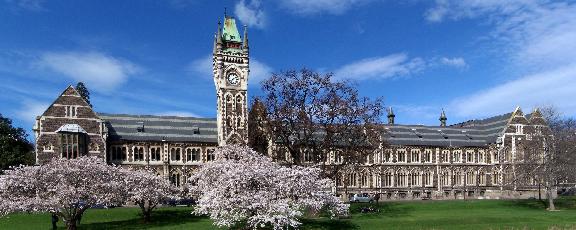
But recently I've begun to wonder - is Dunedin beginning to usurp the crime fiction crown?
Like a titanic battle between Otago and Canterbury in rugby, cricket, or netball, in recent years the southern city has been delivering plenty of shots of its own. Vanda Symon has been a three-time Ngaio Marsh Award finalist for her terrific Dunedin-set Sam Shepherd series and a disturbing standalone. Paddy Richardson has been a twice Ngaio finalist, and continually puts out fantastic Southern-set crime and mystery tales.
Earlier this year, Richardson and Symon were part of an excellent "Murder Most Foul" event with four local crime writers at the Dunedin Writers Festival (Liam McIlvanney and Rogelio Guedea being the others - pictured right).
Then there's Carol Dawber, who wrote a fun outdoors-set crime series back in the 1990s, and now calls Dunedin home. Otago Daily Times sports journalist Rhys Chamberlain has released a crime novel (EMOTION), and Andrew Porteous won the Kingslake Prize for his first effort, A POLITICAL AFFAIR. Young adult mystery writer Ella West, who's superb tale NIGHT VISION won a LIANZA Book Award earlier this year, is also a blue-and-gold-bedecked daughter of Otago.
What's at the centre of this rise in southern crime? Do cold winters and being near the bottom of the world a good crime writer make? Is it Dunedin's recent selection as a UNESCO City of Literature? Or, perhaps, should we be pointing a finger of blame at New Zealand's oldest seat of higher education, the University of Otago? Let me lay out the case against the headquarters of the Scarfies...
Exhibit A: The Scottish crime boss
When he's not penning top-notch crime thrillers set in his home country of Scotland, Mr McIlvanney is molding (corrupting?) the next generation of criminal minds, literary-ally speaking, as the Stuart Professor of Scottish Studies at the University of Otago. He teaches Scottish literature and Tartan Noir.
Liam's been in Dunedin for a few years now, and penned his Ngaio Marsh Award-winning WHERE THE DEAD MEN GO while working at the University. The judges called it "fascinating, brilliant, and challenging... an exceptional thriller entwined with national and workplace politics, sectarian warfare, and the changing face and influence of the newspaper industry".
It's unsurprising McIlvanney feels right at home in Otago - after all Dunedin has plenty of gothic sensibilities, cold winters, and is the most Scottish city outside of Scotland (Dunedin is an amalgam of Dundee and Edinburgh, and there's a statue to Robbie Burns in the main square - well, Octagon in Dunedin's case).
The home of the Scarfies (the nickname for Dunedin's exuberant student population) is rightfully proud of its adopted son's criminal endeavours, and this scion of a prominent Scottish crime family looks like he'll be masterminding plenty of violent incidents in future (we hope), with a third Gerry Conway novel in the works.
Exhibit B: The Mexican crime lord
The greatest universities are true laboratories of learning, bringing world-class experts in many fields together from all over the globe to help their students discover and grow. While Professor McIlvanney has deservedly earned some press for his exploits, a fellow Otago University staff member has rather flown under the radar with his own equally impressive criminal feats.
Dr Rogelio Guedea, an Associate Professor, has been at Otago for a decade, and credits his move to New Zealand with allowing him the freedom, clarity and distance to write crime fiction set in his home country of Mexico. A renowned poet, he is also a bestselling crime novelist in the Spanish language, with an acclaimed trilogy centred on crime in and around the city of Colima. He has been praised for his evocation of rural Mexican life - an aspect of his home country neglected by many of his contemporaries - and nuanced examination of politics, crime, and life in Mexico.
Fortunately for those of us who can't read Spanish, one of Guedea's tales is now available in English, THE BROTHER'S CORONA (Texas Tech University Press, 2014), with hopefully more to come.
Exhibit C: The Poisonous PhD Student
Before she became a superb storyteller, Vanda Symon was a pharmacist - no doubt gleefully imagining the carnage she could cause unruly customers with various potions and poisons, right? A three-time Ngaio Marsh Award finalist, Symon has taken a bit of a break from novel writing since 2012's THE FACELESS, but she's still well-entwined with crime.
Like McIlvanney and Guedea, Symon spends a good chunk of her time at the University of Otago, although in her case it's as part of a PhD thesis on the poisons that our very own Queen of Crime, Dame Ngaio Marsh, used in her Inspector Alleyn tales. When she's not researching how to do away with someone in ways sneaky and undetected, Symon is skewering opponents in Master's level fencing tournaments.
Whether the pen truly is mightier than the sword, or not, our modern-day Empress of Kiwi Crime has both options covered! And after three years working on her PhD, the end is nearly in sight for Symon - so we have our fingers firmly crossed we'll be able to look forward to more Sam Shepherd books in future.
Exhibit D: The Minister of Murder
Professors McIlvanney and Guedea aren't the only University of Otago faculty members prone to penning a crime tale or two. I've recently discovered that Senior Lecturer in Theology Dr Lynne Baab, who moved to Dunedin from Seattle in 2007, has also written a few mystery novels alongside several non-fiction books. You can read an interesting article by Baab about her differing approaches here.
Baab, an ordained minister in the Presbyterian Church in the United States, researches and teaches communication, listening, friendship, leadership, and other topics that affect our everyday lives, approaching them from a Christian and congregational perspective. Her latest mystery certainly adds fuel to the 'Otago is the crime capital' bonfire: DEATH IN DUNEDIN was released on Kindle in August.
In that novel, Lena, a minister of a church in Seattle, is feeling restless and moves to Dunedin on a church exchange, only to then discover a dead body in her new church's car park...
Baab says the first part is inspired by her own life, the latter isn't. But do we really believe her?
Exhibit E: The Writer in Residence
Although she is not (as far as I'm aware - I may be wrong about this) involved with the University of Otago as faculty or student at the moment, Dunedin novelist Paddy Richardson, a two-time Ngaio Marsh Award finalist (for HUNTING BLIND in 2011 and SWIMMING IN THE DARK in 2015) has a strong past association with the university. Back in 1997 she wrote the manuscript for what would become her first novel, THE COMPANY OF A DAUGHTER, while a Robbie Burns Fellow at the University.
That prestigious fellowship is a year-long writer's residency at Otago. Richardson had previously had short stories published in the English Department's magazine. While she was working on what would become her first crime novel, A YEAR TO LEARN A WOMAN, Richardson taught at Otago, and in 2011 she earned the James Wallace-University of Otago residency, which was a three month stint in Auckland at a facility linked to the University of Otago. It was while on that residency that Richardson researched and began writing her excellent crime novel, CROSSFINGERS, which mixed murder with the real-life controversy of the 1981 Springbok Tour.
Following her stint as the Robbie Burns fellow at the University of Otago, Richardson has gone on to publish five acclaimed crime and mystery novels, many of which fall into the 'psychological thriller' category, while also having fantastic evocation of people and place: A YEAR TO LEARN A WOMAN, HUNTING BLIND, TRACES OF RED, CROSSFINGERS, and SWIMMING IN THE DARK.
So with the presentation of the above five exhibits, there is certainly a strong case to be argued that the University of Otago has become the crucible of crime writing in New Zealand, helping Dunedin challenge its northern neighbour Christchurch for the title of Aotearoa's home of crime.
That's the prosecution case... what do you, the jury out there, think?
Saturday, July 25, 2015
10 Kiwi Scribes who Should be Chained Up until they Write Another Crime Novel (Part 1)
After decades of being maligned and overlooked, New Zealand crime writing is flourishing right now. But I want more.
There are good signs everywhere: the media is regularly featuring our masters of murder and mayhem in reviews and articles; local crime novels are becoming bestsellers and picked up for overseas deals and translations; and more and more talented authors of all styles are choosing to write crime and mystery tales for the first time.
The Ngaio Marsh Award long-list is becoming deeper and more varied each year, and the judges are having a heck of a time picking the finalists, let alone the winner - there's so much good writing out there. But like a bear that's got a taste for honey, I want more. More crime-loving local readers giving our own authors a go, more distribution of our great tales overseas. More recognition and respect.
I want one more thing: some of our local crime writing talents who've stepped away to come back to the game. Let me explain: three years ago Paul Thomas - Godfather of modern Kiwi crime, 'Elmore Leonard on acid', one of the finest crime writers around, etc - published his first Ihaka novel in 15 years, DEATH ON DEMAND (2012). It went on to win the Ngaio Marsh Award. He'd taken a winding road back, via sports biographies, media columns, and screenwriting. Always writing, just not crime.
Likewise, it was fantastic to see Joan Druett recently continue her superb Wiki Coffin series (set on the 1800s high seas), after a hiatus of several years that was filled with short stories and much-acclaimed maritime-themed non fiction. THE BECKONING ICE was longlisted for the Ngaio Marsh Award.
But other terrific authors have turned away from crime and not yet returned. They are Thomas or Druett mid-hiatus, working on other writings and other projects. Letting the demands of life steal their time, and worse, steal new crime tales from the voracious crime and mystery fans out there.
So over the next month I'll be delivering my 'most wanted' list of Ten New Zealand crime writers who should be locked to their desks until they deliver us another crime novel.
Here's the first five:
1. VANDA SYMON
In a five-year period starting in 2007, Symon delivered four gripping books featuring Sam Shepherd (one of the most engaging female characters in New Zealand literature), then a dark and twisted standalone, The Faceless, to rival the likes of Linwood Barclay, Harlan Coben, and Gillian Flynn.
Then the three-times Ngaio Marsh Award finalist stopped: purportedly to work on a PhD examining Dame Ngaio's use of poisons in her novels. Time-consuming for sure, especially combined with looking after a family, reviewing books for radio, delivering the Ngaio Marsh Memorial Lecture, and skewering opponents on the masters' fencing circuit. En garde!
I have some sympathy. Some. But it's a crime that we haven't had any new Sam Shephard tales in almost five years now. Like Ihaka, she's too good a character to disappear forever.
And Symon is too good a crime writer. Back in 2011 she told me, for a feature in Canvas magazine, that she took great joy in dropping Sam into all sorts of nasty situations, and seeing how she'd get herself out of them. Well then Ms Symon, it's time to find your happiness, put fingers to keys, and drop Detective Constable Shephard back in the proverbial again, methinks!
2. ALIX BOSCO (GREG MCGEE)
Another reprobate from Otago, although McGee calls Auckland home nowadays - when he's not winning Katherine Mansfield fellowships and swanning off to Menton to write sweeping epics that deservedly have the critics atwitter (The Antipodeans).
McGee vaulted into the local crime writing scene back in 2009 with the startlingly good Cut & Run. Who was this mysterious 'Alix Bosco', a "successful writer in other media", we wondered. My money was on Rachel Lang, a talented TV screenwriter, given the heroine's strong voice, city/suburban Auckland setting, cover quote from Outrageous Fortune's Robyn Malcolm, and the cinematic storytelling in this excellent debut.
A couple of years later McGee, the former Junior All Black, playwright of classic rugby-themed Kiwi play Foreskin's Lament, and screenwriter (at least I got that part right), outed himself as Bosco in the lead-up to the 2011 Ngaio Marsh Award event. He was a finalist for his second Alix Bosco book, Slaughter Falls. He'd won the inaugural award the year before for Cut & Run.
Five years on from Slaughter Falls, we're still waiting for a third tale featuring legal researcher Anna Markunas. Like Sam Shephard, she's a layered and complex heroine, really fun to read about, and has many more stories to tell I'm sure. It's not like McGee hasn't been busy in his un-closeted interim: he wrote the bestselling biography of arguably the greatest rugby player of all time (Richie McCaw), a fine novel under his own name in Love & Money, and now The Antipodeans, described as "wonderful" by reviewers.
But whether it's as Bosco or McGee, we need at least one more book to finish Anna's trilogy. So put back on your fishnets and boa mate, and get to work. We're waiting...
3. STELLA DUFFY
Like Val McDermid, Tokoroa-raised Stella Duffy first broke through with a groundbreaking crime series starring a strong and engaging lesbian protagonist. After 1994's Calendar Girl, Duffy went on to write four more Saz Martin books - the last (so far) being 2005's Mouths of Babes. But unlike McDermid, Duffy hasn't continued with her crime novels.
Instead, over the past 20 years the multi-talented Duffy has produced a staggeringly impressive resume of projects across the creative and charitable spectrums. Along with her five crime novels, Duffy has written eight literary novels, two of which were longlisted for the Orange Prize. She's twice been the Stonewall Writer of the Year, and has also edited the anthology Tart Noir and twice won the CWA Dagger for Best Short Story. So there's been a wee bit of crime apart from the Saz novels.
The former Victoria University drama student has also acted on stage and screen, been a comedian and improv artist, written many stage plays, and directed many others - including Murder, Marple, and Me. If that wasn't enough, she's battled cancer, toured her solo show Breaststrokes in several European cities, and been a driving force behind Fun Palaces, a movement to encourage community engagement with creativity and the arts which saw 138 'laboratories of fun' created by local communities across Britain last year.
I think if we tried to handcuff Stella Duffy to her desk, she'd just break the chains. The woman's a creative dynamo, and an inspiration. So it's just as well that word on the street is that she's already working on a new crime novel. I don't know where she's finding the time, but I'm very glad she is.
4. ZIRK VAN DEN BERG
Back in 2010, as the Ngaio Marsh Award was launching, then Sunday Star-Times Books Editor Mark Broatch wrote a feature looking at the state of New Zealand crime writing. In that article, renowned editor and literary critic Stephen Stratford told Broatch (now New Zealand Listener Books & Culture editor) that he was "still waiting for a new novel from Zirk van den Berg whose outstanding Nobody Dies came out in 2004".
I've since read Nobody Dies, and Stratford is spot-on. It's an outstanding crime novel, a searing tale centred on a loner who's thrown into the witness protection programme in South Africa after witnessing a murder, unaware the cop in charge has taken it upon herself to eliminate her charges in a more permanent manner. In a Herald on Sunday review in 2012 I called it "an absorbing, tense tale that brings the expanses of South Africa to life on the page, along with the grey areas in human hearts and minds." Back in 2004 it's release caused the Listener to ask if van den Berg was New Zealand's best thriller writer - after only one book! And it was rated a Top 5 Thriller, globally, by the New Zealand Herald.
Despite it's acclaim, Nobody Dies fell out of print, in print, though van den Berg resurrected it in ebook form a few years later, and also published another thriller in ebook, No Brainer (2011). The recent Afrikaans translation of Nobody Dies won the kykNET-Rapport Prize as Best Filmable Book. But van den Berg hasn't written any thrillers in the past few years, instead concentrating on his communications business, and writing his historic drama/war and love story, Half of One Thing (2014).
That's all well and good, but whether it's a thriller set in Africa or in his adopted home of New Zealand, we need another crime tale from Zirk van den Berg. He's just too good to just stop.
5. CHAD TAYLOR
For a period from the mid '90s onwards, Chad Taylor was the author who, alongside Paul Thomas, dragged contemporary Kiwi crime writing into a darker, grittier place. His superb tales of urban noir crackled with venom and were powered by skillful, stylish prose. Thomas and Taylor were a long way away from Ngaio Marsh and Laurie Mantell's decidedly cosy tales.
Taylor kickstarted things with his intriguing novella Pack of Lies (1993), and followed that up with Heaven (made into a film by Miramax), Shirker (2000), Electric (2003), and Departure Lounge (2006). Taylor received widespread global acclaim for his 'neo-noir' novels, which both danced eccentrically in and around the edges of 'crime and mystery', and subverted the genre too. Leading UK critic Maxim Jakuboski called Taylor's work "entropy noir" and "hypnotic". The Washington Post's Pulitzer Prize-winning critic Jonathan Yardley compared Taylor's stylised storytelling to Chandler, saying "cool certainly is the word for him, but there's a good deal of heat beneath".
Unfortunately for us, Taylor hasn't published any novels since 2009's The Church of John Coltrane. In a 2010 interview he mentioned he'd just finished writing a "noir, very hardboiled" novel, "Tijuana Bible", but I can't seem to find any trace of that book ever being published. In recent times, Taylor has written a sci-fi/noir film REALITi, which was nominated for several 2014 New Zealand Film Awards, including Best Screenplay. Perhaps it's time for Taylor to return to his noir novel roots - though chaining him to his desk and forcing him to write a crime novel sounds like something he might do to his own characters.
The rest of the "10 Kiwi Scribes who Should be Chained Up until they Write Another Crime Novel" will be named here on Crime Watch in the coming weeks. I hope you've enjoyed this op-ed piece - I'd love to hear your thoughts on the writers above, or other New Zealand or international crime writers you want to return to the page. Join the discussion and leave a comment.
There are good signs everywhere: the media is regularly featuring our masters of murder and mayhem in reviews and articles; local crime novels are becoming bestsellers and picked up for overseas deals and translations; and more and more talented authors of all styles are choosing to write crime and mystery tales for the first time.
The Ngaio Marsh Award long-list is becoming deeper and more varied each year, and the judges are having a heck of a time picking the finalists, let alone the winner - there's so much good writing out there. But like a bear that's got a taste for honey, I want more. More crime-loving local readers giving our own authors a go, more distribution of our great tales overseas. More recognition and respect.
I want one more thing: some of our local crime writing talents who've stepped away to come back to the game. Let me explain: three years ago Paul Thomas - Godfather of modern Kiwi crime, 'Elmore Leonard on acid', one of the finest crime writers around, etc - published his first Ihaka novel in 15 years, DEATH ON DEMAND (2012). It went on to win the Ngaio Marsh Award. He'd taken a winding road back, via sports biographies, media columns, and screenwriting. Always writing, just not crime.
Likewise, it was fantastic to see Joan Druett recently continue her superb Wiki Coffin series (set on the 1800s high seas), after a hiatus of several years that was filled with short stories and much-acclaimed maritime-themed non fiction. THE BECKONING ICE was longlisted for the Ngaio Marsh Award.
But other terrific authors have turned away from crime and not yet returned. They are Thomas or Druett mid-hiatus, working on other writings and other projects. Letting the demands of life steal their time, and worse, steal new crime tales from the voracious crime and mystery fans out there.
So over the next month I'll be delivering my 'most wanted' list of Ten New Zealand crime writers who should be locked to their desks until they deliver us another crime novel.
Here's the first five:
1. VANDA SYMON
In a five-year period starting in 2007, Symon delivered four gripping books featuring Sam Shepherd (one of the most engaging female characters in New Zealand literature), then a dark and twisted standalone, The Faceless, to rival the likes of Linwood Barclay, Harlan Coben, and Gillian Flynn.
Then the three-times Ngaio Marsh Award finalist stopped: purportedly to work on a PhD examining Dame Ngaio's use of poisons in her novels. Time-consuming for sure, especially combined with looking after a family, reviewing books for radio, delivering the Ngaio Marsh Memorial Lecture, and skewering opponents on the masters' fencing circuit. En garde!
I have some sympathy. Some. But it's a crime that we haven't had any new Sam Shephard tales in almost five years now. Like Ihaka, she's too good a character to disappear forever.
And Symon is too good a crime writer. Back in 2011 she told me, for a feature in Canvas magazine, that she took great joy in dropping Sam into all sorts of nasty situations, and seeing how she'd get herself out of them. Well then Ms Symon, it's time to find your happiness, put fingers to keys, and drop Detective Constable Shephard back in the proverbial again, methinks!
2. ALIX BOSCO (GREG MCGEE)
Another reprobate from Otago, although McGee calls Auckland home nowadays - when he's not winning Katherine Mansfield fellowships and swanning off to Menton to write sweeping epics that deservedly have the critics atwitter (The Antipodeans).
McGee vaulted into the local crime writing scene back in 2009 with the startlingly good Cut & Run. Who was this mysterious 'Alix Bosco', a "successful writer in other media", we wondered. My money was on Rachel Lang, a talented TV screenwriter, given the heroine's strong voice, city/suburban Auckland setting, cover quote from Outrageous Fortune's Robyn Malcolm, and the cinematic storytelling in this excellent debut.
A couple of years later McGee, the former Junior All Black, playwright of classic rugby-themed Kiwi play Foreskin's Lament, and screenwriter (at least I got that part right), outed himself as Bosco in the lead-up to the 2011 Ngaio Marsh Award event. He was a finalist for his second Alix Bosco book, Slaughter Falls. He'd won the inaugural award the year before for Cut & Run.
Five years on from Slaughter Falls, we're still waiting for a third tale featuring legal researcher Anna Markunas. Like Sam Shephard, she's a layered and complex heroine, really fun to read about, and has many more stories to tell I'm sure. It's not like McGee hasn't been busy in his un-closeted interim: he wrote the bestselling biography of arguably the greatest rugby player of all time (Richie McCaw), a fine novel under his own name in Love & Money, and now The Antipodeans, described as "wonderful" by reviewers.
But whether it's as Bosco or McGee, we need at least one more book to finish Anna's trilogy. So put back on your fishnets and boa mate, and get to work. We're waiting...
3. STELLA DUFFY
Like Val McDermid, Tokoroa-raised Stella Duffy first broke through with a groundbreaking crime series starring a strong and engaging lesbian protagonist. After 1994's Calendar Girl, Duffy went on to write four more Saz Martin books - the last (so far) being 2005's Mouths of Babes. But unlike McDermid, Duffy hasn't continued with her crime novels.
Instead, over the past 20 years the multi-talented Duffy has produced a staggeringly impressive resume of projects across the creative and charitable spectrums. Along with her five crime novels, Duffy has written eight literary novels, two of which were longlisted for the Orange Prize. She's twice been the Stonewall Writer of the Year, and has also edited the anthology Tart Noir and twice won the CWA Dagger for Best Short Story. So there's been a wee bit of crime apart from the Saz novels.
The former Victoria University drama student has also acted on stage and screen, been a comedian and improv artist, written many stage plays, and directed many others - including Murder, Marple, and Me. If that wasn't enough, she's battled cancer, toured her solo show Breaststrokes in several European cities, and been a driving force behind Fun Palaces, a movement to encourage community engagement with creativity and the arts which saw 138 'laboratories of fun' created by local communities across Britain last year.
I think if we tried to handcuff Stella Duffy to her desk, she'd just break the chains. The woman's a creative dynamo, and an inspiration. So it's just as well that word on the street is that she's already working on a new crime novel. I don't know where she's finding the time, but I'm very glad she is.
4. ZIRK VAN DEN BERG
Back in 2010, as the Ngaio Marsh Award was launching, then Sunday Star-Times Books Editor Mark Broatch wrote a feature looking at the state of New Zealand crime writing. In that article, renowned editor and literary critic Stephen Stratford told Broatch (now New Zealand Listener Books & Culture editor) that he was "still waiting for a new novel from Zirk van den Berg whose outstanding Nobody Dies came out in 2004".
I've since read Nobody Dies, and Stratford is spot-on. It's an outstanding crime novel, a searing tale centred on a loner who's thrown into the witness protection programme in South Africa after witnessing a murder, unaware the cop in charge has taken it upon herself to eliminate her charges in a more permanent manner. In a Herald on Sunday review in 2012 I called it "an absorbing, tense tale that brings the expanses of South Africa to life on the page, along with the grey areas in human hearts and minds." Back in 2004 it's release caused the Listener to ask if van den Berg was New Zealand's best thriller writer - after only one book! And it was rated a Top 5 Thriller, globally, by the New Zealand Herald.
Despite it's acclaim, Nobody Dies fell out of print, in print, though van den Berg resurrected it in ebook form a few years later, and also published another thriller in ebook, No Brainer (2011). The recent Afrikaans translation of Nobody Dies won the kykNET-Rapport Prize as Best Filmable Book. But van den Berg hasn't written any thrillers in the past few years, instead concentrating on his communications business, and writing his historic drama/war and love story, Half of One Thing (2014).
That's all well and good, but whether it's a thriller set in Africa or in his adopted home of New Zealand, we need another crime tale from Zirk van den Berg. He's just too good to just stop.
5. CHAD TAYLOR
For a period from the mid '90s onwards, Chad Taylor was the author who, alongside Paul Thomas, dragged contemporary Kiwi crime writing into a darker, grittier place. His superb tales of urban noir crackled with venom and were powered by skillful, stylish prose. Thomas and Taylor were a long way away from Ngaio Marsh and Laurie Mantell's decidedly cosy tales.
Taylor kickstarted things with his intriguing novella Pack of Lies (1993), and followed that up with Heaven (made into a film by Miramax), Shirker (2000), Electric (2003), and Departure Lounge (2006). Taylor received widespread global acclaim for his 'neo-noir' novels, which both danced eccentrically in and around the edges of 'crime and mystery', and subverted the genre too. Leading UK critic Maxim Jakuboski called Taylor's work "entropy noir" and "hypnotic". The Washington Post's Pulitzer Prize-winning critic Jonathan Yardley compared Taylor's stylised storytelling to Chandler, saying "cool certainly is the word for him, but there's a good deal of heat beneath".
Unfortunately for us, Taylor hasn't published any novels since 2009's The Church of John Coltrane. In a 2010 interview he mentioned he'd just finished writing a "noir, very hardboiled" novel, "Tijuana Bible", but I can't seem to find any trace of that book ever being published. In recent times, Taylor has written a sci-fi/noir film REALITi, which was nominated for several 2014 New Zealand Film Awards, including Best Screenplay. Perhaps it's time for Taylor to return to his noir novel roots - though chaining him to his desk and forcing him to write a crime novel sounds like something he might do to his own characters.
The rest of the "10 Kiwi Scribes who Should be Chained Up until they Write Another Crime Novel" will be named here on Crime Watch in the coming weeks. I hope you've enjoyed this op-ed piece - I'd love to hear your thoughts on the writers above, or other New Zealand or international crime writers you want to return to the page. Join the discussion and leave a comment.
Sunday, April 19, 2015
Who Killed Alix Bosco?
Four years ago, the New Zealand literary world was abuzz with rumours of who was behind the crime writing pseudonym 'Alix Bosco'. According to the author bio on CUT & RUN, which has been published to great acclaim and went on to win the inaugural Ngaio Marsh Award in 2010, and the follow-up SLAUGHTER FALLS, Alix Bosco was "a successful writer in other media".
Speculation was rife - was it a famed literary author who'd chosen to use a different name while delving into the crime genre? Or a well-known journalist or broadcaster dipping into fiction?
Having read both books, my best guess was that it was a screenwriter, and my money at the time was on Rachel Lang - one half of the team behind Outrageous Fortune. Not just for the style and polish of the writing, and the strong female protagonist, but that Robyn Malcolm, star of Outrageous Fortune, had provided a book blurb and then later was tabbed to play Anna Markunas in a planned TV adaptation. Val McDermid was also sure it was a female writer, having been enthralled by the strong female narrator in CUT & RUN. So I was in good company at least...
It turns out I was wrong. In August 2014, junior All Black turned playwright and screenwriter Greg McGee 'came out' as Alix Bosco in a large feature in the Sunday Star-Times. He was one of the people that was rumoured to be Bosco (one anonymous commentator vociferously pushed him as the man behind the pseudonym on this very blog), but it still came as a surprise to many. Kim Knight of the Sunday Star-Times wrote a very fine feature, and it was great to see the splash local crime writing made - noted on the cover of the entire edition, taking the cover of the Culture supplement, then a large spread too.
Back in New Zealand for a visit, I came across this article in my storage locker. I also caught up with McGee for the first time in three years on Thursday evening. He's gone on to other successes since, including writing All Blacks captain Richie McCaw's phenomenal biography, and has a sweeping epic drama novel coming out later this year. Hopefully though, one day soon, he will turn his talents back to another story starring Anna Markunas. She was a terrific character that many people would like to see again.
You can read the Sunday Star-Times feature on the reveal of Alix Bosco, which includes intriguing insights into McGee's very valid reasons for the pseudonym, here.
Wednesday, July 23, 2014
Interviewer turned interviewee: my thoughts on Kiwi crime writing
While I was working in North Carolina and travelling throughout the United States last year, I was contacted by New Zealand journalist Kelly Andrew, who was putting together a feature article on Kiwi crime writer Paul Cleave for the Herald on Sunday, a major nationwide newspaper. Cleave had won the Ngaio Marsh Award in 2011, is massively popular in Germany and France, and I've had a fair bit to do with him due to my involvement in local crime fiction, from reviews to interviews to sharing the stage together at events.
With Cleave's then-latest book, JOE VICTIM, about to be released, Kelly wanted my perspective on Cleave's writing, and where it stood in terms of local and international crime writing, along with some other comments about New Zealand crime writing. It always feels a little strange for me to be the interviewee rather than the interviewer, but it was fun to have a think about these things too.
As is always the case, many of my comments didn't make it into the final article (I know what that's like from a writer/interviewer perspective, trying to work out which of the 6,000 words of terrific interview with an author I use or don't for an 800-1,500 word article). I've recently rediscovered the interview while going through some old files, so thought as well as sharing the link to Kelly's feature here (it's worth a read), I'd share some of my other thoughts and comments that didn't make it into the piece:
KA: How does Paul Cleave stand out from other Kiwi crime/thriller writers?
CS: I think the thing that makes Paul Cleave stand out is the vividness of his writing, the way he treads the darker edge of crime fiction whilst still managing to instil some humour and a really keen eye for protagonists who see the world in a unique, slightly askew way. He really gets readers into the head of his main characters (which isn't always the most pleasant or comfortable place, but is intriguing and rather captivating), as well creating an almost character-like sense of place.
KA: Is there a growing market for New Zealand crime writing overseas?
CS: I think there is potentially a growing market for New Zealand crime writing overseas. Readers worldwide seem to be becoming more open to crime fiction set outside of the US and UK - not only Scandinavian crime fiction, but mysteries set in Asia, the Mediterranean and Middle East, Africa, and Eastern Europe. There are a lot of terrific things about New Zealand as a setting, and we have good writers, so there is definitely potential for New Zealand crime writing to grow in a global readership sense. With the breaking down of geographic barriers when it comes to book publishing and distribution, there is perhaps more than ever an opportunity for NZ writers to succeed worldwide.
KA: Why is the crime and thriller genre so popular in Germany?
CS: Germany seems something of a 'canary in the coal mine' when it comes to crime fiction - they 'discovered' authors such as Stieg Larsson, Linwood Barclay, and Paul Cleave before the UK/US markets caught up. The Germans do seem to devour crime fiction - but in all honesty it's the most popular genre in many markets. The Germans, like other continental Europeans, do seem to have less of a 'literary vs popular fiction' prejudice (which is sometimes apparent amongst literary critics and award judges in English-speaking countries), though I'm not sure how much this affects book sales anyway, given readers don't seem quite so worried about those types of delineations.
KA: Do you think NZ book buyers are reluctant to buy crime novels written by local authors compared to the big international names such as Michael Connelly etc?
I'm not sure if New Zealand book buyers are reluctant to buy crime novels written by local authors as much as just being reluctant to buy books from lesser-known or new authors from any country. The biggest sellers in New Zealand when it comes to crime fiction are almost brand-like: Lee Child, Stieg Larsson, Michael Connelly, Kathy Reichs, James Patterson, etc. They are well-known names that readers recognise and feel they can count on. Crime fiction readers seem very 'tribal' - they find an author they like, and will read many/all of their books. Book prices in New Zealand are high, in a global sense, so I can understand why crime fiction readers might not rush to try newer authors, Kiwi or otherwise, until they have experienced them and are confident about liking them. For example, there are outstanding non-New Zealand crime writers who don't sell that well, relatively speaking, here too. However, things do seem to be improving on this front - at least from a sense of keeping an eye on the appearance of New Zealand crime writers such as Cleave, Paddy Richardson, Paul Thomas, Vanda Symon, and Ben Sanders on the Neilsen Best Seller Lists over the past two to three years - they seem to be featuring more than in the past. Quite how this translates to the actual quantities of books sold, I couldn't tell you.
So what do you think of Kelly's article, and what I had to say? Fair comments? Do you agree or disagree?
Subscribe to:
Posts (Atom)


.jpg)