Showing posts with label Have you read?. Show all posts

Wednesday, June 2, 2010

Have you read Laurie Mantell?

After a long hiatus, Crime Watch’s ‘Have You Read?’ series of author introductions on Kiwi crime, mystery, and thriller writers, is now back. Today, for the 12th instalment in the series, I am taking a look at a somewhat ‘forgotten’ Kiwi mystery writer, who sadly passed away earlier this year (aged 93): Laurie Mantell.

From 1978-1984, Mantell wrote five Wellington-set murder mysteries featuring Detective Sergeant Steve Arrow of the New Zealand Police. She also wrote a sixth crime novel, the standalone MATES, in the late 1990s.

There are still copies of some of Mantell's books, which got good reviews and were published internationally, available from various online second-hand book websites, but up until now there has been very little information available about Mantell herself, on the Internet. I would like to thank several members of the Mantell family, who got in touch with me following Laurie Mantell's passing on 11 March, for providing me with some further information about her, which I can now share with you. Particular thanks to Laurie's son Ray Mantell, daughter Linda Biggins, and son-in-law Barry Biggins.

Laurie Mantell was born Lorraine Hosking at Pahiatua (a small town in the rural southern part of New Zealand's North Island) in 1916, one of four children. Her father, the local publican, died when she was still a child, so she and her siblings were raised by their mother. She studied book-keeping and at age 19 was awarded 1st prize with honours and a medal in NZ Chamber of Commerce Exams in Book-keeping. After marrying, Laurie Mantell moved to Petone (a major suburb of the city of Lower Hutt, near Wellington) and raised a family while working as an accountant for General Motors and Federal Industries.

She began writing short stories in 1945 (some under the pen-name of Curtis Gray) - and over the next few decades had more than 70 short stories published in New Zealand, England, the United States, and Australia. In an interview with Chris Moore for The Press in 1999, Mantell revealed that her "desire to write about crime and police procedures may have come from stories an aunt had told [her] about her police sergeant husband removing bodies from the Napier earthquake debris."

At her funeral service in March, her son Ray recalled that while the family was aware she was typing away on her short stories in the kitchen many nights, "in the background she was working on her dreams to have a book published, and we did not even know". Mantell was a keen reader, mostly science fiction, but also occasionally on a wide variety of subjects, from glass blowing to archery, and murder mysteries. "This all made sense later," says her son.

In the The Press interview with Moore, Mantell says, "When I was about to retire, I thought I would have a crack at a novel... As I'd had many police stories published I decided on that.''

Mantell's first mystery novel, MURDER IN FANCY DRESS, was published by prestigious British publisher Gollancz in 1978 (Gollancz is now part of Orion). In amongst work, family, and her short stories, Mantell had been chipping away at her first novel for around 15 years, and when she thought it was finally reading to publish, friends at her local writers group suggested she start submitting it "at the top", so she sent it overseas to Gollancz. After some minor edits, it was published.

Now confident she knew how to write a publishable novel-length mystery, Mantell produced four more New Zealand-set murder mysteries starring Wellington police detective Steve Arrow, over the next few years: A MURDER OR THREE (1980); MURDER AND CHIPS (1981); MURDER TO BURN (1983); and MURDER IN VAIN (1984). The books, which were apparently quite popular, were also published in North America.

In A MURDER OR THREE, three women are murdered, each with a pair of pantyhose. Detective Sergeant Steve Arrow knows the first victim, a shy teenager he met as part of an investigation into a flasher seen in nearby bush. The body of the second victim, older, extremely attractive, is found in this same bush, and, later, a flirtatious wife dies in her own home with the tell-tale pantyhose around her throat. Residents are in near panic, and Arrow and his colleagues have little to go on as they try to investigate the killings of three women who seemed to have little in common. Could a serial killer, some kind of sex maniac, be loose in 1980s suburban Wellington?

You can read my recent review of A MURDER OR THREE here.

At her funeral service in March, Ray Mantell spoke of how his mother took everything she saw in, and often used it later in her mystery stories: "When I was young I set up my 8mm movie camera to take time motion of flowers opening & closing etc. One day I set it up on the roof to film cloud movements and thought mum did not even know what I was doing. Then in one of her books there it was a boy who set up a camera with time motion on the roof of his house to film a possum in the tree next door and in one of the frame he had the killer on film... [Another time], Linda & Barry took Mum & Dad down to Nelson and Mum saw the wood chips piles waiting to be shipped so she came up with MURDER IN CHIPS."

In the final Steve Arrow book, MURDER IN VAIN, the Wellington police detective had to investigate the death of a nudist who was killed with an arrow at a sun-seekers' club - a plotline inspired by both Mantell's avid reading of non-fiction books on archery, and an unexpected outing - others in the family once took her along to a 'local sun club' to "see what it was all about".

Mantell's Steve Arrow mysteries seem of the 'traditional' British detective story style, with interesting characters and puzzle-type whodunnit plots, just brought forward from the war and post-war years of Poirot and Alleyn into the 1970s-1980s - a Midsomers Murders or Inspector Morse type of feel and style, perhaps - just in a well-evoked New Zealand setting. Mantell brought 1970s/1980s Wellington and New Zealand to life, especially in terms of the way she evokes suburban life, and the way in which even our biggest cities were pretty relaxed in pace at the time. In fact, in a 1999 three-part series of articles discussing the geography of crime fiction, the Washington Post said that "if New Zealand is on your mind, pick up Ngaio Marsh's COLOUR SCHEME or sample the work of Laurie Mantell."

More than a decade after her final Steve Arrow mystery, Mantell published a further, standalone, crime novel, MATES. The publisher's blurb for MATES:

"‘Eric’, said Larry Davenport. ‘Come round to the flat, will you? As quickly as possible. It’s Catia. She’s been murdered. Here. In my flat.’ For Detective Sergeant Eric Walden, this phone call has serious repercussions. Not only is Larry a friend, he’s also another cop, and the main suspect. As the case unfolds Eric finds it increasingly difficult to maintain an objective view. Has he misjudged Larry? What about Catia’s mother? Why is she acting so strangely? And where do the two Brazilian musicians fit in? Set in Wellington, the Hutt Valley and Mt Cook, Mates is an absorbing and tightly-written murder mystery, that uncovers a sleuth with all the analytical skills of a Morse or a Dalglish."

Mantell continued to live in the Wellington region until her death. She lived in Wainuiomata for more than 40 years. She passed away peacefully at Enliven Home Woburn in Lower Hutt on 11 March 2010, aged 93. At the funeral service, her son Ray closed his eulogy with "she has left her mark in this world for people to enjoy any time, and that is great".

Have you read any of Laurie Mantell's books? Do you like the more traditional detective novels - with less sex and violence, and more puzzles? Whodunnits rather than whydunnits (although Mantell herself focused a lot on motive as well)? Thoughts and comments welcome.

Wednesday, November 18, 2009

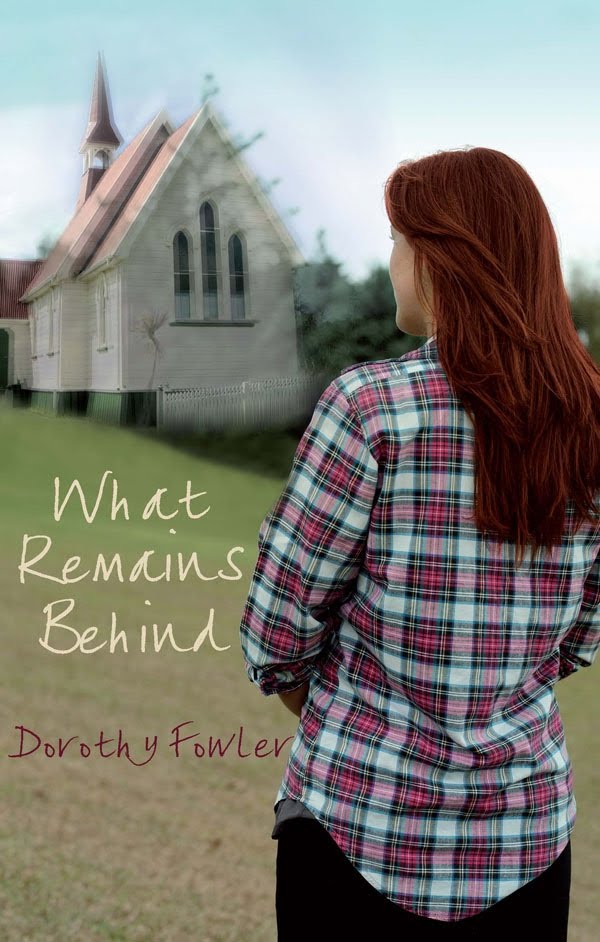
Have you read Dorothy Fowler?

For the eleventh in this blog's regular series of author introductions on Kiwi crime, mystery, and thriller writers, we now take a look at recent debutant Dorothy Fowler, whose archaeological mystery WHAT REMAINS BEHIND was published in both New Zealand and Australia earlier this year.

Fowler lives on beautiful Waiheke Island, a laidback and somewhat rural gulf island in the Auckland harbour, about half an hour by ferry from the main CBD. She has worked in a variety of jobs over the years, including renovating houses and boat building. Eventually she decided to return to university as an adult student, to indulge her passion by studying archaeology and ancient history.

In an interview in July to celebrate her debut novel, she told her hometown newspaper, the Gulf News, that “I had been buying houses, doing them up and selling them. I had a bit of money as a result and woke up one morning and decided I wanted to take a few years out of my life to go back to university and study.”

It was while she was completing those studies for her Bachelor's degree, that Fowler decided to take a creative writing course. Her tutor happened to be iconic New Zealand writer Witi Ihimaera, whose award-winning works have included the book that became acclaimed film Whale Rider, and Ihimaera suggested she apply for a place in the small but diverse class in his very selective yearlong Masters programme. From 32 applicants for the course, six were accepted; all women, ranging in age from 23 to 56.

It was during the yearlong Masters course, in which students were asked to write a 70-90,000 word novel to second draft stage between March and October, that Fowler worked on WHAT REMAINS BEHIND, mentored by both Ihimaera and award-winning New Zealand author Emily Perkins. She was thrilled when it was picked up for publication by Random House New Zealand soon after - the only manuscript from a new writer they are publishing this year (from the 600 or so they receive from hopeful new/unpublished writers annually). Random House Fiction publisher Harriet Allan said Fowler's novel stood out from amongst the hundreds they are sent because, most importantly, "I simply wanted to keep reading".

Fowler’s debut combines her twin passions, centering as it does on a dig near a small rural town in the Kaipara. In WHAT REMAINS BEHIND, Chloe Davis is a contract archaeologist who has returned to her family-owned farm to excavate, before the farm is subdivided for lifestyle blocks, the ruins of a religious community that burned to the ground in the 1880s, killing several people. Already under time and budget pressure, Chloe and her team soon encounter local resistance, ranging from bar fights to sabotage and vandalism. Is someone worried that uncovering the past could upset the present?

Chloe’s life and work is further complicated by the unknown motives of old acquaintances and interfering relatives. The story switches regularly between Chloe’s present-day narration, and journal entries made by Charity, a young girl living in the isolated religious community in the lead-up to the tragedy.

You can read an extract from WHAT REMAINS BEHIND here, and my review of it here. You can also read a review by the Otago Daily Times (from the opposite end of New Zealand) here.

The novel has a slow build, and pulls you in gradually, unfolding leisurely rather than having an early or graphic hook, so in some ways it is paced like a traditional amateur detective novel. Perhaps unsurprisingly then, when speaking to the Gulf News, Fowler described her taste in fiction as ‘classic whodunnits’; Dorothy L. Sayers, Agatha Christie, Ngaio Marsh. Fowler is currently working on the second draft of the next Chloe Davis novel, which will be set on Waiheke Island.

You can listen to an extract from WHAT REMAINS BEHIND and a good interview with Fowler from Radio New Zealand's Arts on Sunday programme with Lynn Freeman, here. The interview covers the plot and writing of the book, Fowler's interest in archaeology, her next book, and some other fascinating topics.

Have you read Dorothy Fowler? What do you think of historic mysteries? Do you like books with a slow burn, rather than an early hook and fast-paced thrills? Please share your thoughts...

Wednesday, October 28, 2009

Have you read Paddy Richardson?

After a short hiatus, here is the tenth in this blog's (ir)regular series of author introductions on Kiwi crime, mystery, and thriller writers. Today I'm taking a look at Dunedin-based author Paddy Richardson, who released her first thriller, A YEAR TO LEARN A WOMAN, in late 2008.

59-year old Richardson, now a full-time writer living in Broad Bay, a beach settlement on the Otago Peninsula, says in a Q&A with her publisher Penguin NZ that she started writing seriously after going to an Otago University Summer School in Creative Writing.
She began with short stories, with which she has had much success, including being published in iconic literary journals Landfall and Takahe, and having her work be highly commended in several writing competitions, including the Katherine Mansfield Short Story Awards. She had also published a short story collection, CHOICES, in 1986.

Richardson won a prestigious Burns Fellowship in 1997, which gave her a full year with an office at the University of Otago to work on her writing. During this time she spent time on what would become her first published novel, THE COMPANY OF A DAUGHTER (Steele Roberts, 2000).
Although she has turned to thriller writing more recently, her first novel was squarely in the 'general fiction' category - a saga of five generations of New Zealand women, described as a "lyrical, slow-moving, meditative kind of novel".
Following THE COMPANY OF A DAUGHTER, Richardson continued to write short stories, as well as beginning work on what would later become her first thriller, A YEAR TO LEARN A WOMAN, while working fulltime teaching English at the Univeristy of Otago. She also taught fiction writing at the Otago Polytechnic, and published a second short story collection, IF WE WERE LEBANESE, in 2003.

The writing of her darker second novel, a thriller centred on a freelance journalist and an incarcerated serial rapist, progressed more rapidly when she won the Foxton Fellowship (now known as the Beatson Fellowhip), which let her take time out of her teaching job to write full-time for a month in a cottage at Foxton Beach on the Kapiti Coast, on the banks of the Manawatu River. She told the Otago Daily Times in a 2008 interview that not only did living at the cottage provide her with more time for writing, it also helped her with experiencing some of the creepy, isolated atmosphere she was trying to create in the novel: "I was writing an intense and frightening book at a beach where I knew no-one. I got that feeling of being threatened and isolated. I think it was a very good thing to happen while I was writing that novel."

Richardson also decided to give up full-time teaching to write full-time, around the same time.

Her second novel, and debut crime thriller, A YEAR TO LEARN A WOMAN features freelance writer Claire, who is hired by a dodgy lawyer to write a biography of an imprisoned serial rapist.

Wary but in financial need, she accepts the unclear assignment, and finds herself face-to-face with the chillingly charming Travis Crill - someone who seems completely unlike any 'rapist' images Claire had held. As Claire delves into how Crill came to be who he is, paranoia and fear begin affecting her, and unseen dangers have her spooked. Are they real, or in her mind?

I read A YEAR TO LEARN A WOMAN a few months after it was published, giving it a mixed grade for Good Reading magazine (2.5 out of 5) - there were some good things I really liked, and some flaws that somewhat bothered me. I am looking forward to Richardson's next thriller however, which is due out in soon.


HUNTING BLIND, released 1 February 2010, is reportedly a thriller focused on missing child. The publisher's blurb states: "On a perfect summer's day, at a school picnic beside a lake, a little girl goes missing, leaving a family devastated and a community asking questions. Seventeen years later her sister, Stephanie, is practising as a psychiatrist. A new patient's revelations force her to re-examine her sister's disappearance. Why are their stories so similar? Unable to let the matter rest, Stephanie embarks on a journey to find out what happened to her sister..."It is great to see another New Zealand author putting out multiple crime/thriller novels - Richardson joins a pleasing recent wave including Paul Cleave, Vanda Symon, Joan Druett, Andrea Jutson, and Michael Green, Hopefully Alix Bosco, Lindy Kelly, and Dorothy Fowler will all similarly follow suit, and continue in the crime/thriller genre beyond their debuts (adult fiction thriller debut in Kelly's case).

It would be fantastic to have a growing canon of Kiwi crime and thriller writing, fuelled and increasingly bolstered by several writers regularly putting out multiple books.

Have you read Paddy Richardson? Either her literary fiction or her thriller A YEAR TO LEARN A WOMAN? Does she sound like a writer that might interest you?

Wednesday, September 30, 2009

Have you read Michael Green?

For the ninth in this blog's regular series of author introductions on Kiwi crime, mystery, and thriller writers, we now take a look at the work of Michael Green, whose second book, BLOOD BOND, in his thriller trilogy about the Chatfield family's quest for survival following a global pandemic, was released in New Zealand earlier this month (and is scheduled to be released in Australia in November).

Born in Sevenoaks, England, 65 years ago, Green grew up as a naturally 'mouthy kid' who was never afraid of expressing his opinions. In his NZ Book Month blog in 2008, he recalled how growing up in a tough part of town, he learned to hold his own with his mouth, since he couldn' t with his fists. That growing comfort with speaking out led to speaking roles at the Boy Scouts, and some school plays when he was sent to serve as a cadet at the 'Training Ship Mercury' from the age of 13 to 17.

Along with that lifelong ability to speak well in public, Green developed a love of sailing and the sea from an early age. He now lives on his yacht, the 40' John Lidgard designed motor sailer Raconteur, in Gulf Harbour, north of Auckland. Although he has lived in New Zealand for decades, having transferred here as the IT Manager of a large British multinational, he still visits Europe regularly, and has recently spent time in France, working on the third book in the trilogy. He often spend the New Zealand winter in the northern hemisphere, and still has family in England.

Before becoming a full-time writer in recent years, Green worked as a successful international IT recruitment consultant, and as a professional public speaker. His love of sailing led to his first book, the humourous novel BIG AGGIE SALES THE GULF in 1986. He says this was based on his own "misadventures sailing around the Hauraki Gulf in a Davidson M20".

Green had also become involved in Toastmasters (a public speaking organisation) while living in New Zealand, and after seeing one of his presentations publishers approached him to write a book on giving great speeches - which resulted in SUCCESSFUL SPEECHMAKING. For many years Green has been an advocate of the importance of communicating well, both in business and other areas of life. In his NZ Book Month blog in 2008, he says: "It was while working as a recruitment consultant that I discovered one of the great truths of life. It isn’t the academically cleverest people who make the biggest salaries. It’s the people who can present and sell their ideas (or, as in the case of Bill Gates, present and sell other people’s ideas.)"

When Green retired from his IT consultancy business in 2003, he found he had more time to write, and notes in his blog that "like many who retire, I also felt it was time to ‘put something back’. " Combining his goals of writing a novel, and raising money for charity, he began work on a thriller, inspired by the SARS outbreak, looking at how the few survivors of a global pandemic that got out of control might act, and interact, when everything was stripped away from them.

"What would I do, how would protect myself and my family?" asked Green. "The answers to those questions became the basis of my novel The Crucial Gene. (The sequel to Big Aggie is on the back burner yet again!)" Green aimed to raise $10,000 for the telephone counselling charity Lifeline - a cause close to his heart due to New Zealand's high youth suicide rate, and the fact that years ago he'd lost his son, and an aunt back in England, in that way.


Green self-published THE CRUCIAL GENE, intending to raise $10,000 by selling 1,000 books, using his toastmaster skills to market the book - he sold out the print run (and more) by talking to Lions, Rotary, and Probus Clubs, and was able to exceed his planned donation to LifeLine. The book was then picked up by Randon House, and republished in late 2008 as BLOOD LINE (with some minor edits to make it a 'tighter' novel).
In BLOOD LINE, when a devastating global pandemic strikes, members of the Chatfield family seem to be the only survivors in New Zealand; a unique genetic twist allowing them to survive the virus. Guessing their relatives in England may have similarly survived, two of the NZ branch of the family embark on a perilous journey to the other side of the world in the small yacht Archangel. When they arrive in England they find their relatives living in a medieval style 'lor and master' community based on the rule of fear - not only may the Kiwi Chatfields not be able to take any relatives back home, they may not be able to escape themselves.

Earlier this month, the second book in the series, BLOOD BOND, was released. Again, many of the proceeds will go to LifeLine. BLOOD BOND picks up right where the first book left off. As the blurb states: "Now escaping the repressive regime at Haver Hall in the UK, a group sails back to the southern hemisphere. Stopping in South Africa and then Australia, they are faced by unexpected dangers but also the hope that there might be other survivors. What awaits them in New Zealand, though, is even more challenging. And can those left in the UK survive each other?"

I finished BLOOD BOND last week, and thoroughly enjoyed it. Post-apocalyptic thrillers aren't really my thing, usually, but Green has crafted a page-turning story that keeps you well interested, while also raising a number of interesting philosophical questions about how people interact, especially under pressure. I enjoyed the book more and more as it went on.

My review of BLOOD BOND in NZLawyer is being published on Friday, and I will republish it on this blog. As good as it is to buy a book that is raising money for charity, it is even better when the book is very much worth buying and reading, regardless - as in this case. BLOOD LINE has also been picked up by German publisher Verlagsgruppe Lubbe (who publish translations of authors such as Dan Brown and Ken Follett in Germany)

You can read a press release Q&A with Michael Green here, and an extract from BLOOD BOND here. You can learn more about Lifeline here.

Have you read Michael Green? What do you think of his thrillers? How do you think people would act towards each other in a survival-first environment after a massive pandemic? Would society break down and regress? Please share your thoughts...

Wednesday, September 23, 2009

Have you read Lindy Kelly?

For the eighth in this blog's regular series of author introductions on Kiwi crime, mystery, and thriller writers, we now take a look at the work of former equestrian Lindy Kelly, whose debut adult thriller BOLD BLOOD hit #1 on the NZ Adult Fiction charts earlier this year.

Although BOLD BLOOD was Kelly's first adult novel, it certainly wasn't her first foray into writing. She had previously published more than 100 short stories, sixteen children’s books, dozens of feature articles, 36 poems, and had her writing feature on National Radio and be performed on stage. When I interviewed her for a feature article in NZ Horse & Pony earlier this year, she said she had one goal for her first adult thriller: “I wanted to write the sort of book that I like to curl up with for sheer pleasure... you know, something with excitement and adventure, a bit of danger, likable strong characters, animals, good plot, a few mysteries, a bit of romance, humour, and passion.”

Kelly was born in 1952 and grew up on a farm just outside of Hamilton (in the North Island of New Zealand). She was an animal-lover from birth. “I was a horse-mad little girl,” she said, noting she collected horse books “ad nauseum”, drew ponies all over her school books, and “lived and breathed” horses.

Kelly still recalls her very first pony, Titch, and riding a horse named Trigger at Matangi Pony Club fifty years ago. Her childhood and teenage years were horse-centric; pony club, attending holiday camps at the NZ Equestrian Centre, and riding alongside now-legendary equestrian Mark Todd (double Olympic Gold medallist, 3-times Badminton winner, 5-times Burghley winner, double World Champion, voted IEF Rider of the 20th Century) in the Waikato.

Kelly became a championship-calibre rider on her white-stockinged, black thoroughbred Passport. “You could just travel across country with him, jumping hedges and ditches, fences and logs – nothing would stop him. And it was just this most amazing feeling of freedom; you were flying, flying through the air on this most magnificent creature… fantastic.”

Kelly and Passport were on the cusp of heading overseas with Mark Todd and others to train and compete in the United States, when tragedy struck at the 1971 New Zealand Horse Trials. Torrential rain, a dangerous course, a slip after a big drop jump, a broken leg; Lindy was faced with every rider’s worst nightmare - Passport had to be destroyed. She eventually went overseas anyway, to work in the horse industry, including in Hawaii and Canada, and studying as an instructor under champion European trainers.

On her return to New Zealand, she “taught riding for some time, then married a farmer and settled down”. They moved to Nelson, the sunshine capital of New Zealand (at the Top of the South Island) and later bought a 400-acre farm. Over the years Kelly combined having a family with a variety of jobs, including breeding “stud sheep, angora goats, thoroughbred horses and Jack Russell dogs all at different times”.


Kelly's children inspired her writing career, as she began penning stories they would enjoy, often peppering animals throughout the tales. Her first collection of short stories for adults, WEKA'S TREASURE, was published in 1995. Her writing for younger readers has appeared in a wide range of New Zealand and Australasian journals and educational publications, winning awards including the Australasian Free Xpression Literary 2000 short story award and the Southern Scribe children's short story award. Her plays for children have been performed extensively throughout New Zealand.

In a NZ Book Council interview with schoolchildren, Kelly said her favourite authors are: "Roald Dahl because I love his mischievous, black humour... [and the] other is Dick Francis because his novels are always set in a racing scene. I too love horses and have been involved with riding and racing them so I really enjoy his books and can’t wait for his new one to come out each year."

Perhaps unsurprisingly, when Kelly turned her writing hand to adult thrillers, horses naturally came to the fore. “There’s a shortage of books written in the rural setting, and I’ve never read a book that’s been written in the eventing world, so I thought there was a real gap there,” said Kelly in our interview earlier this year.

In BOLD BLOOD, a suspicious fall, a coma and a phone call destroy Dr Caitlin Summerfield’s city-living, rich boyfriend, overseas-travel filled life and reverie. She reluctantly returns ‘home’ to rural Nelson and ends up playing caretaker for her estranged but now-stricken mother’s horse farm. Helped by rugged event rider Dom and purple-headed teenage groom Kasey, she scratches beneath the surface of high-tech horse-trailers and well-fed thoroughbreds to discover looming financial ruin, and a shot at a million-dollar breeding contract. A contract someone is willing to do anything for, even kill. You can read an extract of BOLD BLOOD here.

BOLD BLOOD did well for a NZ crime/thriller title following its release this February. It hit #1 on the NZ Adult Fiction bestseller list, and stayed in the top 5 for several weeks. Kelly is currently working on her second adult thriller, as well as some other writing. She has also recently been awarded an AMP Scholarship to help her compete at the 2010 World Masters swimming championships in Sweden.

You can read more about Lindy Kelly and BOLD BLOOD in a good article by writer Nicky Pellegrino in the NZ Herald HERE and also on the NZ Book Council website HERE.

Alternatively, if you can find a hard copy of the May 2009 NZ Horse & Pony, you can also read more about Lindy Kelly in my large feature article "Horses in the Blood" in that magazine. Unfortunately that issue has not yet been archived online.

Have you read any of Lindy Kelly's work? What do you think of BOLD BLOOD (or her other writing)? Would thrillers set in the eventing and equestrian world interest you? Please share your thoughts...

Wednesday, September 16, 2009

Have you read Paul Thomas?

For the seventh in this blog's regular series of author introductions on Kiwi crime, mystery, and thriller writers, we now take a look at the work of Paul Thomas, who wrote several crime novels and short stories between 1994-2003, and also won the very first Ned Kelly Award for his second crime novel INSIDE DOPE.

Thomas was born in Harrogate, Yorkshire in 1951. Moving to New Zealand as a youth, he studied at the University of Auckland, before embarking on a variety of jobs in the communications field. He worked as a public relations executive, consultant, journalist and editor before turning to writing full-time. When he did so, Thomas quickly established a reputation as quite a prolific writer - churning out newspaper articles, novels, short stories, and non-fiction work, particularly cricket and rugby-related sports biographies, at a steady pace over the years.


After writing three sports biographies (in conjunction with top rugby and cricket players and coaches), his first crime novel was released in 1994, OLD SCHOOL TIE (later released in Australia as DIRTY LAUNDRY).

The first of three Thomas novels to feature DS Tito Ihaka, a Maori detective based in Auckland, it demonstrated his blackly comic and witty writing style, despite some of the dark deeds involved, as well as shining something of a light on contemporary Auckland society. One critic described it as "Elmore Leonard on acid", and the novel was widely acclaimed - which was particularly notable at a time when there was little if any New Zealand crime or thriller writing. Some commentators have thus called Thomas "groundbreaking" in terms of the modern era of New Zealand crime fiction.

Written in an edgy style, in OLD SCHOOL TIE businessman Victor Appleyard jumps from the Harbour Bridge with a suitcase of evidence connected to a wealthy woman's death 20 years earlier. Police investigator Tito Ihaka finds himself entangled with the local mafia, a Maori street gang, a small-time loser, and some big-time ex-SAS psychos.


The following year the second Ihaka novel was released; the acclaimed INSIDE DOPE, which centred on a hunt for missing drugs from the notorious real-life Mr Asia gang which spanned Australia, New Zealand, and Southeast Asia in the 1970s (and which was featured recently in the Australian TV series Underbelly: A Tale of Two Cities). Disgraced former cop Duane Ricketts is on hand to hear the dying words of Frank Varty, the only man who knows the location of 10kg of high-grade cocaine misplaced after an aborted drug run a decade before. As Ricketts hunts for the drugs, he opens a Pandora's box of trouble, and Thomas has the reader racing along on a plot filled with bodies in spa pools, rogue CIA agents, indiscreet diplomats, crooked lawyers, hoods, and a CIA assassin. As well are recurring hero Ihaka and his police colleagues, of course.

When the then-new Crime Writers Association of Australia held their first Ned Kelly Awards, Thomas shared the inaugural prize for Best Novel with Barry Maitland (MALCONTENTA).


In 1996, Thomas published GUERRILLA SEASON, the third in the Ihaka trilogy. Once again Thomas produced a well-received novel full of his trademark witty writing, and fastpaced plots full of fun and mayhem. Terrorism has come to New Zealand: a rabid right-wing talkback host is forced to "walk the plank" fifteen stories up; the best known print journalist in the country is murdered; and a monarchist MP is roasted to death and his bodyguard fed to a pit bull. These killings are claimed by the previously unknown Aotearoa People's Army and the anti-terrorism experts from Wellington are sure they're the work of Maori extremists, but maverick cop Tito Ihaka reckons they haven't got a clue.

As one reviewer said: "Guerilla Season is the sequel to Inside Dope and proves once again that the more Paul Thomas writes, the better he becomes. This is an hilarous novel that speeds along quicker than Fred 'the Freckle' Freckleton's dive head-first into the pavement. Tito continues to grow as a character and really earns a place in the reader's heart and, of course, as we've come to expect from Thomas, we have a nail-biting plot full of violence, gore and dark humor."

Thomas set his next thriller, FINAL CUT (1999) in Australia (where he lived for a period), and after three acclaimed Ihaka novels, set the well-liked detective hero aside. When disgraced former merchant banker James Alabaster comes into the possession of an old porno featuring the women of his dreams - who just happens to be the wife of one of Australia's richest men - he thinks his luck is in. But then the cast members of the porno start dying, and things get very dicey for Alabaster and his would-be flame.

With four acclaimed crime and thriller novels in half a decade, Thomas had quickly developed a reputation as a quality crime writer. As noted on the NZ Book Council website, in Writing Gothic Matilda: The Amazing Visions of Australian Crime Fiction, Michael Pollack and Margaret MacNabb write about Thomas’ early novels, "These comic novels leave the reader laughing, that’s for sure. The sparkling dialogue, absurd situations and all the crackling one-liners are pure entertainment. But there is always the shadow of doubt falling over the page…After reading Paul Thomas… one never reads a newspaper or watches a television newscast with the quite the same degree of innocence again."

Thomas took a darker turn with his fifth thriller, THE EMPTY BED (2002), which was more of a character study of the dissolution of a marriage, alongside something of a stylish murder mystery.

In that novel, which was also nominated for a Ned Kelly Award, main character Nick has his world turned upside down when he accidentally discovers a love note to his wife Anne, and realises there are plenty of secrets in the marriage he thought was happy and rock-solid. Bad becomes worse when Anne is murdered, and the finger of blame turns to Nick. Facing the fact he is the prime (and only) suspect, Nick starts his own hunt for the killer, uncovering along the way that Anne is not the only person in his life guilty of deception. Everyone has something to hide.
A reviewer in Wellington newspaper The Evening Post (now merged into The Dominion Post), said: "Thomas doesn’t put a foot wrong in this bleakly brilliant depiction of a marriage unravelling… That makes the book sound very grim. But in fact it’s a compulsive and acerbic read."

During his thriller novel writing period, Thomas continued to work on other forms of writing as well, including more sports biographies. Then in 2003 he published what (as yet) is his last and most recent writings in the crime/thriller genre - the series of 7 short tales in SEX CRIMES.

The publisher's blurb states: "Paul Thomas's blackly humorous stories explore the unpredictable and sometimes fatal consequences that can occur when sex rears its not-so-ugly head. The author of the ground-breaking series of New Zealand comic thrillers featuring the Maori detective Tito Ihaka (Old School Tie, Inside Dope and Guerilla Season) takes us into a world of lust, deceit, betrayal and elaborate revenge, where nothing is as it seems and even the best-laid plots never unfold quite according to plan. Sex Crimes is seven delicious helpings of irony, intrigue and full-on entertainment from the writer who celebrated Australian author Marele Day described as 'a master of plot, pace and the killer one-liner'."

In addition to his novels, Thomas’ short stories have appeared in The Sydney Morning Herald, The Australian Financial Review, Metro, The Eye, Australian Penthouse and The New Zealand Herald. He has written the screenplay for a number of television movies, including one based on the adventures of his recurring hero, Detective Sergeant Ihaka. IHAKA: BLUNT INSTRUMENT (2000) starred Temuera Morrison (of Shortland Street, Once Were Warriors, and Star Wars fame) as the titular detective. A number of other well-known Australian and New Zealand TV stars featured, including Rebecca Gibney. Thomas has also adapted his novel INSIDE DOPE for the screen.
Since his last novel, WORK IN PROGRESS in 2006, which was general fiction rather than crime or thriller, Thomas has continued to write regularly, at least in terms of journalism - his sometimes biting or satirical opinion pieces and sports articles crop up regularly in various publications, including New Zealand's largest daily newspaper, The New Zealand Herald. It is unclear when, or if, he will turn his undoubtedly talented hand to crime and thriller writing again. We can only hope.

Have you read Paul Thomas? What do you think of his crime novels? Do you like a mixture of humour and crime? Comments welcome - please share your thoughts.

Monday, September 14, 2009

Have you read Andrea Jutson?

For the sixth in this blog's regular series (which was going to be every Wednesday, but I'm speeding up a little because I'm finding more and more Kiwi authors) of author introductions on Kiwi crime, mystery, and thriller writers, we now take a look at the work of Andrea Jutson, who has written two Auckland-set crime thrillers featuring reluctant medium James Paxton, and is working on a third.

Born and raised in Auckland, New Zealand, Jutson has spent most of her life around books and writing. She has always enjoyed reading, including plenty of crime fiction, amongst many other books. As a teenager she read the Brother Cadfael mysteries of Ellis Peters, and has said she has always wanted to visit Shrewsbury where they were set.

In fact, she contemplated making Shrewsbury the hometown of her English immigrant hero James Paxton, before picking a nearby smaller town which would have had more chance of "suspicious neighbours". "[Shrewsbury] is still a very medieval town, and I loved the idea that it was on the Welsh marches, a border town. That struck me as perfect for a medium, who also lives between two worlds," said Jutson in a 2008 blog post.

Jutson worked as a bookseller for several years before becoming a journalist for a newspaper, The Aucklander. In a NZ Book Month blog post in 2008, Jutson described working full-time as a journalist as: "a delightful mix of combing council agendas and school newsletters for something out of the ordinary, meeting some truly inspiring or exasperating people, and serving as agony aunt for (mostly exasperating) callers".

Recently, Jutson has been working as a bookseller again, while she works on her third novel.


In 2005, her debut novel SENSELESS was published - a psychic-tinged crime thriller set in Auckland, which introduced reluctant medium and English immigrant James Paxton. Paxton finds the body of a man bludgeoned to death, a dead man who then later asks him to track down his killer, for the sake of his daughter. As the backcover blurb states: "Paxton's carefully constructed new world threatens to crumble as he is sucked into the hunt for a predator, while the police snap close at his heels. And the corpses keep on mounting, one by one . . A darkly gripping mystery with an other-worldly twist."

SENSELESS received some good reviews, but like many New Zealand crime and thriller titles, wasn't highly publicised or otherwise noticed by the New Zealand book-buying public (which does have a strong appetite for crime and thriller fiction). Clea Marshall of NZGirl magazine said: "Grisly images aside, I loved how I could visualise every scene from the book and the locations weren’t your average Auckland icons, either... Andrea Jutson writes with authority and compassion ... a strong, thoughtful crime novel that stands out from the crowd."
Major newspaper the Sunday Star-Times compared Jutson to Ruth Rendell and Jeffery Deaver.

In 2008 Juston released the follow up to SENSELESS, again featuring Paxton and Detective Constable Andy Stirling. In THE DARKNESS LOOKING BACK, Paxton and Stirling find themselves knee-deep in another murder mystery after a pizza delivery boy stumbles across a body at a house in the Auckland suburbs. Stirling, stumped by the grisly but seemingly motiveless crime, visits Paxton, hoping for ‘unofficial’ help. When another bashed and stabbed body is found by another delivery-person, the case quickly takes a more sinister twist, especially when it becomes apparent a game-playing serial killer is targeting unfaithful women. Then Paxton’s involvement is leaked to the media and public hysteria ensues – complicating both Paxton’s personal life, and an already difficult investigation for Stirling and his NZ Police colleagues.

You can hear Jutson talking about the writing of THE DARKNESS LOOKING BACK in this archived Radio New Zealand interview.

In a review of THE DARKNESS LOOKING BACK I wrote for NZLawyer magazine earlier this year, I said: "One of the best things ... is Jutson’s depiction and use of Paxton and his psychic abilities. Neither contrived nor clichéd, Paxton is a fascinating and reasonably complex character - not a cardboard cutout of the average “psychic” tabloid columnist or wannabe TV celebrity... I also enjoyed the ‘piss-taking’ and gallows humour atmosphere amongst Stirling and his police colleagues – realistic team dynamics that some authors avoid. Overall, a well-rendered supporting cast of café owners, headline-hunting journalists, and secrets-keeping suburbanites populates an interesting storyline that largely keeps you on the hook. Topped off nicely by moments of humour and domesticity that provide a breather from the dark deeds, it’s an enjoyable local read for crime fiction fans."

Like many Kiwi crime authors, Jutson has struggled to get much if any attention in her own country, let alone overseas. Her books are so far only published in New Zealand (although overseas readers may be able to order them online). In fact, I understand she may be putting her third Paxton book on hold, in order to write something other than crime, in the hope it gains more attention locally, which is a real shame.

New Zealanders clearly have a strong appetite for crime fiction (over the past 3-4 weeks, a majority of the Top 10 bestselling international adult fiction books in New Zealand each week have been crime, mystery, or thriller titles - e.g. Kathy Reichs, Lee Child, Karin Slaughter, Clive Cussler, Daniel Silva etc). We just need to start noticing, reading, and appreciating our own crime and thriller writers a hell of a lot more.

Have you read Andrea Jutson? What do you think of her crime novels? What do you think of her recurring hero, medium James Paxton? Do you like a mix of paranormal and crime stories? Please share your thoughts.

Wednesday, September 9, 2009

Have you read Joan Druett?

For the fifth in this blog's regular series (every Wednesday) of author introductions on Kiwi crime, mystery, and thriller writers, we now take a look at the work of renowned maritime expert and award-winning writer Joan Druett.

Druett was born in Nelson in 1939, raised in Palmerston North, then moved to Wellington (New Zealand’s capital) as a teenager. She had always wanted to write (including writing and illustrating her first book for her mother at the age of 4), and during this time she began writing science fiction stories for American magazines, and stories for a Maori (New Zealand indigenous culture) magazine under the pen name Jo Friday. Following high school she studied English literature at Victoria University, gaining a BA, before travelling extensively in her 20s to places such as Britain and the Middle East, and living in Canada for a period. After returning to New Zealand she worked as a Biology and English teacher, began raising a family, and continued to write.

After being approached by a publisher, Druett published her first book of any kind, EXOTIC INTRUDERS: THE INTRODUCTION OF PLANTS AND ANIMALS TO NEW ZEALAND in 1983. This non-fiction book looked at the introduction of flora and fauna to New Zealand by sailing ships, and was the start of a long association with maritime history for Druett. On her website, she says “I enjoyed writing the stories of the eccentric sailing ship captains and passengers who had carried such items as birds, fish eggs, racehorses, and deer through the tropics and southern ocean storms”. That first book won both the Hubert Church and PEN Awards for Best First Book in 1984.

Over the next quarter-century Druett’s love affair with the sea has continued and grown. During a vacation to Rarotonga in the South Pacific, working on a travel story, she became fascinated by the stories of the women who travelled at sea with their 19th Century whaling captain husbands. This led to further research and books, including a Fulbright Scholarship in 1986. Druett's non-fiction books over the years have been awarded a New York Public Library Book to Remember citation, a John Lyman Award for Best Book of American Maritime History and the Kendall Whaling Museum's L. Byrne Waterman Award.

After turning 40, Druett also began writing maritime-themed novels, which later lead to the Wiki Coffin series of mystery adventure novels, beginning with A WATERY GRAVE. In that first book, Wiki (who grew out of Druett's non-fiction research, including descriptions of a Maori sailor in a midshipman's journal from the first half of the nineteenth century) embarks as linguister for the US Exploring Expedition. Though beset by enemies, and under a cloud of suspicion himself, his mission is to expose a vicious, opportunistic murderer. The Mystery Reader gave Druett's mystery fiction debut a 5-star review, which you can read HERE.

You can also read the first chapter of A WATERY GRAVE at: http://www.druett.gen.nz/a_watery_grave_32396.htm

As a maritime historian, Druett found the real-life setting which she uses as a backdrop for her fictional mysteries, fascinating. She notes on her website that:
"On Sunday, August 18, 1838, the six ships of the first, great, United States South Seas Exploring Expedition, commanded by Lieutenant Charles Wilkes, crewed by 246 officers and men, and with seven scientists and two artists on board, set sail from the Hampton Roads, Virginia, headed for the far side of the world. Almost four years later, in June 1842, the remnants of the expedition straggled into New York. One vessel had been sent back in disgrace; one had been lost with all hands; another had been wrecked at the Columbia River; and a fourth had been sold into the opium-running trade on the coast of China...

...The strange voyage of the U.S. Exploring Expedition is the setting of the Wiki Coffin mystery series. While the novels are based on true events, and many of the participants in the stories are real, the mysteries and the people most intimately involved with them are figments of the author's overactive imagination—as is the brig Swallow, the seventh ship upon which most of the action takes place."

Following on from her critically-acclaimed first Wiki Coffin mystery, Druett has produced three more titles in the series; SHARK ISLAND, which involves murder and pirate-hunting off the coast of Brazil; RUN AFOUL, in which Wiki must clear his father's name on a murder charge; and DEADLY SHOALS, which involved Wiki joining the Patagonian gauchos to solve a grotesque murder.

Publisher's Weekly said of SHARK ISLAND: "Maritime historian Druett's rousing second historical ... offers rich nautical detail and an engaging and highly unusual protagonist ... A vulnerable captain, his beautiful young wife, a thuggish crew, a valuable and missing cargo and murder provide a stern test of Coffin's deductive abilities and his diplomatic skills. Druett should win plaudits from both mystery fans and aficionadoes of naval adventures."


Druett has also written some Wiki Coffin short stories, published in Alfred Hitchcock Mystery Magazine, for example "Murder in the Hold" in the Jul/Aug 2008 edition. Of that story, Druett told readers of her blog: "For those not in the know, the short stories featuring our young half-Maori, half-Yankee detective are set on a small and elderly Nantucket whaleship in the year 1831. In this episode, Wiki finds a clubbed body in the blubber hold, and is immediately accused of the crime -- "I hear that Maori warriors kill with clubs in New Zealand," says the first mate darkly. 'Nuff said ..."

Since first falling in love with maritime history, Druett has written 18 fiction and non-fiction books. You can read the first chapter of DEADLY SHOALS, Druett's most recent Wiki Coffin mystery novel, HERE.


And in good news for overseas readers, unlike many Kiwi crime/mystery writers, Joan Druett's Wiki Coffin novels are readily available in the USA, where they are published by Minotaur.

Have you read Joan Druett? What do you think of Wiki Coffin and his adventures? Do maritime mysteries appeal to you? What are your thoughts on mysteries in historical settings? All comments welcome.

Wednesday, September 2, 2009

Have you read Neil Cross?

For the fourth in this blog's regular series (every Wednesday) of author introductions on Kiwi crime, mystery, and thriller writers, we now take a look at the work of Neil Cross.

Born in Bristol (United Kingdom), Cross has lived in Wellington, New Zealand for the past several years. He has been the lead writer on the hit BBC TV series Spooks, and written his latest books, while living in New Zealand.

Cross split his childhood between Bristol, and Edinburgh slums where he was raised by a caring South African stepfather he now calls “the angel on one shoulder and the devil on the other”. Derek Cross introduced Neil to his lifelong loves of reading and writing, but also cast both light and shadow on his childhood, and still evokes conflicted appreciation in the now middle-aged author.

In an interview with Cross earlier this year, he told me: “In many ways I couldn’t ask for a better parent, which is kind of why I took his name. He is the single most formative influence on my life. But he was also a white supremacist, a thief, an adulterer, possibly a bigamist, and essentially a religious crank.”

The duality of his father helped Cross get an early understanding of the complexities of human nature, which later strongly came through in the protagonists and other characters of his novels. Throughout his seven books, including the Booker long-listed ALWAYS THE SUN, and his latest release BURIAL, bleak yet menacing settings are populated with characters neither starkly good nor evil, but smudged shades of grey.

Cross says he always wanted to be a writer. For most of his life he spent much of his spare time writing – from his days being bullied and bloodied in the Scottish schoolyard, through delinquent teenage years back in Bristol, then a half-decade and more happily languishing on unemployment, to completing Bachelors and Masters degrees at Leeds University, and then working at a publishing company.

In 1998, he broke through with MR IN-BETWEEN, a disturbing tale of a violent hired gun whose life is turned upside down by a chance encounter with old friends. He followed this up the next year with CHRISTENDOM, before there was a bit of a break until 2003's HOLLOWAY FALLS.

His novels consistenly have bleak yet menacing settings, flawed characters forced into emotional and psychological maelstroms, and occasional literary flourishes. Cross was long-listed for the 2004 Booker Prize for ALWAYS THE SUN, a frightening tale of the steps a gentle man takes after learning his child is being bullied, inspired by Cross’s own “Travis Bickle sort of “ paranoia for his newborn son.

However, despite the literary acclaim, Cross said in our interview that he has always considered himself “a crime and suspense writer”, rather than embracing the literary label. He’s no longer interested in attempting to foist ‘meaning’ onto his work, instead preferring to “tell an interesting and engrossing story”. You can read more from my interview with Neil Cross in the May issue of Good Reading magazine: http://www.goodreadingmagazine.com.au/magazine.cfm?issue=99

Cross has said that if he had to pick a single novel that was his favourite – then the novel that most profoundly affected his life was CATCH 22 by Joseph Heller. "It was a big deal for me". He is also a big fan of THE TALENTED MR RIPLEY by Patricia Highsmith – "she was basically the Beethoven of psycho-pathology".

His favourite writers include Highsmith, Raymond Carver, Heller, Paul Theroux, Graham Greene, Angela Carter, Stephen King, Elmore Leonard, Michael Connelly, and Anne Tyler.

In 2002 he moved to Wellington, New Zealand with his wife Nadya and their family. He visits Britain regularly as part of his TV work, but is otherwise working and based in New Zealand. Following the success and acclaim for ALWAYS THE SUN, a memoir about his troubled childhood and path to being a writer, entitled HEARTLAND, before returning to suspense tales with NATURAL HISTORY, and then his latest novel, BURIAL.

In BURIAL, the 'hero' Nathan is a drunken, coked-up witness to the sudden death of 19-yr old Elise, who expires while entangled in the back-seat with Nathan’s strange friend Bob. Panicked, the pair hastily bury Elise in the woods, and for years don’t speak. Then one day Bob arrives on Nathan’s doorstep, convinced Elise is speaking to him from beyond the grave, and threatening to upturn Nathan’s carefully constructed new life.


Cross is currently working on a new British crime TV series (apparently to be called Luther), along with his next suspense novel, from his Wellington home. You can read more about Neil Cross at: http://en.wikipedia.org/wiki/Neil_Cross or via an interesting article he wrote for The Listener at: http://www.listener.co.nz/issue/3340/artsbooks/1945/that_difficult_fourth_novel.html

Have you read Neil Cross? What do you think of his novels? Please share your thoughts.

Wednesday, August 26, 2009

Have you read Vanda Symon?

For the third in this blog's regular series (every Wednesday) of author introductions on Kiwi crime, mystery, and thriller writers, we now take a look at the work of Vanda Symon.

Born in Tauranga, New Zealand in 1969, Symon grew up there and in Hawke’s Bay (the East Coast of New Zealand’s North Island). She calls herself “the product of a life-long love affair with books”, having developed a strong love of reading at an early age. She has said her first books obsession was with the Berenstain Bears series of children’s books – before she moved on to “camping out at the library” and a steady diet of Rosemary Sutcliffe and TH White. The latter’s THE SWORD IN THE STONE led her to a love of all things Camelot, a fascination with medieval times, and even choosing fencing as her sport.

After high school, Symon headed to Dunedin (the major city in the bottom half of New Zealand’s South Island) to study pharmacy at the University of Otago – later returning to Hawke’s Bay to practice as a pharmacist in the community and at the local hospice until she started a family in 2000. It was while she was bringing up her children that she began writing, working on what would later become her debut novel, OVERKILL, which introduced sassy young policewoman Sam Shephard to the crime fiction world.

OVERKILL kicks off with a haymaker of a prologue, where an intruder forces a young mother to submit to her own death in order to save her nearby baby. Soon after, sole-charge rural cop Sam Shephard finds herself co-ordinating the search for the missing mother, her ex-lover’s wife. Once the body is found, she is left tidying up then investigating the looks-like-suicide drowning. The case is complicated by stroppy Sam’s frequent clashes with authority, her unclear relationship with her ex - the widower, and the public finger of blame beginning to creep her way when suicide turns to murder.

When asked during the 2007 New Zealand Book Month how she came up with the emotionally-charged, extreme prologue, Symon said: “The prologue for Overkill was born purely out of a mother’s paranoia when sleep deprived at ungodly hours of the morning when junior had fallen asleep in a milk-coma and I was still eyes wide open thinking up every possible dreadful thing that could ever happen to me and my precious little bundle... By the way, I still cry at the end of the prologue, and I wrote the flaming thing.”

You can read more from that NZ Book Month interview at: http://nzbookmonth.co.nz/blogs/vanda_symon/default.aspxokmonth.co.nz/blogs/vanda_symon/default.aspx
Symon and her family moved back to Dunedin before OVERKILL was published by Penguin in 2007, and she now continues to live there with her husband and two young sons. In amongst the writing and being a “domestic goddess”, Symon also produces and hosts a monthly books-focused radio show 'Write On' on Toroa Radio (It airs live on the second Wednesday of each month on Hills AM Community Radio 1575 kHz from noon to 1:00pm), serves as the Chair of the Otago Southland Branch of the NZ Society of Authors, and does monthly book reviews for Dunedin Diary on Channel 9 Television.

Last year, Symon told the Otago Daily Times that: “OVERKILL was 4 ½ years from go to whoa. This was very part time fitting in snippets of writing around babies and the associated demands of feeding, play, dealing with messes of all origins, household running and eyeballs-falling-out-of-head tiredness.”
You can read more from that interview, which coincided with the release of her Dunedin-set sequel, THE RINGMASTER, at: http://www.odt.co.nz/lifestyle/magazine/15948/murder-mystery-close-home

Once she got the debut under her belt however, Symon found her writing stride and (relatively) quickly completed the next two instalments in the Sam Shephard series, THE RINGMASTER (Penguin, 2008) and CONTAINMENT (to be released this November). She is currently working on the fourth in the series, BOUND. OVERKILL was also translated for the German market (EIN HARMLOSER MORD) in October 2008.

In THE RINGMASTER, our heroine Sam Shephard has moved to biggish-city Dunedin from small-town Mataura; bridges burnt. On the bottom rung of the detective training ladder, Sam is sidelined from a murder investigation by her grudge-holding boss. Assigned to peacemaking duties between the visiting circus and animal rights protestors, Sam uncovers a link between the circus and deaths spread throughout the South Island, sparking serial killer fears.

In CONTAINMENT, Sam is training as a detective at Dunedin Central when she’s assigned to investigate what seems to be a routine diving accident off the Otago coast. But the forensics reveal that the man didn’t die from drowning; and that the body was stuffed in its wetsuit after death. Perhaps there is a connection with another case Sam is involved with – citizens of Dunedin pillaging the wreckage of a container ship at the entrance to Otago Harbour?

Symon’s books have received good reviews, and it will be interesting to watch her audience grow as the series continues, and more crime fiction fans are exposed to her writing. Bestselling international author Kate Mosse has said: “Vanda Symon's fast paced crime novels are as good as anything the US has to offer - a sassy heroine, fabulous sense of place, and rip roaring stories with a twist. Perfect curl-up on the sofa reading.”

In a review I wrote earlier this year, I said: “Symon is part of a new wave of Kiwi crime writers, and THE RINGMASTER shows that we should feel no cultural cringe when devouring local stories in this most thrilling of genres. Of the many admirable aspects of Symon’s storytelling, chief is her creation of Sam Shephard, a protagonist you want to follow; headstrong, passionate, and flawed… Symon’s talent for creating well-rounded characters permeates throughout… Another impressive facet; from the opening Botanic Gardens murder, to Highlanders games, and student life, Symon brings Dunedin alive.”

Like most Kiwi crime authors, Symon has not yet received the attention she deserves for her writing – however as she continues what has quickly become a very enjoyable series, I am sure more and more readers will come to discover and appreciate her books, and young detective Sam Shephard.

Have you read Vanda Symon? What do you think of her crime novels? What do you think of her recurring heroine Sam Shephard? Please share your thoughts.You can read more about Vanda Symon (including reviews etc) at her website: http://www.vandasymon.com/VandaSymon.html or at: http://en.wikipedia.org/wiki/Vanda_Symon. She also has a regularly-updated blog at: http://vandasymon.blogspot.com/

Wednesday, August 19, 2009

Have you read Paul Cleave?

For the second in this blog's regular series (every Wednesday) of author introductions on Kiwi crime, mystery, and thriller writers, we now take a look at the work of Paul Cleave.

Born in Christchurch, New Zealand in 1974, Cleave grew up wanting to be a writer, "ever since primary school", but found the things he was interested in writing about didn't go down too well with his teachers. High School reports on his short stories included comments along the lines of there was a time and place for his kind of writing - and school wasn't it. Fortunately, that didn't stop him.

In his late teens he switched from short stories to penning his first novel-length manuscripts. Similar to the growth curve of many international stars, he now has several early unpublished manuscripts firmly ensconsced in the bottom drawer. Then as a 24-year old he began working on what would become (after several years of hard struggle) his first two published novels, THE CLEANER (Random House, 2006) and THE KILLING HOUR (Random House, 2007). A year later, he quit his long-term job as a pawnbroker, which has allowed him an insight into many varying sectors of the local community, to concentrate on his writing.

Without any income, he was forced to make a decision - get another job or sell his house. He sold his house and continued to write. Over several years he continued to work on his novels, while also renovating houses. In 2006 THE CLEANER was released, and introduced Joe, a serial killer who works as a janitor at the Christchurch Police Department, to the world. When a killing he didn't perform is linked to him, Joe uses his inside access to try and find and punish the copycat.

Over the following year or so, THE CLEANER become an international bestseller. It was particularly popular in Germany, where the translation of the dark and raw tale that took readers inside an askew mind, hit #2 on the adult fiction book charts (just behind the then-latest Harry Potter), and battled it out over several weeks with Linwood Barclay's smash-hit NO TIME FOR GOODBYE to lead the crime fiction charts.

THE CLEANER ended up as the #1 crime thriller title on Amazon in Germany for 2007, and in the top 10 for all books. In reasonably short order more than 250,000 copies had been sold (international sales of Cleave's books are now approximately half a million, despite the fact he hasn't yet been released in either the UK or US markets). THE CLEANER is one of the biggest and fastest-selling fiction books to ever come out of New Zealand. It was shortlisted for a Ned Kelly crime writing award (Australia) and listed as one of the NZ Listener's Best Books of the Year (quite unusual for a crime novel, particularly a local one). Unlike Cleave's high school teachers, international reviewers were full of praise for his writing. THE CLEANER has been signed up by several non-English speaking countries, including Germany, Russia, the Czech Republic, Poland, Japan, and now (recently) France. There has also been some recent murmurings about a possible movie adaptation.

Cleave followed up his stunning debut with THE KILLING HOUR (2007) and CEMETERY LAKE (2008). All three novels are set in his hometown of Christchurch, which Cleave gives a dark sheen and almost character-like presence. They have somewhat overlapping timeframes (and the events in one book occasionally touch another), and some minor characters appear in multiple books, but each is a standalone, focused on the trials and tribulations of a different main character who is facing his own emotional turmoil.

In THE KILLING HOUR, Charlie wakes up, covered in blood, to the news that two woman he was with the night before have been brutally murdered. In CEMETERY LAKE, former policeman and now private eye Theo Tate finds himself caught up in the hunt for a serial killer who's storing bodies in other people's graves. Both books have received good reviews.

The great news for English-speaking northerners, is that Cleave's novels have recently been signed up by Random House UK (Arrow Books division). Starting with CEMETERY LAKE on 24 September, they are scheduled to start being released in Great Britain.

Those that like a mixture of grim crime with dark humour, ala Mark Billingham and Stuart MacBride, are likely to enjoy CEMETERY LAKE. Although Cleave can be a little more brutal than Billingham, in the vein of Mo Hayder. He also focuses on allowing the reader a look inside some tormented, troubled, or otherwise askew minds, so fans of Patricia Highsmith may also really enjoy that aspect. You can sample the first chapter of CEMETERY LAKE at: http://www.paulcleave.co.nz/novels_cemetery.php
Award-winning British crime writer Mark Billingham met Cleave while in New Zealand last year, and (clearly having now future as a high school teacher) was very impressed by his writing. He says: "Most people come back from New Zealand talking about the the breathtaking scenery and the amazing experiences. I came back raving about Paul Cleave. These are stories that you won’t forget in a while: relentlessly gripping, deliciously twisted and shot through with a vein of humour that’s as dark as hell. Cleave creates fictional monsters as chilling and as charming as any I’ve ever come across. Anyone who likes their crime fiction on the black and bloody side should move Paul Cleave straight to the top of their must-read list."

However, like Dame Ngaio Marsh, Cleave still seems far more appreciated overseas (in those countries which have published his books) than at home in New Zealand. Hopefully, this may be slowly starting to change, with a large feature article on Cleave in a recent (June) issue of North & South magazine, and further feature articles scheduled to coincide with the release of his fourth novel, BLOOD MEN, in 2010. To give you a taste of what's to come, you can read the prologue of BLOOD MEN here: http://www.paulcleave.co.nz/novels_bloodmen.php

Have you read Paul Cleave? What do you think of his crime novels? Do you agree with Mark Billingham? Do the snippets above (and first chapters) make you want to read more? Please share your thoughts.

You can read more about Paul Cleave (including reviews etc) at his website: http://www.paulcleave.co.nz/index.php or at: http://en.wikipedia.org/wiki/Paul_Cleave