Wednesday, March 31, 2010

Crime Reviews on Radio New Zealand

Yesterday afternoon, as part of Jim Mora's week-daily Afternoons programme, Radio New Zealand took a look at the most recent books of two of the bigger names in the crime and thriller writing canon; Michael Connelly's NINE DRAGONS and Linwood Barclay's NEVER LOOK AWAY. It's great to see Radio New Zealand continuing its good record of regularly reviewing some crime and thriller fiction, along with other types of books.

Today the reviewer was fellow blogger Graham "Bookman" Beattie, who is (deservedly) highly-regarded in the New Zealand book industry. He is the former head of Penguin Books, a Book Awards judge, a Books Editor, and is now an acclaimed blogger and consultant to the industry.

Beattie said both books, although quite different, we of the "I couldn't put it down" category. You can listen to the Bookman's full reviews of NINE DRAGONS and NEVER LOOK AWAY here (it's a file of a whole lot of entertainment commentary - so you'll need to fast-forward to 7:25mins), or you can read the text of the radio review on his fantastic blog here. His blog is well-worth visiting on a regular basis.

Monday, March 29, 2010

WIN TICKETS TO MEET LEE CHILD IN AUCKLAND


WIN TICKETS TO SEE LEE CHILD LIVE IN PERSON!

International mega star thriller writer Lee Child's 61 HOURS jumped straight to #1 on the bestsellers list when it was released in New Zealand last week, and next month the man himself is touring the country for a series of author events and book signings. See here for his full schedule - five cities, six author events, and 13 short bookstore appearances.

Tickets to some of the events, where Lee Child will speak, and attendees will have a chance to ask questions, meet him, and get their books signed, are already selling out fast.

However, courtesy of the event organisers, Crime Watch has two (2) double-passes to giveaway to the Takapuna event on Sunday 11 April 2010 - the first of the six events on Lee Child's tour. This event is being held at 7pm at the Rosmini College Auditorium, 26 Dominion St, Takapuna. Tickets are $15 from http://www.eventfinder.co.nz/

It will be a truly fantastic evening, as it being MC-ed by highly-regarded former publisher, books editor, book awards judge, reviewer, and industry commentator Graham Beattie. Given Beattie's well-deserved status within the industry, and the fact he enjoys reading and critiquing crime fiction and has been a longtime reader of the Reacher books, there could be no one better to host the first Lee Child event of the tour. Incidentally, it is also the I have chosen to attend - for that very reason.

The Crime Watch giveaway is of course only available to those living in the Auckland area, or willing to travel to attend the event on the night. You may enter the draw by making a comment on this post, noting your full name and answering one of the two giveaway questions.
You do not need to place any address details in your comment, as the tickets will be held at the door on the night for each of the two winners. The draw for the two double-passes will be made at 5pm on Wednesday 7 April 2010, so you have just over ten days to enter the competition.

Giveaway Questions:
  1. What is your favourite Lee Child book, and why?; or
  2. What is a question you would like to ask Lee Child at the event?
Good luck.
Oh, and if for any reason you are having difficulty placing a comment on this blog, you can instead email me your entry, directly (name and answer to one of the above questions). Please email to craigsisterson@hotmail.com

Saturday, March 27, 2010

2010 Global Reading Challenge: interim report (Australasia, Europe, etc)

As promised yesterday, today I will share my progress in the 2010 Global Reading Challenge, in terms of the other four continents (Australasia, Europe, South America, Antarctica).

As I've previously said, I'm aiming for the 'Expert' level - to read two novels from each of the six continents, trying to read and review novels from 12 different countries if possible (and new-to-you authors), as well as two novels set in Antarctica.

As I said yesterday, almost three months into the year, I'm going along okay with the Expert Challenge, having tried several new authors, and books from or set in several countries. I have however been a little slack on posting reviews thusfar, so I thought I'd do something of an interim round-up yesterday and today, with longer reviews and commentary on each book to follow in due course.

Europe (continent completed)
I usually read quite a bit of British crime anyway, and last year I also read novels from Irish, Swedish, and German authors. So I decided to stay away from UK-set stories for my two 'official' entries for the European continent in the 2010 Global Reading Challenge - although no doubt I will read several such books over the course of the year anyway (e.g. Mark Billingham's upcoming FROM THE DEAD, etc)

So, so far this year I have read two books set in continental Europe, both from authors that are new-to-me; SELF'S MURDER by Bernhard Schlink (translated from German, set in Germany), and THE BLACK MONASTERY by Stav Sherez (set in the Greek Islands).

Retired German judge and law professor Bernhard Schlink is an award-winning crime writer, but for the wider public outside of Germany he may be best-known as the author of THE READER, which was of course adapted into an Oscar-winning film starring Kate Winslet. His series of crime novels star Gerhard Self, a philosophising senior citizen private detective with a fondness for sweet cigarettes and liqueurs, and a desire to atone for his links to his country's troubled past.

I thought SELF'S MURDER was good, but not great. It was reasonably enjoyable, but at times seemed a little pedestrian. There were aspects I really enjoyed, but overall it was just, for me, 'so-so', which is a shame. You can read a more in-depth review I wrote for EuroCrime, here.


THE BLACK MONASTERY is Stav Sherez's second crime novel, following his debut THE DEVIL'S PLAYGROUND, which was shortlisted for the CWA John Creasey Dagger back in 2005 (there was a five-year gap, and a change in publishers, between Sherez's first and second novels).

Faber & Faber's blurb for THE BLACK MONASTERY says, "People used to come to the small Greek island of Palassos for the historic ruins. Now they come to take drugs and party all night. But the horrific ritual murder of a boy in the grounds of an old monastery brings back memories of two similar deaths in the mid-1970s, and of a mysterious cult who once dwelt in the island’s interior, memories the island has tried hard to forget.

As Nikos, the police chief who has been persuaded back to his home island for the final years of his career, begins his investigation, two Brits arrive on the island: the bestselling crime writer Kitty Carson, on a break from the pressures of work and her strained marriage, and Jason an aspiring writer with a secret of his own. When a second body is discovered - further endangering the island’s lucrative tourist trade - these three characters are thrown together, as the gruesome secrets of the past begin to emerge."

Sherez's style leans towards literary at times, perhaps even becoming over-wordy occasionally, but I really enjoyed the read. He evokes a nice sense of the Greek Island setting, and the changes some such places have endured in the past decades, shifting from history-filled rural getaways to booze and drug-filled party places for yobbish British tourists. It's a good mystery, but I will be writing a longer review elsewhere in the near future, so won't preempt that here (I will of course post a link when that review is published).

AUSTRALASIA/OCEANIA (continent completed)
I have of course read several New Zealand books this year, including the latest from Paul Cleave and Paddy Richardson, and older tales from the likes of Laurie Mantell, amongst others. I also have several Australian crime novels in my TBR pile, from the likes of Barry Maitland, Tara Moss, Peter Corris, Michael Robotham, and others.

But in terms of the two 'official' Australasian/Oceanian books for the challenge, I will focus on Laurie Mantell's A MURDER OR THREE and Leah Giarratano's BLACK ICE, both of which I have read in the past couple of weeks or so.

In A MURDER OR THREE, which was published back in 1980, three women are murdered, each with a pair of pantyhose. Detective Sergeant Steve Arrow knows the first victim, a shy teenager who has already told the police of a flasher seen in nearby bush. The body of the second victim, older, extremely attractive, is found in this same bush, and, later, a flirtatious wife dies in her own home with the tell-tale pantyhose around her throat. Residents are in near panic...

I really enjoyed this book, as I did Mantell's MURDER TO BURN, which I read the week before (another Detective Steve Arrow tale). I probably liked this one a touch more, or perhaps I'd just settled more into Mantell's style - which is of the classic Agatha Christie/Ngaio Marsh 'cosy' style, although its late 1970s/early 1980s New Zealand, rather than mid-war Britain. Mantell writes good 'puzzle' books in the classic sense, and conforms to the 'Malice Domestic' style on the sex/blood front as well. I will be writing some longer reviews in due course, and I am also looking forward to reading MURDER IN FANCY DRESS, which I have also acquired for my ever-increasing crime fiction collection.

In BLACK ICE, Giarratano's third novel, her recurring heroine Detective Sergeant Jill Jackson is working undercover in Sydney's murky drug world, where glamour and seedy underbelly collide.

The publisher's blurb states: "Living in a run down flat and making unlikely friends Jill sees first hand what devastation the illegal drugs scene can wreak. Jill's sister Cassie has a new boyfriend Christian Worthington. Like her, he is one of the beautiful people of Sydney, rich, good looking, great job, great car and seen in all the right places. He is a high flying lawyer doing pro bono work to keep a drug dealer out of gaol. He is also Cassie's supplier, keeping her supplied with cocaine and ice. When Cassie overdoses and is dumped at the hospital her life begins to spiral out of control. Seren Templeton is just out of Silverwater Women's Correctional Centre. Two years in gaol away from her son for something she didn't do. And now she is ready to get her revenge on the man responsible. Things start to go awry when these worlds collide and Jill and Cassie meet on opposite sides of the law."

I really enjoyed this book, and I found myself enjoying it more and more as it went on. Initially I wasn't that enamoured with Jackson as a main character, but she grew on me throughout, and I liked Giarratano's mix of setting (the scabby urban Australia underbelly), good dialogue, interesting plot, and some unique and memorable characters. At times I could see the psychologist in her coming through a little too much, especially when it came to 'excusing' or mitigating the actions of some characters (particularly any female character - whose flaws always seemed to come down to how badly she'd been treated by some man in her past) - but this was a minor quibble in an otherwise great read. I will post a longer review in due course.

SOUTH AMERICA and ANTARCTICA (0 of 4 completed)
As I noted earlier in the week, up until recently I hadn't been doing to well at getting my hands on crime fiction from either South America, or set in Antarctica. I have recently partially rectified this, although I haven't got around to reading and finishing any of the books yet.

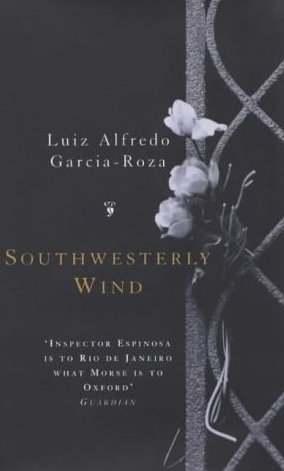
I bought a copy of Luiz Alfredo Garcia-Roza's SOUTHWESTERLY WIND from Unity Books earlier in the week, so that will be one of my two South American books (Brazilian author, set in Brazil). In SOUTHWESTERLY WIND, Chief of the Copacabana precinct Espinosa is more than happy to interrupt his paperwork when a terrified young man arrives at the station with a bizarre story. A psychic has predicted that he will commit a murder, it seems, and the prediction has become fact in the young man's mind. It's a case more appropriate for a psychiatrist or philosopher, but, rising to the challenge as usual, Espinosa slowly enters the web of a psychologically conflicted man. As the weather changes and the southwesterly wind - always a sign of dramatic change - starts up, what at first seems like paranoia becomes brutal reality. Two violent murders occur and their only link is the lonely, clever man who has sought Espinosa out a few days earlier for help.

I had actually just ordered another book in the Espinosa series (THE SILENCE OF THE RAIN) from the library the day before, but as I want two different authors from two different countries in South America for the 2010 Global Reading Challenge, I won't be using that for the challenge itself. So I'm still on the lookout for another good South American-set (and preferably, written by a South American) crime novel - not from Brazil. Any ideas or recommendations?

In terms of Antarctica, I have ordered a couple of books from my local library; THE ICE LIMIT by Douglas Preston & Lincoln Child, and ICE STATION by Matthew Reilly - the authors being from different countries as well.

-----------------------------

So that's where I'm at, in terms of the other four continents for the 2010 Global Reading Challenge. In total, 9 of 14 books down. Two each from South America and set in Antarctica, and one from/set in Asia, to go.

Have you read any of these books or authors? Thoughts and comments welcome.

Friday, March 26, 2010

2010 Global Reading Challenge: interim report (Africa, Asia, North America)

Like almost 100 other book bloggers and keen readers around the world (most of them crime and thriller fiction afficianados), I am participating this year in the 2010 Global Reading Challenge, a web-based initiative sparked by fellow crime fiction enthusiast and blogger Dorte Jakobsen of Denmark-based DJ's Krimiblog.

The aim of the 2010 Global Reading Challenge is to encourage participants to read books from (or set in) a wide variety of countries, in the coming year. Participants sign up on the website - here - and then attempt one of three levels of reading challenge over the next 12 months:
  • Easy Challenge: read one novel from each of six continents (Africa, Asia, North/Central America, South America, Europe, Australasia) in 2010 - trying to find novels/countries/authors that are new to the reader;
  • Medium Challenge: read two novels from each of the six continents, trying to read and review novels from 12 different countries if possible; and
  • Expert Challenge: as above, plus two novels set in Antarctica.
Three months into the year, and I'm going along okay with the Expert Challenge, having tried several new authors, and books from or set in several countries. I have however been a little slack on posting reviews thusfar, so I thought I'd do something of an interim round-up today, with longer reviews and commentary on each book to follow in due course.
AFRICA (continent completed)This year I have read two books set in Africa, both from authors that are new-to-me; THE ANUBIS SLAYINGS by PC Doherty (set in Ancient Egypt), and A DEADLY TRADE (set in modern-day Botswana).
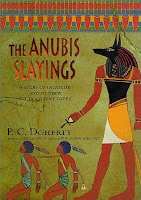
PC (or Paul) Doherty is the author of several acclaimed mystery series set in different historical periods, including the Sorrowful Mysteries of Brother Athelstan, the Hugh Corbett Medieval Mysteries, and the Canterbury Tales of Mystery and Murder. I picked up a copy of THE ANUBIS SLAYINGS, the third book in Doherty's Ancient Egypt series starring Lord Amerotke, while travelling through Egypt in January, from a bookstore in Luxor (ancient Thebes).
In THE ANUBIS SLAYINGS, a series of grisly slayings ignite passions in Pharoah’s Egypt. Then there is a daring theft of Egypt's most valued national treasure. Is it the work of humans or has the god Anubis come to earth intent on sabotaging peace negotiations with the dreaded Mitanni? Only Amerotke, wise and trusted judge of the powerful female Pharaoh, Hatusu, can sort through the tangle of intrigue that surrounds the killings and discover the truth.

I enjoyed this book a lot, and will be looking to read more of Doherty's Ancient Egypt series. I was reading it in Egypt, having just travelled through many of the areas mentioned in the book, and having just learned quite a bit about the Ancient Kingdoms, hieroglyphics, gods, traditions etc - so it was great to see the accuracy in Doherty's work, and they way he wove quite a lot of setting and history in, without overwhelming the reader with detail, or suppressing/slowing what is a well-plotted story. In comparison, I also picked up another Ancient Egypt-set book, THE TREE OF LIFE by Christian Jacq, and found the writing far inferior (I haven't actually finished it yet, putting it aside and not yet getting back to it).

Michael Stanley is the pen name of the crime-writing tag-team of retired South African-born professors Michael Sears and Stanley Trollip, and A DEADLY TRADE is their second novel. Set in Botswana, and bringing back their food-loving Detective "Kubu" Bengu, this book is sold as THE SECOND DEATH OF GOODLUCK TINUBU in North America.

A mutilated body found at a tourist camp near the Namibian border becomes even more of a mystery when Kubu and his fellow policeman discover the victim, Goodluck Tinubu, was killed during the Rhodesian war thirty years before. Trying to solve this modern-day murder entwined with the past becomes even more complex for Kubu and his colleagues when hints of international drug-running, horrific war crimes, and political pressure, all arise. Then the criminals turn their attentions to Kubu’s own family, and the rotund detective realises that the stakes are much higher than just closing the case.

I really enjoyed this book, and gave it a 3 1/2 star rating (3 stars is 'enjoyable') for a review appearing in the April issue of Good Reading magazine. Kubu (nicknamed because his manner and build resembles a hippopotamus - seemingly slow and serene but deadly when roused) is a delightful main character, and I'm looking forward to going back and reading their debut, A CARRION DEATH, when I find the time.

ASIA (1 of 2 books read)
For my first book in the Asian leg of the 2010 Global Reading Challenge, I purchased a copy of John Burdett's BANGKOK EIGHT from the Kuala Lumpur airport, when on a stopover on the way home from Cairo to Auckland in January. I'd been looking for some Malaysian crime, given my location at the time, but Thailand was the best I could do from the airport bookstore.

In the end, I was stoked that I ended up picking up Burdett's debut, which introduces his unique hero, Thai police detective Sonchai Jitpleecheep, a fair-skinned Thai and a devout Buddhist who commutes daily between the sacred precepts of his religion and the profane delights the city has to offer.

In BANGKOK EIGHT, Jitpleecheep's partner and 'soul brother' is killed when the pair come across an African-American marine sergeant locked inside a Mercedes with a maddened python and a swarm of cobras. Sworn to vengeance, Jitpleecheep, works his into the moneyed underbelly of Bangkok, where desire rules and the human body is as custom-designable as a raw hunk of jade - and where Sonchai eventually tracks the killer, a predator of an even more sinister variety.

Quite simply, BANGKOK EIGHT is one of the best debut novels I've read in a long time. Both the characters and the writing is fresh and original, and Burdett does a great job weaving both the halluconigenic and contradictory atmosphere of Bangkok, and some interesting philosophical questions, into the exciting storyline. On returning to New Zealand, I immediately went out and got my hands on some more of Burdett's series featuring Jitpleecheep; BANGKOK TATTOO and BANGKOK HAUNTS. I'm looking forward to reading them, but won't use them for my second Asian novel in the 2010 Global Reading Challenge, as I want to use a different country, and different author for the Expert Level.

I already have several other 'Asian' options in my TBR pile however, including: A BALI CONSPIRACY MOST FOUL , the Indonesia-set second 'Inspector Singh' novel from Singapore-based writer Shamini Flint; SINGAPORE SLING SHOT by Andrew Grant - a thriller set in Singpore written by a New Zealander who has spent a lot of time in the region; and THE CASE OF THE MISSING SERVANT by Tarquin Hall (India-set detective fiction).

NORTH/CENTRAL AMERICA (continent completed)
Perhaps unsurprisingly, I have read several North American novels already this year. The two I am using for the challenge are a thriller by Canadian author Linwood Barclay, and a detective tale set on the Navajo reservation, by the legendary Tony Hillerman - my first taste of Hillerman, who I had been meaning to read for a while. I wanted to pick a US setting and author that was new to me, rather than an LA or New York set novel.

I've also read great crime/thriller fiction from the likes of Robert Crais (THE FIRST RULE) and Lee Child (61 HOURS) so far in 2010, among other North American authors.

In NEVER LOOK AWAY, reporter David Harwood’s wife Jan vanishes from a popular theme park. As if that wasn't bad enough, when the police can’t find any evidence of Jan ever being at the park, the begin to suspect David. A body discovered in a shallow grave increases the pressure, and David must dig into an unclear past to uncover the perhaps unpalatable truth about the sedate life he thought he was living.

I thought NEVER LOOK AWAY was another great 'domestic thriller' from Barclay, who has shown a masterful hand with these 'everyday person gets the rug pulled out from under them' type of tales, over his past few books. You can read a short review I did of this book for Latitude magazine, here.

As I said above, Tony Hillerman's tales (featuring Joe Leaphorn and Jim Chee) have been on my 'to read' list for a while. He is one of those modern 'classic' authors that I have been meaning to get around to, in amongst all of the new and recently-released books (others in that category for me include Joseph Wambaugh, Sarah Paretsky, Ed McBain, Walter Mosley, and Sue Grafton). I picked up a copy of A THIEF OF TIME from a second-hand store in my hometown of Richmond, Nelson, when I was back visiting family in January.

In A THIEF OF TIME, a noted anthropologist vanishes at a moonlit Indian ruin where pot hunters ("thieves of time") ravage sacred ground for profit. When two corpses appear amid stolen goods and bones at an ancient burial site, Navajo Tribal Policemen Lt. Joe Leaphorn and Officer Jim Chee plunge into the past to unearth the astonishing truth behind a mystifying series of horrific murders.

I really enjoyed A THIEF OF TIME, and was glad I'd finally got around to reading a book by Hillerman. It definitely won't be the last. I've always been interested in Native American culture, and I've travelled through Southwest USA, and visited Monument Valley and some of the surrounding area in Nevada, Arizona, and Utah - so I enjoyed the setting as well as the good mystery storyline. It was my first Hillerman novel, but definitely won't be the last.

-----------------------------

So that's where I'm at, in terms of three of the continents for the 2010 Global Reading Challenge. I will post the second half of my interim update over the weekend.

Have you read any of these books or authors? Thoughts and comments welcome.

Kiwi authors recently publishing (only) overseas

Regular readers of this blog will have 'heard' me rail against the way quality Kiwi crime and thriller writers have been overlooked and undervalued - particularly by our own media, festival organisers, book prize judges, booksellers, and therefore readers - both now and in the past.

I am somewhat hopeful that things are beginning to change, little by little - with several local crime and thriller authors now being published and supported by the 'big publishers', and seemingly getting increased exposure in terms of both the media (reviews and interviews) and booksellers' shelves. Would I like to see more support? Yes, of course. But things do seem to be (slowly) heading in the right direction.

Already this year we have seen three Kiwi-penned, Kiwi-set crime and thriller novels break onto the local bestseller list, and one, Paddy Richardson's HUNTING BLIND, hit #1. The authors involved (Vanda Symon and Paul Cleave, along with Richardson) have also (deservedly) had what seems like better media coverage than in the past. Now if we could just get a few more authors events, a bit more in-store promotion, and a few more Kiwis learning about the books so they're more open to giving them a go...

But along with the current Kiwi authors publishing in New Zealand (and overseas), there are also some Kiwi authors who are only publishing overseas (exacerbating their 'overlooked' status downunder), even if they live here. Today I want to focus on the most recent books (released overseas in 2009, but not yet in New Zealand) of two such authors; Andrew Grant and Colin D. Peel. A bit of a mea culpa on my part - until very recently I hadn't included either author's latest works on my "Recent Kiwi crime, mystery, suspense, or thriller releases" sidebar. I was guilty of overlooking them myself.


SINGAPORE SLING SHOT
by Andrew Grant
This is the second thriller in an Asia-set series, starring former British secret agent and assassin Daniel Swann, written by 'Andrew Grant' (the thriller writing pen name of Christchurch-based Grant Shanks, who writes in a variety of genres), and follows on from 2007's DEATH IN THE KINGDOM.

Overall it's the fifth thriller Shanks has penned under the 'Andrew Grant' name over the past decade-plus. His first two thrillers, HAWK (a local bestseller) and TYLER'S GOLD, were set in New Zealand. His award-winning third thriller, MESQUITE SMOKE DANCE, was an American police psychological thriller set in Texas.

According to the publisher's blurb, "In SINGAPORE SLING SHOT, former British agent Daniel Swann is living in semi-retirement in Hong Kong when he receives a call for help from his old friend, Thai drug lord Sami Somsak. Sami’s stepbrother and his family have been murdered, and Sami’s brainchild, the $6-billion Intella Island project, Singapore’s largest offshore construction, is in jeopardy. When Swann attempts to retrieve vital evidence hidden in Fort Siloso, a bloody gun battle erupts on Sentosa island, and staid, quiet Singapore becomes a raging battlefield.

Chinese Triads, a ruthless Colombian drug cartel ,and a shipping container holding $2 billion dollars converge on Singapore as Swann and his associates battle to save the Intella Island project and seek their revenge on Singapore’s unscrupulous Thomas Lu - the man they call The Undertaker."

I understand that SINGAPORE SLING SHOT is likely to be released in New Zealand in the coming months, which is great news. By the way, you can view an interesting 2007 interview with Andrew Grant, on Channel News Asia, about his first fast-paced Asian-set thriller, here.


THE RYBINSK DECEPTION
By Colin D. Peel
Another New Zealand-based author who has published several thrillers overseas, but is fairly overlooked here in New Zealand, is Colin D. Peel, who lives on "a remote peninsula" in the northern part of the North Island.

Peel has published more than twenty novels since 1972, with most being published by UK-based Robert Hale Publishing (who over the years have also published other NZ-based crime/thriller writers like Freda Bream). Several of Peel's novels have also been published in the USA by St Martin's Press, and overall his books have been published in 10 countries, and translated into six languages. There are also audio-book and large print versions. Peel's passion for 'international thrillers' can possibly be tied to his earlier career designing weapon systems in the aerospace industries of Europe and North America. According to his website, his stories "range from terrorism and nuclear-testing to gun-running, the heroin business, diamond smuggling and the illegal market for plutonium."

Peel's latest book, released in 2009, is THE RYBINSK DECEPTION. The publisher's blurb states: "David Coburn: working undercover, but profiting from the activities of the remote outpost he is supposed to have infiltrated. Hari Tan: sapphire trader turned modern-day pirate preying on shipping in the Malacca Strait. Heather Cameron: UNICEF nurse struggling to prevent the exploitation of children on a beach of toxic waste. Luther O'Halloran: nuclear defense analyst on assignment to the US National Counter-Proliferation Center. These are the four people whose futures hang in the balance when the crew of a Russian supertanker are found dying of radiation poisoning. There is a conspiracy so menacing that unless Coburn can halt an attack on a warship in the Yellow Sea, the US will be forced into conflict with an enemy having a nuclear arsenal that this time will be frighteningly real."

It certainly sounds intriguing (and takes me back to my days of reading the likes of Alistair MacLean, Desmond Bagley, and Tom Clancy, growing up), and I will be trying to get my hands on a copy soon.

-------------------------------------

So have any of you read any of the thrillers penned by Andrew Grant (the New Zealand-based one - Lee Child's little brother is now also writing thrillers under the name Andrew Grant, which is understandable given that is his real name) or Colin D. Peel? If so, what did you think? Do either of the books above intrigue you? Thoughts and comments welcome.

Thursday, March 25, 2010

9mm interview: Paddy Richardson

As I noted last week, I have now launched a new series feature for the Crime Watch blog - 9mm: quickfire interview will consist of the same nine quesions (9 MurderMystery questions) put to an ongoing series of New Zealand and international crime, thriller, and mystery authors.

The series kickstarted with an international flavour on Monday, with the very first 9mm interview being with international thriller writing mega star Lee Child, who is touring the UK, Australia, New Zealand, and the USA over the next couple of months, in support of his 14th and latest Jack Reacher novel, 61 HOURS. You can read that first 9mm interview here.

For the second in what is intended to be a regular series of interesting author interviews, I put the 9mm questions to Dunedin-based crime writer Paddy Richardson, author of the psychological thrillers A YEAR TO LEARN A WOMAN, and the recently released #1 bestseller HUNTING BLIND. I've covered Richardson and her work a bit on Crime Watch, especially lately with the release and success of HUNTING BLIND, and have written reviews of her thriller for Good Reading magazine, but this was the first time I'd actually interviewed her.

So without further ado, here is the first 9mm interview with a Kiwi crime or thriller writer (I will be trying to bring you a great mix of local and international authors over the coming weeks and months).

Who is your favourite recurring crime fiction hero/detective?Kate Atkinson's Jackson Brodie

What was the very first book you remember reading and really loving, and why?
BLACK BEAUTY. Maybe it was because I was going through an 'I want a horse' phase but I remember being drawn totally into the story and crying over it!

Before your debut crime novel, what else had you written (if anything) - unpublished manuscripts, short stories, articles?A few poems, some short stories (read on National radio and published in journals and two collections, CHOICES and IF I WERE LEBANESE). And a novel THE COMPANY OF A DAUGHTER.

Outside of writing, and touring and promotional commitments, what do you really like to do, leisure and activity-wise?Swimming, gardening, cooking, travelling, reading, going to concerts, films, plays, listening to music.

What is one thing that visitors to your hometown should do, that isn't in the tourist brochures, or perhaps they wouldn’t initially consider?Driving slowly around the Otago Peninsula, walking tracks, visiting beaches with a picnic lunch in the car.

If your life was a movie, which actor could you see playing you?Helen Mirren

Of your books, which is your favourite, and why?A YEAR TO LEARN A WOMAN. Because I learned a lot from it in terms of moving a plot along and creating character over the duration of a novel.

What was your initial reaction, and how did you celebrate, when you were first accepted for publication? Or when you first saw your debut story in book form on a bookseller’s shelf?
My first ever publication was a poem in Landfall. I started by writing poetry because I had small children at the time and I didn't ever have much longer than a few minutes to get down the odd line. I remember staring at the acceptance letter in stunned and amazed silence. I've had lots of celebrations with wine and friends since then but I remember that vividly because it gave me the confidence to keep going.

What is the strangest or most unusual experience you have had at a book signing, author event, or literary festival?
The most awful was when I was doing a short story reading and found out half -way through that I was missing one of the pages. The best was when a stranger rushed up, threw her arms around me and told me she'd loved my book.


Thank you Paddy Richardson. We appreciate you taking the time to talk with Crime Watch.

-----------------------------------------------
So what do you think of the 9mm format? Of Paddy Richardson's answers? Have you read any of her thrillers? If so, what did you think? Feedback, thoughts, and comments greatly appreciated.

Wednesday, March 24, 2010

Review: THE BLACK MONASTERY by Stav Sherez

THE BLACK MONASTERY is Stav Sherez's second crime novel, following his debut THE DEVIL'S PLAYGROUND, which was shortlisted for the CWA John Creasey Dagger back in 2005 (there was a five-year gap, and a change in publishers, between Sherez's first and second novels).

Faber & Faber's blurb for THE BLACK MONASTERY says, "People used to come to the small Greek island of Palassos for the historic ruins. Now they come to take drugs and party all night. But the horrific ritual murder of a boy in the grounds of an old monastery brings back memories of two similar deaths in the mid-1970s, and of a mysterious cult who once dwelt in the island’s interior, memories the island has tried hard to forget.

As Nikos, the police chief who has been persuaded back to his home island for the final years of his career, begins his investigation, two Brits arrive on the island: the bestselling crime writer Kitty Carson, on a break from the pressures of work and her strained marriage, and Jason an aspiring writer with a secret of his own. When a second body is discovered - further endangering the island’s lucrative tourist trade - these three characters are thrown together, as the gruesome secrets of the past begin to emerge."

Sherez's style leans towards literary at times, perhaps even becoming over-wordy occasionally, but I really enjoyed the read. He evokes a nice sense of the Greek Island setting, and the changes some such places have endured in the past decades, shifting from history-filled rural getaways to booze and drug-filled party places for yobbish British tourists.

Nikos, Kitty and Jason are an interesting trio of main characters, and Sherez does a nice job giving each of them some substance, and creating tension, drama and intrigue both between them, and between each of them and other characters. The mystery plot bubbles away, keeping the reader interested, and overall I found it a book well worth reading.

Recommended for those that like a bit of atmosphere, history, and societal comment or insight woven into their mysteries.

This book was read and reviewed for Dorte Jakobsen's excellent 2010 Global Reading Challenge.

A modern-day Sherlock Holmes?

Recently it was announced that filming was underway on a new BBC television series that will turn the iconic character of Sherlock Holmes into a modern-day 2010s-era crime fighter. The Baker Street dwelling detective (he will still live at the famous 221B address) will no longer be making deductions amongst the horse carriages and gas lamps of 1890s London, but on the gritty streets of the modern-day city. The series of 90-minute telemovies is touted by the BBC as "a thrilling, funny, fast-paced take on the crime drama genre set in present day London."

For more than 100 years, Sir Arthur Conan Doyle's eccentric drug-taking, violin playing, pipe-smoking sleuth has fascinated readers and viewers around the world. There have been many interesting film and TV adaptations of the stories, including of course the recent Golden Globe-winning performance by Robert Downey Jr as the iconic detective.
Other productions, e.g the acclaimed medical drama House, have clearly been inspired by the Holmes character (Hugh Laurie plays Gregory House, an eccentric, highly intelligent, but arrogant and difficult to deal with, flawed individual, who using logic, deduction and reasoning is able to solve medical mysteries). But how do you feel about the characters of Holmes and Watson themselves being brought squarely into the modern world?

The new series, Sherlock, is set in the 21st century, and will reportedly have modern events and concerns woven into the stories. The brainchild of Doctor Who writer Steven Moffat and actor and writer Mark Gatiss, star of The League of Gentleman. Holmes will be played by Benedict Cumberbatch (Starter for Ten), pictured left, while Martin Freeman (The Office, Love Actually) will be Dr Watson.

Although none of Conan Doyle's original plots will be used (even in adapted form for modern times), Moffat has said that "everything that matters about Holmes and Watson is the same". That will of course, in the end, be for the viewers to decide. Piers Wenger, Head of Drama, BBC Wales, said in a press release that: "Our Sherlock is a dynamic superhero in a modern world, an arrogant, genius sleuth driven by a desire to prove himself cleverer than the perpetrator and the police, everyone in fact."
You can read more information about the series here. It has already been sold to other countries like the USA and Australia, and will be broadcast later this year.

So what do you think of bringing Sherlock Holmes into the modern world? Is it a sign of the universality and importance of such characters (like what happens with various adaptations of Shakespeare's plays)? Or is the BBC just trying to make money off the name, even though none of Conan Doyle's tales will be used? Thoughts and comments appreciated.

Tuesday, March 23, 2010

Damn you, Unity Books!

As some readers of this blog may know, Unity Books is a highly-regarded independent bookstore in New Zealand, with stores in Auckland and Wellington. The High Street store is fairly close to my work, in the Auckland CBD, so I pop in now and then.

From a crime fiction perspective, for a relatively small store, Unity Books (Auckland) has a very good selection of international crime fiction. They don’t overwhelm their crime fiction section, which is in a prime position right near the entranceway and the cash registers, with stacks and stacks of the big name bestsellers; instead they have a pretty wide selection, especially given their space. On their shelves you will find everything from hardcover reprints of classic Raymond Chandler novels, to a plentiful selection of lesser-seen translated fiction (i.e. not just the Swedes, but many books from the likes of Camilleri, Boris Akunin, Luiz Alfredo Garcia-Roza, etc).

Especially for their size, they are a great, great store when it comes to getting your hands on some interesting crime fiction. Unfortunately, as I noted when I conducted a bookstore review late last year, this high standard and wide selection didn’t extend as much to New Zealand crime and thriller writers, which was a real shame.

Today at lunch I found myself browsing Unity Book’s shelves once again – looking to see whether something caught my eye for Dorte’s 2010 Global Reading Challenge. I was really only in need of South American crime fiction, but was, as always, looking wider anyway. It’s not like I need more books – my TBR pile is ridiculously large already, both in terms of recent/upcoming releases for review, and older titles and authors from New Zealand and overseas that I’d like to get around to at some point. But I always like the vibe of good bookstores, and you never know when you might find a gem or two. Incidentally, Unity Books is also in the middle of a fairly large sale of some of their older or excess stock – I picked up a handful of crime fiction titles a couple of weeks ago at very, very good prices, and then when I went in today noticed they had increased the discounts even further – they now have a 50 % off sale (that’s 50% off the already heavily reduced sale price), so some excellent books can be had for as little as NZ$4-6. So, along with the excellent crime section, I found myself browsing the sale tables. You never know what you may find.

And as is often the case with book-lovers like myself, even when you wander into a store with no set motivation to buy a book, or the thought you’ll ‘just maybe get one’, with a big sale on, things can quickly change. I ended up walking out of the store with eight books in tow. Oops.

In my defence, most of my purchases were translated crime fiction which I haven’t seen readily available elsewhere (that’s no slight on other very good NZ bookstores – remember, I haven’t visited you all), so I could at least partially justify it as helping with Dorte’s challenge, or at least improving the diversity of my personal collection (since I’d already finished off some of those continents) – which is a good thing. After all, since I want others overseas to try more New Zealand crime fiction, I should of course return the favour too. So, what did I get? Here’s the line-up:
  • SOUTHWESTERLY WIND by Luiz Alfredo Garcia-Roza (Brazil);
  • THE CASE OF THE MISSING SERVANT by Tarquin Hall;
  • STRANGE LOYALTIES and THE PAPERS OF TONY VEITCH by William McIlvanney (Two classic ‘Laidlaw’ novels from the Scottish literary master, and father of Liam);
  • PLAYING FOR THRILLS by Wang Shuo (China);
  • THE PROPHET MURDERS by Mehmet Murat Somer (Turkey);
  • CINNAMON KISS by Walter Mosley (USA – has been on my ‘classic author - I need to read some of his books’ list for a while); and
  • CONAN DOYLE by Andrew Lycett
And all for less than what it would normally cost two buy two books (or less than the cost of the latter book, a nice big hardcover biography, by itself), making my little spending spree even more bearable.

As a side note, when I was in the store a couple of weeks ago (I then picked up a copy of Neil Cross’s NATURAL HISTORY, amongst other books), I noticed that Unity Books seemed to have far more NZ crime fiction than when I’d reviewed them late last year. All four Paul Cleave books were available (THE KILLING HOUR was on the sale table, and the other three in the crime section), as were two of Vanda Symon’s books, Alix Bosco’s CUT & RUN, Liam McIlvanney’s ALL THE COLOURS OF THE TOWN, multiple copies of Lindy Kelly’s BOLD BLOOD, three Neil Cross titles, plenty of Ngaio Marsh (including her autobiography BLACK BEECH AND HONEYDEW), and some other Kiwi crime. I may have to re-review them.

As I was paying that time, I said to the lady behind the counter that they had a great crime section, and that it was also nice to see plenty of Kiwi crime books there too. And you know what she said? “Yeah, I saw a while ago that we’d got a mention on some obscure blog, and they’d come in and done this undercover review and said we hardly had any New Zealand crime writers, so I got some more in.”
It was a strange moment. Not wanting to bust my ‘cover’ (haha), I just thanked her for the books, and walked out, with a smile on my face.

BREAKING NEWS: A further Lee Child event in Auckland confirmed!

Further to my post of last week confirming the dates and specific details of Lee Child's mid April tour of New Zealand, there has now been a second public event officially added to his Auckland itinerary!

So those in the Auckland area that can't make it along to see Lee Child speak at his Takapuna event on Sunday 11 April at 7pm, can instead head along to a "Books and Bubbles" event at the Ellerslie Racecourse the next evening at 6:15pm. Of course if you can't make it along to either of these public events, there are six separate book signings on the Sunday, Monday and Tuesday (11-13 April) that Lee Child is in Auckland. You can see the list of book signings here.

The Books and Bubbles events are an initiative of Paper Plus, one of the major bookstore retail chains in New Zealand. Often these events are hosted by Paper Plus's celebrity book reviewer Kerre Woodham, but in this case it will be hosted by bestselling author, TV and radio host Justin Brown. The tickets are NZ$35, and include a glass of 'bubbles' on arrival, and a goodie bag to take away. Lee will speak, and the audience will have an opportunity to ask questions, and get books signed etc. You can purchase tickets for this event from here.

I will be heading along to the Takapuna event, which I understand is being hosted by the always-excellent Graham "Bookman" Beattie - but this second Auckland event looks great as well. And it's great to see Kiwi crime and thriller fiction fans get even more of a chance to meet one of the biggest names in the business.

With this additional confirmed Auckland event, the full list of Lee Child's tour events and book signings is now as follows:
EVENTS:

  1. Auckland - Sunday, 11 April, 7pm: Rosmini College Auditorium, 36 Dominion St, Takapuna. Tickets $15 from http://www.eventfinder.co.nz/ or at door
  2. AUCKLAND - Monday, 12 April, 6.15pm: Ellerslie Events Centre. Tickets $35 available online at booksandbubbles.co.nz Includes glass of bubbles on arrival (added event)
  3. Wellington - Tuesday, 13 April, 6pm: Duxton Hotel. Tickets $20 (includes glass of wine) phone 0800 50 50 90
  4. Nelson - Wednesday, 14 April, 6pm: The Boathouse.Tickets $5 tickets from Page & Blackmore booksellers
  5. Christchurch - Thursday, 15 April, 7pm: James Hay Theatre, Christchurch Town Hall. Tickets $15 from Ticketek on sale from 24 March
  6. Dunedin - Friday, 16 April, 6.30pm: Dunedin Public Art Gallery. Tickets $40 single; $70 double (includes wine-tasting and nibbles) from Paper Plus, George St
STORE SIGNINGS:
Sunday, 11 April (Auckland)
11am-12 noon: The Warehouse, Albany
1pm-2pm: The Warehouse, Westgate
2.30pm-3.30pm: The Warehouse, Sylvia Park

Monday, 12 April (Auckland)
1-1.30pm: Dymocks, Broadway, Newmarket

Tuesday, 13 April (Auckland)
12.00-12.30pm: Borders, Queen St
1.00-1.30pm: Whitcoulls Corner, Queen St

Wednesday, 14 April (Wellington)
12 noon-12.30pm: Whitcoulls, Lambton Quay
1pm-1.30pm: Borders, Lambton Quay

Thursday, 15 April (Christchurch)
11.30am-12 noon: Borders, Riccarton Mall
12.00pm-12.30pm: Paper Plus, Riccarton Mall
1pm-1.45pm: Whitcoulls, 111 Cashel St

Friday, 16 April (Dunedin)
12 noon: Whitcoulls, 143 George St
1pm: Paper Plus, 251 George St
------------------------------------------
So, NZ-based Crime Watch readers, who's heading along to one of these events or book signings?

Monday, March 22, 2010

9mm interview: Lee Child

As I noted a couple of days ago, I have now launched a new series feature for the Crime Watch blog - 9mm: quickfire interview will consist of the same nine quesions (9 MurderMystery questions) put to an ongoing series of New Zealand and international crime, thriller, and mystery authors.

And, as promised, the very first 9mm interviewee is international thriller writing mega-star Lee Child, whom I spoke to last Thursday via telephone. Lee Child is of course the British-born, New York-based author behind the phenomenonally popular Jack Reacher books. After being made redundant from his British television job in the mid 1990s, he decided to become a writer of 'American thrillers'. It just goes to show that from crisis comes opportunity, because since his debut KILLING FLOOR was released in 1997, his books have sold more than 16 millions copies, and hit #1 on several bestseller lists around the world.

He is touring the United Kingdom, Australia, New Zealand, and the USA in the coming couple of months, in support of the 14 and latest Reacher novel, 61 HOURS. You can see the detailed schedule of his appearances in all of those countries, here.

We spoke for an hour about a wide variety of things - and other parts of my interview will be woven into magazine (and perhaps newspaper) articles in the coming weeks. But for now, here is the very first Crime Watch 9mm quickfire author interview.

Who is your favourite recurring crime fiction hero/detective?
There’s a lot of series of which I read every instalment. Um, the best ever was probably the Travis McGee series by a guy called John D. MacDonald. Twenty-one books long, set in Florida. And it’s just a great… you have your favourites amongst the 21, but there’s no weak ones, it’s just a very good series.

What was the very first book you remember reading and really loving?
I would think it was probably one of the Enid Blyton books, the Famous Five, almost certainly. They were the first books, proper books that I ever read without pictures in them. And I was probably about five at the time, and they were the ones that I really remember, and devoured one after the other. Very, very instructive actually, inasmuch as she was doing things that we still have to try and do. One is telling an exciting story, and the other is giving you what you’d want to have yourself [as a reader], that you weren’t getting. I don’t know if you remember the Famous Five… there were no parents in the story, it was just the kids having fun on their own, and they weren’t harassed or told off by the parents at all. So it was a very early introduction to wish fulfillment

Before your debut crime novel, what else had you written (if anything); unpublished manuscripts, short stories, articles?
No, nothing at all. KILLING FLOOR was the very first thing I ever wrote, and yeah you know I’m not the sort of guy – if I’d had unpublished things I would have found a way to use them, because it’s a business. You can’t afford to waste effort.

Outside of writing, and touring and promotional commitments, what do you really like to do, leisure and activity-wise?
I’m very passive. I know New Zealand is very active, people are very active there, they’re hiking, or sky diving, or bungee jumping… I sit down and read. Or I watch baseball on television or listen to music. My favourite position for any kind of leisure activity is horizontal.

What is one thing that visitors to your city should do, that isn't in the tourist brochures, or perhaps they wouldn’t initially consider?
I would say walk from side to side. You know [Manhattan] is a narrow island, and you can easily walk from the East River to the Hudson, and you could do it in a couple of hours, stopping along the way for whatever. Just pick a random street, and walk from one river to the other, and you’ll see plenty of stuff that you wouldn’t otherwise see

If your life was a movie, which actor could you see playing you?
Um... I think maybe Jeremy Irons... I’ve seen him in roles where he sort of reminds me of myself, so he would be alright, yeah. I think that would work for me anyway.

Of your books, which is your favourite, and why?
I think they’re all memorable for one reason or another. Obviously the first one, KILLING FLOOR, is a sentimental favourite because it’s what started everything, and then you’ve got – I would probably skip ahead to the seventh one, which was PERSUADER, and then the one that came out a couple of years ago, NOTHING TO LOSE. That was a pretty controversial book here in America, because it took a very pacifist stance about the Iraq War, and you know very critical of the Bush Administration. And that caused me a lot of trouble in the States, but it’s a book that I’m very proud that I wrote, and I will always stand by... to say that the military is being used for short term political gain, is not anti-military, it’s anti-short term politics. But people who are uncomfortable with the truth always prefer to attack the messenger rather than look at the issue.

What was your initial reaction, and how did you celebrate, when you were first accepted for publication?
Well, I was actually in a pub when I heard. I was at a pub doing a quiz night. And my agent phoned home, and my daughter said ‘he’s out at the pub’, so he phoned the pub, and gave me the news. And so yeah, I bought a round of drinks, which was the first time I’d done that in a long time, because I was out of work.

What is the strangest or most unusual experience you have had at a book signing, author event, or literary festival ?
A real strange one was after one; I did the event, I was flying out really early the next morning, so I got up at 6 in the morning, and room service brought me coffee. And I sat down and took a sip of my coffee, and my cell phone rang. And the voice on the other end said "are you enjoying your coffee?" So it was some fan or something, and I have no idea how that happened, but that was a new definition of stalker for me.

Thank you Lee Child. We look forward to seeing you on tour.

------------------------------------------

So what do you think of the 9mm format? Of this specific interview? Of Lee Child's answers? Feedback, thoughts, and comments on the first Crime Watch 9mm quickfire author interview would be greatly appreciated.

W is for WHAT REMAINS BEHIND

Continuing the fun series started by fellow Anzac book blogger Kerrie at Mysteries in Paradise, where each week bloggers from around the world write about a notable crime fiction novel or author (first name or surname) starting with a particular letter of the alphabet, this week is the turn of “W”.

Given that in my "A" post I said I would regularly sprinkle my contributions with a New Zealand-related post or two, this week I am including a post on Kiwi mystery writer Dorothy Fowler's debut novel WHAT REMAINS BEHIND.

Fowler lives on beautiful Waiheke Island, a laidback and somewhat rural gulf island in the Auckland harbour, about half an hour by ferry from the main downtown area. She has worked in a variety of jobs over the years, including renovating houses and boat building, but is now indulging her passion for writing.

You can read more about Dorothy Fowler here. A few months ago, Fowler told me she was already on the second draft of the next Chloe Davis novel, which will be set on Waiheke Island. So hopefully we will have another Fowler novel later this year, or early next.

I wrote reviews of Fowler's debut for both Good Reading magazine (Australia) and NZLawyer magazine last year. Given that it is the longer, and more comprehensive, of the two reviews (the different magazines have different book review word counts), I'm reprinting the text of my NZLawyer review below.


What Remains Behind
By Dorothy Fowler (Random House/Black Swan, 2009)
Witi Ihimaera is a New Zealand literary icon thanks to stories such as Pounamu Pounamu and The Whale Rider, and famous throughout the world thanks to the award-winning film adaptation of the latter. But he’s also playing a key part in cultivating the next generation of local authors, through his leadership of the creative writing programme at the University of Auckland. And in July, one of his recent students, Dorothy Fowler, joined him in the ranks of published authors.

What Remains Behind is an archaeological mystery Fowler worked on while completing her Masters in Creative Writing, under Ihimaera’s tutelage. She was also mentored by award-winning novellist Emily Perkins during the course, which the Waiheke Island resident took after getting hooked on storytelling courtesy of an undergraduate creative writing paper taken as part of completing her degree in archaeology as a mature student.

Fowler’s debut combines her twin passions, centering as it does on a dig near a small rural town in the Kaipara. Chloe Davis is a contract archaeologist who has returned to her family-owned farm to excavate, before the farm is subdivided for lifestyle blocks, the ruins of a religious community that burned to the ground in the 1880s, killing several people. Already under time and budget pressure, Chloe and her team soon encounter local resistance, ranging from bar fights to sabotage and vandalism. Is someone worried that uncovering the past could upset the present? Chloe’s life and work is further complicated by the unknown motives of old acquaintances and interfering relatives.

The story switches regularly between Chloe’s present-day narration, and journal entries made by Charity, a young girl living in the isolated religious community in the lead-up to the tragedy. It’s a literary structure that could flourish or fall flat, but overall Fowler does a very good job, utilising the linked but 120-years-apart storylines to collectively build towards her novel’s denouement. Each has its own voice and language, different enough to seem authentic, without being overdone.

Fowler also creates a nice sense of authenticity with the small-town setting, filled with the spider-web of shared histories, and secrets past or present, that can be prevalent in a place where everyone knows everyone (or at least presumes they do). Fowler also shines with bringing the reader into the world of archaeology, striking a balance between enough details to fascinate and ring true, without overwhelming with technical jargon.

Depending on what sort of mysteries readers are used to, some may struggle with the slower pacing in the early part of the novel; Fowler employs a slow burn, with events unfolding leisurely until the final third of the novel. There’s a growing sense that something is not quite right with the excavation and the nearby town, rather than any sort of focused investigation being sparked by an early hook or crime.

Beyond the alternating narratives, the impact of history on the present is also a wider theme in What Remains Behind. Fowler weaves the colonial and more recent past into the fabric of the story, and things are brought together very well, and not in an entirely predictable way, in the latter stages. Overall, an enjoyable read and a promising debut from a new voice in New Zealand writing.
------------------------------------------

Saturday, March 20, 2010

Crime fiction a great way of looking at society? I agree with Ian Rankin, and here's why...

Following on from my post earlier in the week on Crime fiction as a window on culture and society, later in the week eminent Scottish crime writer Ian Rankin gave an interesting interview with German broadcaster, Deutsche Welle, which touched on some similar issues (hat tip to Graham Beattie of the excellent Beattie's Book Blog, and fellow EuroCrime reviewer Maxine Clarke, who also pens the crime-centric Petrona blog)

Ahead of a stop at Cologne literary festival LitCologne, the best-selling crime novelist spoke with Breandain O'Shea, about crime writing versus literary writing - and why they're not so different after all. You can read the full interview here.

When Liam McIlvanney (ALL THE COLOURS OF THE TOWN) was talking to me last year about the way in which it was Scottish crime writers, rather than literary writers, who had actually addressed the major changes in Scottish society during the 1980s and 1990s, he was of course referring in large part to Ian Rankin, and those that have followed the man considered by many as being at the very forefront of the 'explosion in Scottish crime writing'. As an interesting aside, Rankin himself actually credits McIlvanney's father William (a renowned 'literary writer', and author of the 'Laidlaw' series of detective novels) with being a key influence on his own writing.

"In the case of Scotland you had the added dimension that throughout the 1980s and the 1990s we had a growing campaign for a Scottish parliament," said Liam McIlvanney. And in that context, you had the feeling that there wasn’t a proper political forum for these issues to be aired and interrogated, and in a sense it was crime fiction that played quite a potent role, in that it gave the reader a place in which those political issues were explored."

Rankin says something similar in his interview with Deutsche Welle: "the best crime fiction today is actually talking to us about the same things big literary novels are talking about."

And this is something that I think is key; crime writing of course can be frivolous and fun, quick-reading light entertainment that is read, enjoyed, and forgotten. But it can also be about more than just the uncovering of a murderer, or the solving of a crime. Like Shakespeare, who wrote stories for the people (ie, 'popular' fictions), entertaining them with plot and character while providing enough underlying themes and insights into society and humanity that we'd still be talking about it in millions of classrooms all over the world several centuries later, modern day crime writers can, as Dennis Palumbo so eloquently put it, 'hold a mirror up to society'.

Crime writers shouldn't be treated as second-class citizens, to be looked down upon by the literati and academia as producing something 'less worthy'. For in fact, it is through popular storytelling that humans have always best learned about the world around them.

As a non-crime example, growing up as a teen in the 1990s, I honestly think that some of the best books addressing racial prejudice that I ever read, were not 'literary fiction', but the New York Times bestselling fantasy novels of R.A. Salvatore. Salvatore has a main character that is traditionally from an 'evil' side of the fantasy world racial divide (a dark elf), but is in fact good-hearted, loyal, courageous, and all of the things that the the heroes in fantasy novels usually are.

So in amongst the exciting storylines, battle scenes, and adventure, Salvatore also often touches on issues of racial discrimination and prejudice. Despite who he really is, the main character (Drizzt Do'Urden) is regularly faced with those who judge him based solely on the colour of his skin, and the reputation of those who 'look like him'. Salvatore doesn't write a book solely dealing with racial discrimination; he writes an exciting, plot-based tale that readers will love, while also weaving in such issues. And this is what the best crime writers do.
More than fifteen years on from reading my first Salvatore book starring his iconic dark elf, I may have forgotten exactly how each book ended, or the details of the plots, but what Drizzt had to go through, and how he approached a world filled with prejudice towards him, have stayed with me. I learned plenty about Martin Luther King, slavery, the treatment of colonial peoples, and modern-day ehtnic issues such as the Bosnian and Rwandan conflicts, throughout my many years of schooling (along with my general curiosity about the world, which leads to ongoing reading about all number of issues, etc). But I honestly think in some ways I learned almost as much from following the tales of a dark elf fighting his way through a fantasy land.

In my opinion, popular writers often address such issues even better than many so-called literary writers, because their books are about more than just society, and such issues. They are also interesting and exciting stories - through which issues and societal insights are shared. And in that way, some part of those insights (like Shakespeare), will stick with you long after the pages have closed. The best literary writers, of course, do this exceptionally well also. It's just that many others who are tagged as 'literary', and so automatically placed on a pedestal by some, shouldn't be quite so quick to look down their noses at their crime-writing cousins.

Or as Rankin says in his recent interview: "It was a problem for me in the early days, but only because I studied literature at university. I was doing a PhD in literature when I started writing my first Rebus novel. I wasn't that fond of crime fiction. I just happened to think a detective was a good way of looking at society, and of exploring a city. So when the first book was published and it went in the crime shelves, I went, "What the hell is this?" and I moved it to the literature section. I wanted it beside the people I was studying - Sir Walter Scott, Robert Louis Stevenson, Muriel Spark. But then I started to read crime fiction, and I liked it… Everything I wanted to say about the world, I could say within the crime format. So I thought, "Why the hell not?"

Indeed, everything you want to say about the world, you can say via crime fiction. And have your readers excited to turn the page, and learn more about not only what happens in the story, but the world it is set in. Our world.

Why the hell not?
Thoughts and comments welcome.

French writer sued for using real life setting in latest murdery mystery

This week there were news reports that French crime writer Lalie Walker is being sued by Village d'Orsel, the business which runs the iconic Marché Saint Pierre store in Paris; a 60-year-old landmark store in the Montmartre district, best known for its extensive selection of fabrics and low prices.

Walker set her latest novel, AUX MALHEURS DES DAMES (The misfortunes of the ladies), in the real life store. But the owners are not happy with Walker's tale of a crazed killer operating amongst the fabrics, even though the author is reported as saying she thought she was paying a nostalgic tribute to the "much-loved Parisian landmark".

According to the Guardian newspaper, Village d'Orsel is demanding €2m (£1.8m) in damages, arguing that certain passages in Walker's fictional depiction of a business rocked by threats, voodoo and staff abductions are defamatory. "No one can have anything to do with or talk about the Marché Saint Pierre without the authorization of the owner and the director," Robert Gabby, the store's director, told the website Rue89. "It's defamation."

The ex-lawyer in me is not quite sure what to think about all this - not being as familiar with French defamation law as I am with our New Zealand/Australian/UK common law versions. I'm not sure if the owners would have to show that the portrayal in the fictional book would have to cause 'right-thinking members of society' to now have a lower opinion of the real-life store, or expose the store to hatred, ridicule or contempt. And then, even if that were so, whether or how much real damage was actually done to its reputation.

It would seem strange for writers to not be able to use famous real life places as the settings for their books, for fear of being sued (if the owners didn't like the fact that in a fictional world something 'negative' was portrayed as happening there). How far would you draw the bow? As has been noted elsewhere, the Louvre didn't sue Dan Brown for setting a murder in THE DAVINCI CODE there. Would every book, film, or TV show that has ever set a murder in or around Central Park be liable for defaming what in real life can be a very pleasant place to wander? What about the thousands of other famous settings - no murders set in the Globe Theatre please, the tourists might not want to go there anymore?

But by the same token, I guess it could be argued that Walker could have just fictionalised the store under a different name? But where should you draw the line between fictionalising real life settings, and just using the real life ones?

In any case, I can't imagine the publicity is hurting either party (well, Village d'Orsel's actions might actually lower their reputation in the eyes of 'right-thinking' members of society more than anything Walker wrote in her book, but that's a whole 'nother matter), although I would guess Walker could do without the stress of legal proceedings. Hopefully the news story will help her sell some more books, in case she needs extra funds for legal fees.
That's the problem with such cases - they can just end up being a financial (as well as emotional) drain on parties involved, even if they prove in the end to have been a bit ridiculous.

You can read the full Guardian article here (hat tip to Bookman Beattie for the heads-up).

What do you think of Village d'Orsel's actions? Of Walkers choice to use an iconic real life store in her murder mystery book? Thoughts and comments welcome.

Friday, March 19, 2010

9mm - Crime Watch's new quickfire author interview series

After a little bit of thought, following my post last month, I am now officially launching Crime Watch's new series of quickfire-style author interviews.

The series is called 9mm, which doubles as a nod to the crime fiction theme of the interviews, while also referring to the structure; each quickfire interview will consist of the same nine quesions (9 MurderMystery questions) put to an ongoing series of New Zealand and international crime, thriller, and mystery authors.

The first official 9mm interview (to be posted in the next day or so) will feature international thriller writing superstar Lee Child, who I interviewed by phone for an hour yesterday. From now on, whenever I interview an author, whether it's for a feature article for a newspaper or magazine here in New Zealand or overseas, or specifically for Crime Watch, I will incorporate these nine questions into the interview, and bring those answers to you here, on this blog.

I am hoping to be able to include a wide range of crime writers here. I am very fortunate to have a growing contact list of both New Zealand and international authors, and the means to get in touch with many more via the magazine articles I write. So I'd like to utilise this to provide all of you with some quickfire interviews that I hope you will find interesting and insightful. As I said in February, it's about growing this blog into not only a resource for news and information, and my own thoughts on crime fiction, but also how I can hopefully provide even more value or interest to visitors, whether regular or occasional.

So without further ado, here is the official list of the 9mm questions that will be put to each author (thanks for the comments and suggestions). I have decided to go with a balance between writing-focused, personal, and random.

The Crime Watch 9mm Author Interview:
  1. Who is your favourite recurring crime fiction hero/detective?
  2. What was the very first book you remember reading and really loving, and why?
  3. Before your debut crime novel, what else had you written (if anything;) unpublished manuscripts, short stories, articles?
  4. Outside of writing, and touring and promotional commitments, what do you really like to do, leisure and activity-wise?
  5. What is one thing that visitors to your hometown should do, that isn't in the tourist brochures, or perhaps they wouldn’t initially consider?
  6. If your life was a movie, which actor could you see playing you?
  7. Of your books, which is your favourite, and why?
  8. What was your initial reaction, and how did you celebrate, when you were first accepted for publication? Or when you first saw your debut story in book form on a bookseller’s shelf?
  9. What is the strangest or most unusual experience you have had at a book signing, author event, or literary festival ?
So those are the questions that various authors, Kiwi and international, will be answering right here on Crime Watch in the coming weeks and months. The first 9mm interview, featuring Lee Child, who is of course touring the UK, Australia, New Zealand, and the USA in the coming months in support of his latest book, 61 HOURS, will be posted here very soon.

I would love any comments or feedback on the format and questions of 9mm, or what you think of the title, etc. And please let me know if there are any particular authors you'd love to hear answer these questions. Thoughts and comments welcome.