Wednesday, August 31, 2011

Meet up-and-coming Kiwi crime writer Ben Sanders in Takapuna next week

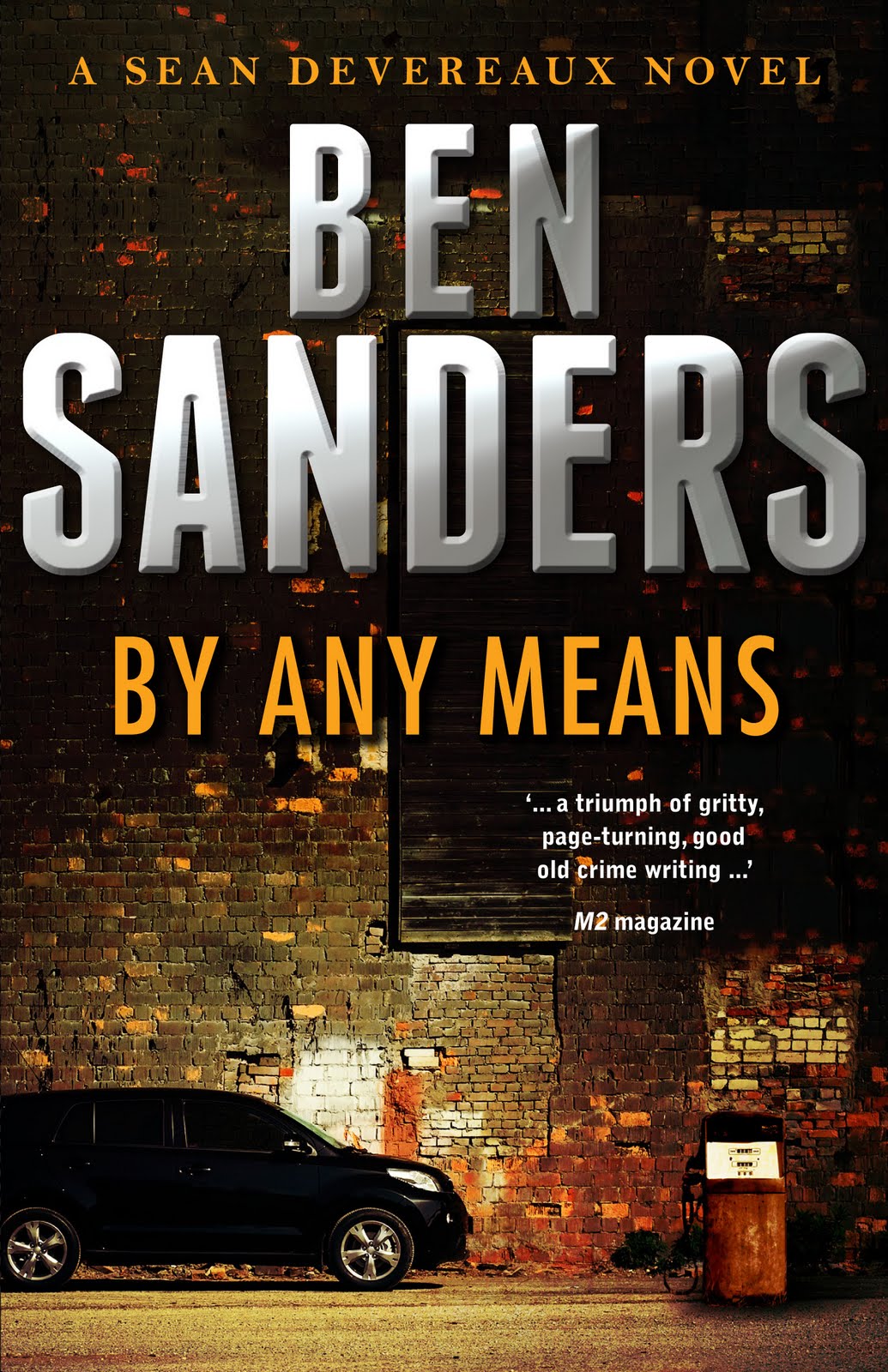
Earlier this month, 21-year-old Auckland engineering student Ben Sanders (pictured right, between myself and Michael Connelly) released his second crime novel, BY ANY MEANS, which continued his gritty Auckland-set crime series starring Detective Sergeant Sean Devereaux and ex-cop turned private consultant John Hale - a 'brains and brawn' style team (although Devereaux has some brawn too, and Hale plenty of brains to go with his action-first persona).

You can read my recent review of BY ANY MEANS here, and my feature article on Sanders for the Weekend Herald (New Zealand's biggest-circulation newspaper), here.

Now readers have a chance to meet Sanders for themselves, as I will be interviewing him, on stage, at an event at the Takapuna Library next Wednesday, 7 September 2011. The Takapuna Library has built up a strong tradition of hosting great crime fiction events, with visiting international stars John Hart, Michael Robotham, Peter James, Simon Kernick, Tom Rob Smith, Gregg Hurwitz and Linwood Barclay all appearing over the past two years. It's great to see the library now hosting an event featuring one of our rising Kiwi crime fiction stars. Sanders' debut, THE FALLEN, spent several weeks atop the NZ Adult Fiction bestseller list on release last year, and was longlisted for the Ngaio Marsh Award for Best Crime Novel.

Here's the official spiel about next week's event:

By Any Means - interview with Ben Sanders

Come along to an exciting interview with Ben Sanders.

Wednesday 7 September 2011 6.30pm
Takapuna Library
6pm: light refreshements served, 6.30pm event starts
Admission: $5 ($2 Friends of the Library)

Come along to an exciting interview as crime fiction expert, Craig Sisterson, grills 21-year-old Ben Sanders about his latest release, By Any Means, and his fascination with crime fiction.

Following the discussion will be a book signing courtesy of Paper Plus, Takapuna.

RSVP: Email Helen Woodhouse (Helen.Woodhouse@aucklandcouncil.govt.nz) or phone (09) 486 8469.

If you're in the area, it would be great to see you there - the Takapuna Library always hosts great events, and it would be good to get a good crowd for a local crime writer.

Tuesday, August 30, 2011

The deadlier of the species? Let's celebrate 25 years of Sisters in Crime!

This year brings the celebrations of the 25th anniversary of the creation of Sisters in Crime, an international organisation that now spans 48 chapters worldwide; more than 3,000 members. Founded in a Soho loft, Sisters in Crime promotes the professional development and advancement of women writing crime fiction.

According to its website, Sisters in Crime grew out of a growing sense that female mystery writers were being overlooked; legendary American crime writer Sara Paretsky spoke at the first-ever conference on Women in the Mystery in March 1986, talking about the growing use of graphic sadism against women in mysteries. "Remarks I made at the conference set off a firestorm around the mystery world," Paretsky recalls. "Women began calling me from all over the country with their personal histories of treatment/mistreatment."

Phyllis Whitney wrote a letter to the Mystery Writers of America, pointing out that female authors weren't being nominated for awards, and then by the time the Bouchercon event occurred in October 1986, the movement was well and truly getting up to speed. "I convened the initial meeting of interested women at the Baltimore Bouchercon in October 1986," Paretsky says. At that meeting, she noted that books by woman mystery writers also weren't being reviewed at a percentage equal to their participation in the field. At the annual Edgars Week in 1987, interested women writers were invited to Sandra Scoppettone's SoHo loft for breakfast, to meet each other and discuss the situation. At that meeting, Sisters in Crime was formed.

New Zealand has quite a good tradition when it comes to female crime writers - the doyenne of our mystery-writing world is of course Dame Ngaio Marsh, one of the four Queens of Crime of the Golden Age of Detective Fiction. In contemporary times, two of the five authors who've been finalists for the Ngaio Marsh Award for Best Crime Novel are women (Vanda Symon and Paddy Richardson), and several other female Kiwi crime writers have been published in recent times, such as Lindy Kelly, Donna Malane, Dorothy Fowler, Trish McCormack, Cat Connor, Bev Robitai, Joan Druett, and others.

Historically, although New Zealand wasn't thought to have much of a crime or mystery writing tradition, outside of Dame Ngaio, amongst the crime writers we did have, many were women, for example: Dorothy Eden, Mary Scott and Joyce West, Freda Bream, Carol Dawber, Laurie Mantell, and others. In fact, many, perhaps even most, of the crime writers New Zealand had, from the 1950s-1990s, that wrote more than a book or two (ie a longer series of five, seven, ten books etc) seem to be women.

In the coming weeks I will be sharing more about many of these great Kiwi women crime writers, along with some of the international female crime writers I read and enjoy, or have had the privilege to meet, as part of a terrific Sisters in Crime blogging challenge being run by mystery writer, reviewer and blogger Barbara Fister. Fister is a member of Sisters in Crime, and currently serves on the board. Here is the challenge she has created:

Easy challenge: write a blog post about a work of crime fiction by a woman author; list five more women authors who you recommend.

Moderate challenge: write five blog posts about works of crime fiction by women authors. For each, mention another woman author who writes in a similar vein.

Expert challenge: write ten blog posts about works of crime fiction by women authors. For each, mention three similar women authors whose works you would recommend.

Deadline: whenever. Another one of the joys of reading for pleasure is not having deadlines. Also, feel free to recycle previous reviews. Fister says she is all about recycling.

If you tag your posts with “SinC25", Fister will compile them on her blog.  And if you tweet, use the hashtag #SinC25.

Although I'm a little 'challenged-out' lately, I will be joining in, because I think it is a terrific thing to celebrate all that is good and great about female crime writers - and perhaps give more publicity to some who deserve it. I will be updating some of my 'encyclopaedia-style' posts about Kiwi crime writers, republishing some reviews and interviews of Kiwi and international authors, and much more.

If you have any suggestions, or requests, in terms of what you'd like to see from me in the coming weeks - which authors you'd like me to feature/highlight/interview etc, please do let me know. To start with, how about answering this question: who are some of your favourite female crime writers?

Vanda Symon: International Guest of Honour at SheKilda

Acclaimed Dunedin crime writer and 2010 Ngaio Marsh Award finalist Vanda Symon is one of three international guests of honour appearing at the upcoming Shekilda 2011 crime writing convention in Melbourne, Australia.

Symon (author of the Sam Shephard series) joins South African Margie Orford (author of the Dr Clare Hart series) and Singapore's Shamini Flint (author of the Inspector Singh series) as an International Guest of Honour at SheKilda - the Australian Women's Crime Writers' Convention, to be held from 7-9 October. The convention is organised by the Australian arm of Sisters in Crime, an international organisation supporting and promoting female crime writers, that is celebrating its 25th anniversary this year. The Australian arm is also celebrating its 20th anniversary.

Here's the brief rundown of SheKilda Again, the 2011 convention:

SHEKILDA Again - AUSTRALIAN WOMEN'S CRIME WRITERS' CONVENTION 2011

The Plot:
To celebrate women’s crime writing on the page and screen and bring a collective critical eye to the field.

The Motive:
To mark the 20th anniversary of Sisters in Crime Australia Inc by a 500-strong gathering that brings together women writers, true crime practitioners and those who enjoy women’s crime writing.

Modus Operandi:
To hold SheKilda Again, Women’s Crime Writers' Convention 2011 (October 7-9), Rydges Hotel, 701 Swanston St, Carlton, Victoria

The convention will involve all leading Australian women crime novelists together with true-crime writers, screen-writers, producers, booksellers, publishers, lawyers, judges, police, forensic specialists, librarians, academics, critics and (mostly) readers and viewers. It will discuss and analyse books, film and television shows, law and justice issues, new trends and critical issues of the genre.

It looks like there will be many terrific events over the three days of the convention. You can read the full programme here. Symon will be appearing at several events, including:
Symon is also delivering the End Note Speech at the Closing event for the convention, on Sunday at 3.30pm.

It looks like it will be a great three days, full of terrific crime fiction authors and events.

Monday, August 29, 2011

Vanda Symon reports on "Setting the Stage for Murder"


Last Sunday, the second-ever Ngaio Marsh Award for Best Crime Novel was presented in Christchurch, to Paul Cleave for his dark thriller set in a near-dystopian version of that very city, BLOOD MEN. The Award was part of "Setting the Stage for Murder", a fantastic event put on by the Christchurch Writers Festival, as part of the 2011 Christchurch Arts Festival. It was great to have so many crime writers, and readers, in one place - a rarity for New Zealand. The event had six authors on stage (internationals John Hart and Tess Gerritsen, followed by the four Ngaio Marsh Award finalists: Paul Cleave, Paddy Richardson, Neil Cross, and Alix Bosco/Greg McGee), and several others at the event, in the audience, and at the post-match lunch.

2010 finalist Vanda Symon came up from Dunedin for the day to support her fellow crime writers, 2011 longlistee Ben Sanders came down from Auckland (fellow longlistee Andrew Grant was also in the audience), and others from the books and writing world were also in the audience. It's great to see such support for locally-written crime fiction - hopefully things will get even bigger and better in future years.

Symon has today shared her own report of the big day. You can read it in full at her blog, Overkill, here.

The photo above was taken at the post-event lunch at Kate Sheppard house - quite possibly the most crime writers all in one place, ever, in New Zealand. Unfortunately Andrew Grant/grant Shanks, Alix Bosco/Greg McGee, and Ben Sanders had already left by the time this photo was taken, but it's still a fairly murderous line-up! Left to right: a bashful Neil Cross, Paul Cleave, Craig Sisterson (myself), Vanda Symon, Tess Gerritsen, Paddy Richardson, and John Hart. I must be the only one there that's not a serial killer (in a literary sense, I mean, of course). It was a terrific day, and hopefully is just the start of things to come.

Comments welcome.

Is Paul Cleave too dark for New Zealand bookstores?

It was great to see 2011 Ngaio Marsh Award winner Paul Cleave get some good coverage in yesterday's Herald on Sunday (see right). Cleave was interviewed by acclaimed author Nicky Pellegrino, who edits the books pages for the Herald on Sunday, and he was quite upfront about how he feels overlooked in New Zealand, despite his international success.

I think it's good to see an author speaking his mind, rather than just being politic with his comments - New Zealand is a very small market, so sometimes I think people don't address issues because they're worried about making waves - they're worried about putting certain people off-side. The New Zealand books industry is filled with fantastic, enthusiastic, passionate people, but there are plenty of things that could be done better, and if no-one talks about them, nothing will change.

In his interview with Pellegrino, which you can read in full online (click here), Cleave mentions how frustrated he is that he sells hundreds of thousands of novels in Europe, and yet his books can be hard to find in many bookstores in his home country. He has been told by one bookstore that a reason might be that his books are "too dark" - which is interesting because I know that bookstore chain stocks plenty of novels by Stephen King, Dean Koontz, Mo Hayder, Stuart MacBride, Karin Slaughter, Val McDermid, and many other authors who go to some very dark places. But maybe because they are international 'big names', that 'rule' doesn't apply to them?

Personally, I think bookstores in New Zealand should be proud to stock Cleave's books - he's a Kiwi writer doing great things on an international stage, who largely gets good and great reviews from readers and critics alike (although as he notes in Pellegrino's article, readers do tend to 'love or hate' his writing) - we should be supporting Cleave and other writers like him, rather than shunning his work because it doesn't fit into some narrow idea of what local fiction should be. If indeed that was a real reason given, rather than just an excuse from a staff member at that particular large chain, which has had plenty of problems in the past few years.

I would point out that I have seen (or heard about) good stock levels of Cleave's Christchurch-set thrillers in other bookstores in New Zealand, such as the excellent Unity Books in Auckland, Penny's Bookstore in Hamilton, Page & Blackmore in Nelson, and even the Borders store on Queen Street, Auckland. UBS Canterbury also had plenty of stock at the Setting the Stage for Murder event last weekend. And of course Kiwi readers can readily purchase Cleave's books online from places such as Fishpond and Mighty Ape.

What do you think? Are Cleave's books too dark for New Zealand bookstores, even though they are gobbled up by European readers? Should we - bookstores, festivals etc - be more supportive of our quality local writers, regardless of what they write? Should authors speak out about issues in the book industry, or just keep writing? I'd love to get your opinions on some of these issues

Sunday, August 28, 2011

Joan Druett interviews Alix Bosco

For two years, from the publication of award-winning debut thriller CUT & RUN in August 2009 to the revelation a fortnight ago that the writer behind the 'Alix Bosco' pseudonym was acclaimed playwright and TV screenwriter Greg McGee, there were few interviews with the author of the New Zealand-set crime fiction series starring middle-aged legal researcher Anna Markunas (CUT & RUN, SLAUGHTER FALLS). Understandably, as the desire for anonymity that saw the use of the pseudonym in the first place, would largely inhibit interview opportunities etc. Although Crime Watch did manage to get a 9mm interview with Bosco (via emails with Bosco's agent), and others such as Sunday Star-Times Books Editor Mark Broatch also managed to get comments via email from Bosco for articles on the state of New Zealand crime fiction.

Now that McGee has 'come out' as Bosco, of course, the acclaimed writer will have many more opportunities to his thoughts about books, writing, and more with readers and the media - which I think is a great thing. I enjoyed having McGee as part of the New Zealand crime writers panel at last Sunday's "Setting the Stage for Murder" event in Christchurch - he certainly brought a different perspective about a number of things, and I think many in the audience enjoyed his contributions (judging from some comments on the Chch City Libraries blog, etc) to what was a great day for crime fiction in New Zealand.

Now, maritime expert and award-winning writer Joan Druett (pictured right, author of the Wiki Coffin mysteries set on 1830s US sailing ships) has interviewed McGee this week for her World of the Written Word blog. Druett was one of the people who publicly suggested that McGee was Bosco, several months ago, so I think she is enjoying finding out more about the man behind Alix Bosco.

In the interview, McGee talks to Druett about whether his early success as a playwright shaped his focus on social commentary, and led to the need for a thriller-fiction pseudonym, his character of Anna Markunas (and whether aspects of McGee's earlier theatre and other writing distilled into the thriller heroine), and whether he felt a little like a villain after not showing up to the inaugural Ngaio Marsh Award for Best Crime Novel ceremony last year.

You can read the interview in full on Druett's blog here.

McGee has also been interviewed in the past fortnight by Lynn Freeman of Radio New Zealand - the interview was broadcast last Sunday. You can listen to that interview here.

Friday, August 26, 2011

Review: BY ANY MEANS by Ben Sanders

By Any Means by Ben Sanders (HarperCollins, 2011)

Reviewed by Craig Sisterson

Young Aucklander Ben Sanders, who juggles novel writing with his university civil engineering studies, burst onto the local books scene last year with The Fallen, a gritty crime thriller that introduced Detective Sean Devereaux and ex-cop John Hale, and was packed with murder, kidnapping, and police corruption. All set amongst the seamy streets and suburbs of our largest city. Now, 21-year-old Sanders returns, as do Devereaux and Hale, with By Any Means, the follow up to his #1 bestselling debut.

In the first sentence, a bus driver is killed, shot by an unknown gunman on Auckland’s bustling Albert Street during Friday rush hour. Detective Sean Devereaux picks up the case, only to discover wildly conflicting witness accounts then a sense the victim wasn’t the true target. But then, who was? At the same time Devereaux is dealing with a double killing in the affluent suburbs: the wife and daughter of a prominent finance company director. Murder-suicide or double homicide? The police turn their attention to the husband, but Devereaux has doubts. Meanwhile, John Hale is largely unavailable to assist, as he’s witnessed a kidnapping, and finds himself the target of a dogged senior police officer as he tries to do his own private investigations.

Sanders writes in a crisp and punchy style, powering a storyline that can hook you early and keep the pages whirring. He often has a very nice way with words when it comes to pithy descriptions of people and places, using some vivid imagery, although at times some of the travel around Auckland, and the use of musical references, can get a touch too ‘listy’, which could bother some readers. Overall, By Any Means is a solid sophomore effort, and shows that Sanders is no one-hit wonder. I’m certainly looking forward to the next Sean Devereaux and John Hale tale.

Ben Sanders will be discussing By Any Means and his writing at the Takapuna Library in Auckland on Wednesday 7 September 2011 at 6.30pm (refreshments from 6pm). RSVP to Helen.Woodhouse@aucklandcouncil.govt.nz or call (09) 486 8469.

-------------------------------------------------------------------------------------------------------------------------------

This review was first published in the Friday, 26 August 2011 issue of NZLawyer magazine, and is reprinted here online with permission.

Thursday, August 25, 2011

Five Favourite Thrillers: Stephen Stratford

Last week I began a brand new series here on Crime Watch - Five Favourite Kiwi Thrillers - inspired by prolific and diverse New Zealand novelist David McGill. This week I have the second edition, featuring a selection of Kiwi titles chosen by a man who's very well known and influential in the New Zealand books industry, Stephen Stratford.

Stratford has published more than a dozen books, mostly non-fiction. He has edited more than 100 other books, and currently runs the manuscript assessment service Write Right. He is a NZ Society of Authors representative on the Board of Copyright Licensing Ltd. His journalism work includes writing for Quote Unquote, Metro and the New Zealand Listener. A founding trustee of the Auckland Writers & Readers Festival (our biggest literary festival), Stephen has also been a judge of the Spectrum Book Design Awards, the Montana NZ Book Awards, and he convened the judges for the 2010 NZ Post Book Awards.

For those overseas, the latter two awards are kind of New Zealand's equivalent of the Miles Franklin Award in Australia, or the Booker Prize in the UK - they're our country's biggest books awards, that usually are won by literary fiction, in the fiction categories. He also writes the very interesting Quote Unquote blog.

Importantly, for our purposes here, Stratford is also a longtime fan of crime and thriller fiction, and I am very glad to host him and his comments here on Crime Watch today. Here are his five favourite Kiwi thrillers:

Five favourite Kiwi thrillers – Stephen Stratford


 SHIRKER by Chad Taylor (2000)
Summary: Ellerslie Penrose, a part-time futures broker, finds a junkie's body in an Auckland dumpster, steals his wallet and embarks on a hallucinatory journey into the shadow life of the dead man. This brings him into contact with fantasy bordellos, mysterious manuscripts, bizarre antiques dealers, and a sleazy nest of quirky happenstance

Note: SHIRKER was published in several countries, including the United States, the United Kingdom, France, and Germany, and readers around the world may still be able to find the odd new copy from online booksellers, as well as second-hand copies.

Stratford’s take: “You can’t go past a novel with a protagonist called Ellerslie Penrose. Recognisable Auckland settings just slightly askew, recognisable characters very much askew. The best New Zealand prose stylist of his generation, I reckon.”

OVERKILL by Vanda Symon (2007)
Summary: When the body of a young mother is found a small rural community is rocked by her tragic suicide. But all is not what is seems. Sam Shephard, sole-charge police constable in Mataura, soon has to face the realisation that there’s a killer in town, and because the women was the wife of Sam’s former lover, she’s on the list of suspects and suspended from duties. Sam must cast aside personal feelings and take matters into her own hands.

Note: Hasn’t been widely published outside of Australasia yet (there was a German translation), but there are new copies still available in bookstores, and overseas readers can source the book via New Zealand sources, or some online booksellers.

Stratford’s take: “Our introduction to Sam Shephard. The three sequels are great too but I love the Mataura setting in this. And it’s really funny.”

NOBODY DIES by Zirk van den Berg (2004)
Summary: A South African policewoman has found the perfect way to make sure people in her witness protection programme stay hidden – she kills them! As her victims are meant to disappear, her crimes stay hidden. Then Daniel Enslin enters the programme…

Note: Had fallen out-of-print, although still available in second-hand bookstores and libraries. However, has recently been released as an e-book available on Smashwords.

Stratford’s take: “Tough, spare, and redefines the concept of cop-killer. I can’t understand why this hasn’t gone international.”

ONE NIGHT OUT STEALING by Alan Duff (1991)
Summary: Traces traces the increasingly desperate circumstances that lead a Pakeha small-time criminal with big ambitions, and his more sensitive Maori ‘partner’, to their ‘one night out stealing’ in Wellington, and the divergence between them that results.

Note: From the same author who wrote ONCE WERE WARRIORS, which was adapted into a terrific independent film starring Temuera Morrison as abusive husband Jake ‘the Muss’ Heke.

Stratford’s take: “Dark stuff, mostly uncomfortable, but it all rings true and is thoughtful. Years ago Alan told me he thought it was his best novel. I agree.”

 HUNTING BLIND by Paddy Richardson (2010)
Summary: On a perfect summer's day, at a school picnic beside a lake, a little girl goes missing, leaving a family devastated and a community asking questions. Seventeen years later her sister, Stephanie, is practising as a psychiatrist. A new patient's revelations force her to re-examine her sister's disappearance. Why are their stories so similar? Unable to let the matter rest, Stephanie embarks on a journey to find out what happened to her sister.

Note: Was one of the finalists for the 2011 Ngaio Marsh Award for Best Crime Novel. Available new in New Zealand bookstores and online.

Stratford’s take: “I have been haunted by this since I first read it. It is based on every parent’s nightmare, so can’t help but grip, but the writing and characterisation are of a very high order.”


-------------------------------------------------------------------------------------------------

What do you think about the new series? About Stratford’s choices? Have you read any of these five novels? Do they sound intriguing? Who else would you like to see be part of the new 'Five Fantastic Kiwi Thrillers' series? Comments, critiques and suggestions appreciated.

A crime writer shares his thoughts on his broken city


At the "Setting the Stage for Murder" event on Sunday in Christchurch, during the New Zealand author panel that I chaired (consisting of the four 2011 Ngaio Marsh Award finalists), the audience questions took something of an unexpected turn. Often, at such events, writers get asked things like 'where do you get your ideas from?', 'how did you first get published?', 'how often/much do you write each day', etc. Basically, questions that show there are plenty of aspiring writers in the audience, hoping to discover the 'secret' to those particular authors' success.

At the Michael Connelly event in Auckland earlier this year, one gentleman asked Connelly what software he used - perhaps believing that was all that stood between him and his writing dreams? Or he was just curious.

However, the first audience question on Sunday was far more meaningful - were the writers, and Paul Cleave in particular (being Christchurch-based), considering incorporating the recent devastating Canterbury earthquakes into their future books? And if so, how did they think they would address it?

It was a question that sparked some great discussion and debate. Cleave was very clear that he would never use an earthquake as a plot device, although he couldn't say for sure that he wouldn't ever incorporate it into the setting/background to his stories at some point. Others on the panel thought it might be okay to address the earthquake after a certain time period. From memory, Neil Cross strongly believed that writers shouldn't be afraid of tackling such issues in their books. Edgar Award winner John Hart, who'd been part of the international panel with Tess Gerritsen, and was now in the audience for the New Zealand panel, asked if the authors thought there might be some obligation on writers to help people deal with such matters by writing about them, incorporating them into future stories. He pointed to some September 11-themed books that may have had that sort of effect for people - although as the Kiwi writers noted, they came out a few years after the terrorist attacks. There's always the question of when is 'too soon', and people will have wildly diverging opinions on such issues.

The discussion was certainly an interesting portion of a great event, and it was brought to mind again this morning when I came across a new blog post by a crime writer based in Christchurch, Steve Malley, who emigrated from the United States several years ago. Malley is the author of two thrillers available as e-books. You can read my 9mm interview with him from earlier this year, here.

In his post, Malley talks passionately about the devastating effects of the earthquakes on his adopted home town, and how they've changed the city in an unprecedented way.

"Way back in September (funny to think it's not quite a year yet-- it seems decades), we were all so grateful that so much was spared. Some really great stuff was lost, but for a shake that size, every damn one of us knew we'd gotten off light.

Boxing Day hammered us pretty hard, but it also left the bones of our city unscathed. No major buildings fell, no loss of life. It seemed like this was how it was going to be: scary, but doable.

February changed everything. Forever."

As the months go past, and the news cycles move on to other dramas happening here and abroad, it will be important to remember Christchurch, a beautiful city, now lying bent, if not broken, that will take a long time to recover, despite the marvellous resilience and can-do attitude of its citizens.

Speaking from my own experiences, I drove around the outskirts of the cordoned CBD area with crime writers Paul Cleave, Vanda Symon, Neil Cross, and website designer David Batterbury, after the event on Sunday. It was just devastating - people are still kept out of most of the CBD, but you can see the twisted, leaning, and badly damaged buildings, as well as plenty of blank sites where buildings once stood. I spent five years in Christchurch while at University there (college, for US readers), and it was eerie seeing how places I knew were just gone. Wiped from the map by the hand of mother nature.

You can read Malley's full blog post here.

Thoughts welcome.

Ngaio Marsh Award giveaway - and the winner is...

Over the past few weeks here on Crime Watch, the Ngaio Marsh Award Facebook page, and elsewhere, we have been running a giveaway where one lucky reader, from anywhere in the world, would win all eight of the longlisted Kiwi-written crime/thriller novels eligible for the 2011 Ngaio Marsh Award for Best Crime Novel.

It was great to see a very good number of entries rolling in, from several countries around the world, considering there was a bit of a hurdle to entry: taking a photo of yourself reading a New Zealand-written crime, mystery, thriller or suspense novel. You can see many of the entries in the "Reading Kiwi Crime Fiction" photo album on the Ngaio Marsh Award Facebook page. It's interesting to see which books and authors cropped up the most too. Vanda Symon and Paul Cleave were particularly popular, but others such as Neil Cross, Ngaio Marsh, Alix Bosco and Donna Malane all had multiple representations too.

The draw was made on Saturday, the day before the Setting the Stage for Murder event in Christchurch (and presentation of the award to Paul Cleave for BLOOD MEN), and I'm very pleased to announce the winner is: Lisa Smith of Northcote, New Zealand, who took a photo of herself reading Paula Morris's HIBISCUS COAST (see above). Congratulations Lisa - your fantastic prize pack is on its way to you.

When the random draw picked out Lisa's photo, I did have to chuckle a little - because that was the only entry that surprised me when it came in, in terms of the books people were reading. I'd never realised that Paula Morris had written a thriller - but on closer inspection HIBISCUS COAST is a tale revolving around art forgery and a heroine on the run from dangerous people, so there you go.

You learn something new... as they say. I'll have to add the book to my bibliographical list (see above).

Congratulations to Lisa. For everyone else, thanks so much for sending your entries in. Keep your eyes peeled for another giveaway in the very near future. And in the meantime, if you're on Facebook, head to the Ngaio Marsh Award Facebook page and click 'like', if you haven't already. Thanks.

Wednesday, August 24, 2011

President Obama likes a bit of crime fiction - good or bad?

The media is all atwitter today with news of United States President Barack Obama's summer reading list - with plenty of comment about both the books on the list, and those that aren't. For those who like crime fiction, the most notable inclusion is of course THE BAYOU TRILOGY by Daniel Woodrell, who also wrote WINTER'S BONE (which was turned into a very good film, from what I've heard). Personally, I think it's great that the President is enjoying some high quality crime fiction. Others, of course, have their opinions too - and many aren't so impressed. As reported by CNN, the books on the President's fiction-heavy summer reading list while he and his family are vacationing at Martha's Vineyard are:
  • "The Bayou Trilogy," by Daniel Woodrell -- A collection of crime stories set in Louisiana
  • "Rodin's Debutante," by Ward Just -- A coming-of-age novel set against the backdrop of Chicago
  • "Cutting for Stone," by Abraham Verghese -- A book about the lives of twin boys born in Ethiopia
  • "To the End of the Land," by David Grossman -- A novel, set in Israel, about a mother's grief during war
  • "The Warmth of Other Suns," by Isabel Wilkerson -- A nonfiction book that outlines the migration of African-Americans out of the South
I actually saw THE BAYOU TRILOGY in a bookstore in New Zealand the other day, and was intrigued by it. It's an omnibus reprinting of three of Woodrell's novels from the 1980s and 1990s (similar to what New Zealand's Paul Thomas did last year with the omnibus re-release of his THE IHAKA TRILOGY) - UNDER THE BRIGHT LIGHTS, MUSCLE FOR THE WING, and THE ONES YOU DO. Described by some as "rural noir", it certainly sounds interesting. Woodrell himself has been described as a "backcountry Shakespeare".

I really enjoy John Hart and James Lee Burke's multi-faceted tales set in the rural areas of the American South, so I think I will have to accelerate Woodrell up towards the top of my TBR pile. Here's a blurb about THE BAYOU TRILOGY:

A hard-hitting, critically acclaimed trilogy of crime novels from an author about whom New York magazine has written, “What people say about Cormac McCarthy … goes double for Woodrell. Possibly more.”

In the parish of St. Bruno, sex is easy, corruption festers, and double-dealing is a way of life. Rene Shade is an uncompromising detective swimming in a sea of filth.

As Shade takes on hit men, porn kings, a gang of ex-cons, and the ghosts of his own checkered past, Woodrell’s three seminal novels pit long-entrenched criminals against the hard line of the law, brother against brother, and two vastly different sons against a long-absent father.

The Bayou Trilogy highlights the origins of a one-of-a-kind author, a writer who for over two decades has created an indelible representation of the shadows of the rural American experience and has steadily built a devoted following among crime fiction aficionados and esteemed literary critics alike.

It will be interesting to see if sales of THE BAYOU TRILOGY jump after today's news about the President's summer reading list. I understand other crime novels or crime writers highlighted by previous Presidents (such as Clinton, who was also a keen reader) certainly got a 'jump' in notoriety and sales.

Of course, not everyone is happy about the President reading fiction on his vacation, or crime fiction in particular - regardless of the widespread literary acclaim for Woodrell as an author. The Conservative-leaning (being euphemistic) National Review certainly impled that genre fiction was too trashy for Presidents to read, or at least for them to admit they read. Great - now we have literary pretentiousness meeting political bias; what fantastic bedfellows!

Said conservative commentator Tevi Troy, "Beyond the issue of fiction vs. nonfiction, there is also the question of genre. The Bayou Trilogy has received excellent reviews, but it is a mystery series. While there is nothing wrong with that per se, not every presidential reading selection is worth revealing to the public. Bill Clinton, for example, used to love mysteries, but he did not advertise the titles of what he once called 'my little cheap thrills outlet'." So there is nothing wrong with reading mysteries, as long as you don't tell people about it. Hmmm....

What do you think of the President's reading choices? Is it good or bad that he's open to a bit of highly-acclaimed crime fiction? Have you read any of Woodrell's 'rural noir'? Comments welcome.

Tuesday, August 23, 2011

Credit for NZ crime writers: an article on the Ngaio Marsh Award in the Nelson Mail

It's nice to see the Ngaio Marsh Award getting some good media coverage in its second year. Along with the articles I've already shared (and hopefully more to come, focused on winner Paul Cleave), while I was travelling during last weekend, my old hometown newspaper, the Nelson Mail, published an article on the award and New Zealand crime fiction in it's Weekend edition. They've now kindly allowed me to reprint the article in full here on Crime Watch, so you can all read it (it's not yet available anywhere else online).

Credit for NZ crime writers
New Zealand’s best crime writing will be honoured this weekend, and the man behind the awards hopes they will help change Kiwi attitudes to home-grown whodunits, writes Naomi Arnold.

At Richmond Primary School in the 1980s, Craig Sisterson read the Hardy Boys and Agatha Christie; at Waimea Intermediate it was Nils-Olof Franzen; at Waimea College it was Patricia Cornwall and James Patterson.

Now the crime novel connoisseur has turned his love of the genre into a quest to get the best crime writers in New Zealand celebrated and read as widely as his early heroes. Though Sisterson now works fulltime as a journalist in Auckland, he cherishes his Nelson roots. “I tell people I’m a Nelsonian who just doesn’t live there at the moment,” he says. For the past two years the 32-year-old has moonlighted as a reviewer and blogger at Crime Watch (kiwicrime.blogspot.com). But as the website developed, he found that his regular conversations with crime writers, publishers and readers kept bringing up a nagging lack – there was no award to recognise good crime writing in this country.

“People would talk about how even really good crime novels from the past wouldn’t get a look in at the [NZ Post] Book Awards, and we’d talk about how overseas it didn’t matter if a crime novel didn’t get nominated because they’ve got [Britain’s] The Daggers,” he says. Or Australia’s Ned Kelly, the United States’ Edgar, Scandinavia’s Glass Key, and Canada’s Arthur Ellis. But New Zealand was pretty much the only English-speaking country in the world that didn’t have a crime fiction award.

“We got to the stage where everybody thought it would be a good idea to have an award but everyone was just waiting for someone to do it, and I guess I just got sick of waiting. It’s the Nelson thing as well. You just kind of get out there and do stuff.”

So he set up his own: the Ngaio Marsh Award for the best crime, mystery, or thriller novel by a New Zealand citizen or resident and published here during the previous year. Decided by a panel of local and international judges, the first was presented in November 2010.

Sisterson blames the cultural cringe for our tardiness. Although we’re now happy seeing ourselves reflected in film, music, television programmes and literary works, that faith hadn’t extended to crime fiction. And Sisterson believes it wasn’t a question of it not being good enough, but one of exposure. “The feedback we continually get [from the international judges of the award] is the best of the New Zealand stuff matches up with the stuff we buy in droves from overseas, and we shouldn’t have any cultural cringe about our writing,” he says. “It’s good and we should pay attention to [it].”

He feels popular fiction is easy for ‘certain people’ to look down their noses at “because they equate structure with formula, which isn’t always true”. “Readers don’t care. Readers read everything: romance and crime are the two biggest genres in the world. There’s a reason for that.”

This year’s finalists are Paul Cleave’s Blood Men, Neil Cross’ Captured, Paddy Richardson’s Hunting Blind and Alix Bosco’s Slaughter Falls. Bosco, who wrote last year’s Ngaio Marsh winner Cut and Run has just been outed as playwright Greg McGee. As well as Bosco, Cross and another 2010 finalist Vanda Symon, a who’s who of modern New Zealand crime writers might include Paul Thomas, Joan Druett, Ben Sanders and Donna Malane, many of whom sell well overseas. Cleave sells thousands in Germany but isn’t well known at home. That may change as more attention generates more sales, more readers and encourages more writers. So perhaps all we needed was a champion, and Sisterson may have unintentionally become just that. He says the authors are “really stoked about it”.

“Everyone’s just hoping it’ll carry on and grow to be bigger and better. We’ve had people suggest more events and crime writing festivals and hopefully we can grow those in the future.”

------------------------------------------------------------------------------------------------------------

This article was first published in the Nelson Mail on Saturday, 19 August 2011, and is republished here with its kind permission. Update: the paper has now decided to add the article to the popular Stuff website as well, see here.

------------------------------------------------------------------------------------------------------------

I would love to get your views on the article, the Ngaio Marsh Award, and what you think of some of the comments I made about New Zealand crime fiction in the article. Comments appreciated.

Meet John Hart at Takapuna Library!

After booklovers in Canterbury got to meet Edgar and Dagger Award-winning crime writer John Hart on Sunday at the terrific and well-attended "Setting the Stage for Murder" event, now Aucklanders have their chance to meet this rising star of the world crime writing scene. Hart will be making one public appearance in Auckland, tonight at the Takapuna Library.

The Takapuna Library is renowned for hosting some great events with visiting writers - in the past year crime writers Simon Kernick, Peter James, and Michael Robotham have all made crowd-pleasing appearances there, and since I returned from overseas a little over two and a half years ago the Takapuna Library line-up has also included Linwood Barclay, Tom Rob Smith, Gregg Hurwitz, and others. The evenings are always great fun, and pretty casual, giving attendees a good chance to hang out with the author, get books signed, ask some questions, and more.

Tonight's event is scheduled for 6.30pm, with drinks and nibbles beginning at 6pm. It's only $5, or $2 if you're a Friend of the Library. So great value, and a great chance to meet a superb international author.

You can read my recent New Zealand Listener feature article on Hart here, my review of IRON HOUSE, his fourth and latest novel, here, and my 9mm interview with Hart, here.

If you're in the Auckland area, it would be terrific to see you in Takapuna tonight!

Monday, August 22, 2011

Writer slays competition: Christchurch's Paul Cleave featured in today's The Press newspaper

There is a nice story about Kiwi crime writer Paul Cleave winning the 2011 Ngaio Marsh Award in today's issue of The Press, the South Island's biggest newspaper. It's great to see some hometown media support for and celebration of Cleave's achievement (and a nice big pic of Cleave with the Award too), as the internationally bestselling author has been a little overlooked here in New Zealand by many in the books world; for example bookstores and event organisers, etc, in the past - despite his tremendous (and growing) overseas success.

It's been quite a year for Cleave - in recent months he has largely been based in Europe, and has also travelled to North America; meeting agents, editors, publishers, film companies and others as his writing career goes from strength to strength.

Cleave's books have now been signed up for publication in 19 countries (the most recent being Spain, Korea, and Bulgaria), and have been translated into more than a dozen languages. He has secured high spots on bestseller lists in France, Germany, and Turkey. Over the next year he will be appearing at books festivals in several countries, and recently and in the next few months he's had (or will have) further books come out in Italy, Brazil, the United States, France, Turkey, Taiwan, and Germany.

In short, Cleave is becoming a bona fide international crime writing star - and hopefully more and more of his compatriots will begin to catch on too. As Kiwis, we're often proud (deservedly so) of the achievements of our sportspeople, film makers, musicians, and others on the world stage - despite the fact they come from a small country at the end of the world - but we've been a little less vocal about the quality and success of our writers. Hopefully that will continue to change in future, perhaps led by the likes of Cleave.

You can read the full news story from The Press here.

Have you read BLOOD MEN, the Ngaio Marsh Award winning novel, or any of Paul Cleave's other dark thrillers? Were you at yesterday's event (or wish you were)? Do you think New Zealand should be prouder and more supportive of its writers, including its crime writers? Comments welcome.

And the winner is...


The winner of the 2011 Ngaio Marsh Award for Best Crime Novel is BLOOD MEN by Paul Cleave. The award was presented at the end of the fantastic "Setting the Stage for Murder" event in Christchurch on Sunday afternoon (I apologise for the delayed post - I had no Internet access the past 36 hours). It was a truly terrific event, with a great crowd first enthralled by Tess Gerritsen and John Hart (a session chaired by Ngaio Marsh Award judge Graham Beattie), then the four Ngaio Marsh Award finalists: Cleave, Paddy Richardson, Neil Cross, and Alix Bosco (Greg McGee).

Here are some of the judges' comments about BLOOD MEN:
  • "Cleave is an original, a writer with his own distinctive voice"
  • "Incredibly well written ... Excellent pace & black humour. It has stayed with me for ages"
  • Cleave tells a gruesomely gripping story in clean, sharp prose, with authentically laconic dialogue and flashes of very dark humour. The twists and turns of the fast-moving plot are often surprising but never illogical. This is world-class writing."
  • "Cleave's prose crackles with energy. He gets you deep inside the head of a troubled man, and takes you on a great ride, story-wise, with plenty of twists in plot and character to keep you on your toes."
  • "This thriller moves at a furious pace. Paints a detailed, dystopian picture of Christchurch which I hope is not accurate."
More details, and photos from the event, to follow. You can read a short news story from The Press about Cleave's win (from today's paper) here, and also more from the Christchurch City Libraries Blog here.

Friday, August 19, 2011

The place to be this Sunday


Well, in less than 48 hours we will find out who has won the 2011 Ngaio Marsh Award for Best Crime Novel. It's going to be a really cool event on Sunday, and the TelstraClear Club really will be the place to be for crime fiction fans this weekend: along with the finalists for the award - four fantastic Kiwi crime writers, international bestsellers John Hart and Tess Gerritsen will also be in attendance, and I understand other Kiwi crime writers such as Vanda Symon and Ben Sanders may also be there in the audience. It's a terrific chance to listen to, and meet, many fantastic crime writers all in one day. And its the first public event where you can meet the man behind 'Alix Bosco', too.

We've never had such a line-up at one event before in New Zealand - so if you like your reading to contain a bit of fictional murder and mayhem, and you're anywhere near Christchurch this weekend, make sure you join us all at "Setting the Stage for Murder". It truly will be a fantastic event, and the highpoint of our crime fiction calendar. Click here for full details.

Hope to see some of you there! Feel free to come up and say hi.

Thursday, August 18, 2011

So, who's going to win then?

With the 2011 Ngaio Marsh Award for Best Crime Novel about to be presented this weekend, I thought it was time to ask you - my knowledgeable Crime Watch readers, which of the books you think might win the Award in its second year.

We have four truly terrific finalists this year, that represent quite a diverse range of styles, settings, and storytelling. Each is a very good read in its own way, although readers will each have their own favourites, based on their own preferences, of course. But who will win? Who will the judges - international and New Zealand crime fiction experts - prefer?

Here's my summarised take on what's good and great about each of the four finalists (listed alphabetically), as shared with the Herald on Sunday last weekend:

Blood Men by Paul Cleave (Random House)
Cleave's prose crackles with energy in this dark tale told from the skewed viewpoint of Edward, an accountant trying to track those responsible for shattering his family. Cleave gets you deep inside the head of a troubled man, and takes you on a great ride story-wise, with plenty of twists in plot and character to keep you on your toes.

Captured by Neil Cross (Simon & Schuster)
Cross vividly takes readers into some uneasy places as dying Kenny seeks to set right past mistakes, discovering that an old friend is missing, her husband suspected but free. It's a page-turner with terse prose powering a pacy story that touches on wider themes like justice, the importance we sometimes place on fleeting events, memory and reality, and concerns about what legacy each of us may leave behind.

Hunting Blind by Paddy Richardson (Penguin)
Richardson's tale of a woman who is trying to uncover what really happened to her sister years ago expertly melds family drama and psychological suspense. Highlights of this novel include the evocation of the South Island scenery, a lingering sense of unease, and the way Richardson delves into the complexity of human relationships and the aftermath of high-profile tragedy; uncovering the very real and ongoing effects after the media circus leaves.

Slaughter Falls by Alix Bosco (Penguin)
Anna Markunas is an intriguing heroine - middle-aged and multi-layered - who finds herself investigating a puzzling death from a Queensland holiday. There's plenty of the tension (personal and plot) and vivid action-packed moments that readers (and judges) enjoyed in Cut & Run, but Bosco has amped up the personal, character-based parts of the story, and developed Markunas further as a series character.

The judging panel praised all of these crime novels highly - they really are a great representation of quality contemporary Kiwi crime writing. The judges praised BLOOD MEN as “a gruesomely gripping story” told “in clean, sharp prose, with authentically laconic dialogue and flashes of very dark humour”; said CAPTURED was “fascinating”, with “amazing twists and turns” and a “main character who was drawn so well”; rated HUNTING BLIND highly for its “sense of downright creepiness” and “some fascinatingly complex characters”; and were impressed by “the depth and complexity” and “well-executed plot unfolding at a good pace” in SLAUGHTER FALLS.

Each of the four novels would be a worthy and deserving winner. And each has been listed as a 'favourite' by various crime fiction readers I know. I really don't think the judges can go wrong, no matter which of these books ends up winning the Ngaio Marsh Award this year. But I'd really love to read what you think about the finalists, which ones you've read, and which one(s) you like best. Please share your thoughts.

Who do you think will or should win the 2011 Ngaio Marsh Award for Best Crime Novel?

Wednesday, August 17, 2011

9mm interview with John Hart

The 9mm series has been on a bit of a hiatus in the past few weeks, but don't worry, it will continue to be a regular feature here on Crime Watch. Today, for the 55th instalment of the popular series, I am sharing my recent 9mm interview with double Edgar Award winner John Hart (DOWN RIVER, THE LAST CHILD), an author who in my opinion is one of the very finest around, whatever the genre.

I was fortunate enough to interview Hart for a recent article in the New Zealand Listener (read here), and it was a real pleasure to talk to him about everything from the literary merit of crime fiction, to the importance of compelling characters and treating a setting honestly (it's good and bad aspects), to getting gripping drama from 'small-scale' personal stories rather than world-coming-to-an-end plotlines, to the fact we'd both left the law to do something else, something better (hopefully) with our lives.

Hart was a really humble, down-to-earth guy, and I'm looking forward to meeting him in person when he visits New Zealand in the next few days, touring in support of his fourth novel, IRON HOUSE. Hart will be appearing at Hagley Park in Christchurch on Sunday 21 August as part of the "Setting the Stage for Murder" event where the 2011 Ngaio Marsh Award for Best Crime Novel will be presented, and at Takapuna Library in Auckland on Tuesday 23 August for a solo event (see further details here).

But for now, John Hart stares down the barrel of 9mm.

9MM AUTHOR INTERVIEW: JOHN HART

Who is your favourite recurring crime fiction hero or detective?
I still love Kay Scarpetta from Patricia Cornwell’s novels. We went to the same small school, she was a few years ahead of me, and she has always been an inspiration to me, and when I was trying to get into this business I could look at her and think if she could do it, I could do it. I’ve followed her career for that reason, amongst others, and I’ve always enjoyed her. I love Lucas Davenport, John Sanford’s character, he’s enjoyable. And I’m a sucker for Jack Reacher too, Lee Child’s guy, and Harry Bosch from Michael Connelly. Those are really four series characters that I would go to regularly.

What was the very first book you remember reading and really loving, and why?
I remember specifically, because I remember my father read it to me and I still have it, a book called DIVERS DOWN, I can’t remember the author, it’s in a box in the basement somewhere. But it’s called DIVERS DOWN and it’s about a group of kids who came to sort of an engineering camp in Hawaii and got involved in a project raising a sunken ship that had belonged to some Hawaiian king. And the book was filled with good kids trying to do right, and bad kids trying to derail things, and underwater adventure. That’s definitely the first one I remember. For all I know it could have been absolutely the worst thing ever written, because I was probably six or seven, but my father was doing his medical residency when I was at that formative age, so for him to find ten or fifteen minutes to read a story to me was be a big deal, because he would be at the hospital 30-40 hours straight, sleeping in the backrooms...

Before your debut crime novel, what else had you written (if anything) unpublished manuscripts, short stories, articles?
I had a couple of unpublished manuscripts that remain deep dark secrets, two failed novels that honestly should never have been published. My editor thinks they’re lost masterpieces and keeps asking me to see them, but keeps getting refused, which I’m convinced is the height of wisdom. The first one was a science fiction novel and the second was more a mainstream thriller.

And there was plenty of legal writing of course. The only short story I wrote I wrote when I was ten years old, and it may have linked in to that DIVERS DOWN story because it was about falling off a fishing boat and basically being rescued by Aquaman, and an underwater civilisation brought me into their world. I’m sure it was fun to write.

Outside of writing, and touring and promotional commitments, what do you really like to do, leisure and activity-wise?
Well I love my dog, and I’ve got a fairly large piece of land, so I spend a lot of time out on the property with the dog... I’m out on the land a lot, just walking in the woods - that’s where I get my best ideas for whatever book I’m working on. I have young kids, which takes up a lot of my time, and I made a deal with my wife that as long as they cared about spending their spare time with me, I would put a lot of things aside with the understanding that when they came of an age where they’d rather be with their friends at the pool, then I could start playing golf again (chuckling). I love playing golf and tennis. I really just love being out on the land.

What is one thing that visitors to your hometown should do, that isn't in the tourist brochures, or perhaps they wouldn’t initially consider?
I’m brand new, I just moved in the last couple of weeks to a new city... there’s a restaurant in Charlottesville, I’m in Charlottesville, Virginia now, we moved recently, called the C and O, which is based of the name of the old railway line that used to be up here. And it inhabits a building that for probably a hundred years was used by the railroad engineers that had overnight layovers. And it’s this restaurant in this old building that they’ve worked hard to keep the same, and my great grandfather was an engineer for that railroad, in Charlottesville, so he spent his life working in and around this building. And it’s my favourite place, and I go there all the time, because it feels like you’re stepping back into the 1800s, but you get this absolute wonderful food. So if you’re ever in Charlottesville, Virginia, you should go to the C and O restaurant.

Charlottesville, it’s beautiful. We moved up here because it’s gorgeous. I’ve seen enough pictures of New Zealand to know how beautiful it is, and this is about as close as you could come to having that on the east coast in my opinion.

If your life was a movie, which actor could you see playing you?
Wow, man, that’s a bit of a mind-blower. I’ve never thought of that before. Well, let me see, he would have to be devilishly handsome of course (laughing). The thought has never occurred to me. I would have to say - you would have to ‘young him up a bit’, pardon the colloquialism, but I would love to see someone like Tom Hanks do it. Because I don’t have any great convictions of my physical prowess, but I believe that I’m a very sincere guy, and I love all the characters that Hanks plays, I think he brings a real sincerity to it. So I think I would probably like to see him do it. I think he’s wonderful...

Of your books, which is your favourite, and why?
THE LAST CHILD is my favourite. It’s my favourite because I had to reach for those boys, for Johnny and Jack. I really had to dig deep into my own memories, my own soul, to try to find a credible way to convey two traumatised thirteen year old boys. And just to give you an idea of how personal I consider that book, Johnny and Jack are both nicknames for John, and that was intentional. I kind of feel like I split the difference between those two; Johnny is the kid that most men wish they could have been - clear-eyed, fiercely loyal, courageous, selfless kid. And then you’ve got Jack on the other spectrum, and he’s this hell-raiser who steals his Dad’s liquor, smokes cigarettes and slicks his hair. And I kind of feel like they are two sides of the same coin, and that book for me was a very soulful book. I really relate to those kids, and feel like I’m a part of them and they’re a part of me, and the fact that there was such a risk inherent in trying to write an adult-based thriller around a 13-year-old boy. I knew fundamentally the risk I was taking when I started that book, and the fact that it worked out at the end of the day, and it worked as well as it has, just fills me with pride.

I’m always pushing the book I’ve just finished, but THE LAST CHILD will forever be, I think, my special book... it’s really weird. I do like different books for different reasons. I try to take chances with every book, and IRON HOUSE is a little bit different because I set out to try to write a page-burning thriller that didn’t lose the depth that made the other books work. I felt again that it was a risk that I took knowingly, and I feel satisfied that it’s worked for what it is. So I’m very attached to all of them for different reasons, but THE LAST CHILD will always be my personal most significant.

What was your initial reaction, and how did you celebrate, when you were first accepted for publication?
As luck would have it, my wife’s parents were in town, and they’ve always been my biggest supporters. Early on when everyone says ‘don’t quite your day job, you’ll never succeed in this field’, my in-laws were the ones that said ‘if you need to quit your job, we’ll feed your family while you try this’, they were really that supportive.

So it turned out that they happened to be in town, and we were just doing a cookout, and I just remember my wife made a lovely toast to tell her parents that I’d got the deal, and she got choked up and was just full of pride, because it had been 15 years and two failed novels to get to that point. And the moment I remember most after that was just fixing a very stiff drink and going outside to light the grill, and just taking a sip of that drink and feeling a sense of just unbelievable relief, of what had been years of pent-up frustration, seep away, that it had actually happened.

So it was that family moment, and then ten minutes of just standing outside, enjoying that cocktail and just taking very deep breaths, that this had actually happened. So nothing outstanding in terms of no headline-grabbing celebration; just a very quiet, contemplative and meaningful evening with my family.

What is the strangest or most unusual experience you have had at a book signing, author event, or literary festival?
No question, hands down the strangest thing I’ve ever had at a book signing was when a man walked up and meowed at me. Like a cat. It was a terrible book signing, for the KING OF LIES, and it was probably the worst event we’d had all tour. I was just sitting at this table by myself and this man just walks over, looks me up and down, and goes ‘reeooowww, reoowww’ [cat noise], and then turns around and walks away. And I just literally turned to the manager and said ‘I think I’m done here’. It was just so odd (chuckling).

 
Thank you John Hart. We appreciate you taking the time to talk to Crime Watch.
 
--------------------------------------------------------------------------------------------------------------------------------
 
Have you read any of John Hart's novels? What do you think? Which is your favourite? Will you be coming to one of the New Zealand events? Can big stories come from small plots? Are characters the most compelling aspects? Comments welcome.

Meet Tess Gerritsen in Auckland tomorrow night!

BEST-SELLING INTERNATIONAL crime writer Tess Gerritsen will be making the first of only two public events during her New Zealand visit at the Women's Bookshop in Ponsonby, Auckland, tomorrow night. It's a great opportunity to meet the physician-turned-author who has won critical acclaim and sold more than 20 million copies of her thrillers worldwide. As the legendary Carole Beu of the Women's Bookshop says, Gerritsen is "gripping , gory & glorious! She's one of the world's great crime writers & she'll be in our bookshop!"

I recently read Gerritsen's latest Rizzoli and Isles thriller, THE SILENT GIRL (released this month), which is the first of her novels to ever touch on her own Asian-American heritage in any major way. Here's a blurb:

In the murky shadows of an alley in Boston's Chinatown a hand has been discovered. On the rooftop above lies a woman's severed head. Two strands of silver hair - not human - cling to the body that lies nearby.

These are Detective Jane Rizzoli's only clues, but they are enough for her and Dr Maura Isles to make a startling discovery: that this violent death had a chilling prequel.

Seventeen years early a horrifying attack in a Boston restaurant left five people dead. Only one woman connected to the massacre is now still alive - a mysterious martial arts master who knows a secret she dare not tell. A secret that lives and breathes in the shadows of the city. A secret that may not even be human.

It soon becomes clear than an ancient evil is stirring in Chinatown: an evil that has killed before, and will kill again - unless Jane and Maura can track it down, and defeat it.

I really, really enjoyed THE SILENT GIRL (much more than last year's THE KILLING PLACE), and I'm looking forward to hearing Tess Gerritsen talk about it at the Women's Bookshop tomorrow night.

An evening with Tess Gerritsen
The Women's Bookshop
105 Ponsonby Road, Auckland
6pm. Refreshments provided.

Carole Beu and her team always put on great events at the Women's Bookshop (I really enjoyed the Val McDermid evening there last year), so it should be a terrific night. Hope to see some of you there

Tuesday, August 16, 2011

New Kiwi crime: THE BRINGING DOWN OF THE HAWK

As part of my ongoing efforts to dig up and share some 'forgotten' Kiwi crime fiction that has fallen out of print, due to the vagaries of the publishing world, earlier this year I wrote about ON THE LIP OF A LION by Roy Jenner, which I had acquired online. That 2004 book (which got some good reviews on release) had been published by Hazard Press, a publisher that later went under, unfortunately taking the budding careers of several promising New Zealand popular fiction writers with it (at least temporarily).

Back in January, I noted that I hadn't been able to find out much more about the author, Roy Jenner, or whether he'd continued to write following Hazard's demise. I am very pleased to say that Jenner has written several more crime and thriller titles, and is now progressively making them available online in e-book form - which means Crime Watch readers, no matter where you are in the world, can give them a go.
 
Today, Jenner has released THE BRINGING DOWN OF THE HAWK. Here's the blurb: "World War 2 rips the hearts from the Starlings. A ten year old boy survives the London Blitz to mourn a father lost at Dunkirk. Eddie Starling emerges unscathed to battle Rommel in North Africa where Eddie is wounded. The war ends. Father and son reunite in New Zealand where their trust is exploited. The embittered son Ted Starling vows vengeance."

You can read a longer description of the book at the Smashwords website, where it is for sale in a variety of e-book forms for US$4.99, here. I understand several more of Jenner's novels (he has apparently written nine over the past few years) will become available to purchase in the coming weeks and months. You can read a little more about him and his crime and thriller writing at his blog here.Search through the July 2011 posts to see the variety of titles that he will soon be publishing.

Monday, August 15, 2011

Five Favourite Kiwi Thrillers - a brand new Crime Watch series

Now that we've passed the two year blogosphere anniversary of Crime Watch, I thought it might be a good time to introduce a new recurring series - Five Favourite Kiwi thrillers - inspired by New Zealand writer David McGill, who I interviewed for the 9mm series last month.

Unlike 9mm (which will continue, don't worry - we have to get to at least 100 interviews before that series is retired), this brand new series won't just focus on crime and thriller writers, but instead will involve crime and thriller fiction readers - a much wider group. So over the next few months you'll see a variety of faces here on Crime Watch, from celebrities in and out of the books world to everyday readers, talking about their favourite Kiwi thriller novels (could be crime thrillers, spy thrillers, adventure thrillers, whatever).

The series arose from an email conversation I was having with McGill (pictured  above right), who has written 45 books on a very wide range of subjects, including several that fall within the thriller category (for example, IN XTREMIS). He shared with me his all-time five favourite Kiwi thrillers, caveated by the comment that his selection probably "dated" him somewhat. You can read more about McGill, his career, and his wide variety of acclaimed books, at his website here.

To kick-off the new series, here is a run-down of David McGill's Five Favourite Kiwi Thrillers (as far as I'm aware, in no particular order):

THE IDIOT PLAYED RACHMANINOV by Michael Brown
Summary: In the near future, when danger is in the mind and violence lurks behind every smile, a rural community foster a terrorist group called The Little Red Hen to defend themselves against the right-wing state. At the centre of the confrontation is the beautiful Rosa with the mentality of a child.

Note: Currently out-of-print, but you may be able to find copies in second-hand bookstores and/or libraries (I did, and have seen it a few times).

McGill's take: "international class and really thrilling in paranoid tradition".

SMITH'S DREAM by CK Stead
Summary: When Smith is left by his wife and goes to hide away in the bush in the Coromandel he never imagines he will become the most wanted man in the country. In a right-wing coup one man, Volkner, has seized power in New Zealand and is using army and special police to maintain his government. Smith's Dream forces us to imagine such a situation and to ask ourselves: Where would you stand? How far would you go?

Note: Recently reprinted as part of the 'Popular Penguin' series. Was adapted into a film, Sleeping Dogs, starring Sam Neill, which was the first New Zealand film released in the United States.

McGill's take: "I prefer the Sleeping Dogs title, and indeed the movie is as good B-grade as they get, and also the paranoia in the Big Brother tradition".

THE SCARECROW by Ronald Hugh Morrieson
Summary: A hilarious Gothic melodrama of a sex killer in a small town. Klynham is a sleepy little New Zealand town in which not a lot happens. But then one moonlit night the Scarecrow arrives, swilling brandies and looking for victims. Something sordid and even macrabre lies ahead.

Note: Widely renowned for having 'the greatest opening line in New Zealand literature': "The same week our fowls were stolen, Daphne Moran had her throat cut." Also adapted into a film in 1982. Recently re-released as part of the 'Popular Penguin' series of classic novels.

McGill's take: "Truly scary. Only Maurice Shadbolt patronage persuaded publication, which says much about our publishers (I know the chap who turned down THE BONE PEOPLE twice as publisher with different houses!)"

OLD SCHOOL TIE by Paul Thomas
Summary: Involves the unlocking of a dark 25-year-old secret relating to a teenage girl's mysterious suicide at a private school ball. Freelance journalist Reggie Sparks' investigation spills over into an underworld turf war involving the Sydney mafia and a ferocious Maori gang, the Blood Drinkers.

Note: Also known as 'Dirty Laundry'. Recently re-released as part of THE IHAKA TRILOGY, along with the Ned Kelly Award winning INSIDE DOPE and GUERILLA SEASON.

McGill's take: "Fresh and genuine crime talent".

BROKEN OCTOBER by Craig Harrison
Summary: The Treaty of Waitangi is stolen by Maori Guerillas. A weak Prime Minister resigns, and his power-hungry successor can't cope with the internal and international problems which rapidly follow. Industrial unrest flares overnight into violent racial conflict. New Zealand splits into two colours; And then the dominoes begin to fall. In one sense this novel is a straightforward narrative of violent revolt and savage repression - a 20th century Maorit Land War fought with all the weaponry and psychological techniques so grimly familiar to the 1970's. Fantastic ? Or eerily credible......

Note: This novel is out of print, but can be found in second-hand bookstores and online, and in libraries. I picked up a copy from a second-hand bookstore a few months ago, and have seen it elsewhere too.

McGill's take: "At time a breakthrough, I thought. More paranoia – must be Kiwi schtik".

-------------------------------------------------------------------------------------------------

What do you think about the new series? About McGill's picks of some lesser-known thrillers from days gone by? Have you read any of these novels? What do you think of McGill's penchant for dystopian tales of a New Zealand gone bad or mad at the highest, governmental level? Is that something New Zealand writers do well? Who else would you like to see be part of the new 'Five Fantastic Kiwi Thrillers' series? Comments, critiques and suggestions appreciated.