Showing posts with label canadian crime. Show all posts

Thursday, March 18, 2021

Punk bands and LA bus rides: an interview with Wayne Arthurson

Kia ora and haere mai, welcome to the latest weekly instalment of our 9mm interview series for 2021. This author interview series has now been running for over a decade, and today marks the 223rd overall edition. 

Thanks for reading over the years. I've had tonnes of fun chatting to some amazing writers and bringing their thoughts and stories to you. 

My plan is to to publish 40-50 new author interviews in the 9mm series this year. You can check out the full list of of past interviewees here. Some amazing writers.

If you've got a favourite crime writer who hasn't yet been featured, let me know in the comments or by sending me a message, and I'll look to make that happen for you. Even as things with this blog may evolve moving forward, I'll continue to interview crime writers and review crime novels.

Today I'm very pleased to welcome award-winning First Nations author Wayne Arthurson to Crime Watch. Wayne lives in Edmonton and has worked as a newspaper reporter, a drummer in a rock band, and as a freelance journalist. He is the bestselling author of more than a dozen books including literary novels, non-fiction, and crime fiction. Like the hero of his award-winning Leo Deroches mysteries, Wayne is the son of Cree and French-Canadian parents. 

Wayne's non-fiction books have covered topics including the world of spirit animals and totems, the rich history and inventions of First Peoples, and reporting on the Truth and Reconciliation Commission of Canada in relation to the experiences of those affected by the legacy of the Indian Residential Schools system. His crime fiction has won the Alberta Readers' Choice Award, the Alberta Book Publishing Awards. Last year, Wayne won the Arthur Ellis Award for Best Novella for THE RED CHESTERFIELD, a book which 'humorously disrupts the tropes of crime fiction'. 

But for now, Wayne Arthurson becomes the latest crime writer to stare down the barrel of 9mm. 


9MM INTERVIEW WITH WAYNE ARTHURSON

1. Who is your favourite recurring crime fiction hero/detective?
I’ve always had a fondness for Benny Cooperman, Howard Engel’s creation. Not super well-known internationally, Engel’s mysteries were far different from the hardboiled and spy stuff I read as a kid and teen, and Cooperman came from a part of Canada faraway from mine, culturally and geographically. But the Cooperman books were probably the first crime novels I read that were set in Canada and featured a Canadian detective.

2. What was the first book you remember reading and really loving, and why?
I can’t recall this type of book. Reading has been so much a part of my life as long as I remember, it’s been like breathing for me.

3. Before your debut crime novel, what else had you written (if anything) - unpublished manuscripts, short stories, articles?
I was a journalist, copywriter, magazine editor, freelancer and ghostwriter for about 15 years before my first debut crime novel was published. I also had a number of short stories published, heck, I even had a literary novel (FINAL SEASON) published nine years before my debut crime novel. Though its existence did cause a bit of a ruckus in The Arthur Ellis Awards (the Canadian crime writing awards) when my actual first crime novel, FALL FROM GRACE, came out. 

My US publisher, unaware of my first novel, entered it in the category for Best First Novel in the Arthur Ellis Awards. When I pointed out to the award organizers that it wasn’t my first novel, and thus not eligible for that award, they pulled it from contention. But when we asked if they could move it to the Best Novel category because it was just a simple mistake, they refused to even move it over the first Best Novel section for some administrative reason. Obviously you can tell this situation still annoys me 10 years later. 

4. Outside of writing and writing-related activities (book events, publicity), what do you really like to do, leisure and activity-wise?
I have a number of typical leisure activities, but I’ve been a drummer in a few local Edmonton bands for 25 years. In the 90s, I was a punk band that actually recorded albums, went on tour, sold merch, opened for some big punk rock names. But  now, it’s just a hobby, middle-aged guys just having fun, maybe playing a gig or two a year. Though with Covid, I haven’t played drums since March 2020. 

5. What is one thing that visitors to your hometown should do, that isn't in the tourist brochures, or perhaps they wouldn’t initially consider?
Edmonton is one of the major arts capitals of Canada. Sure from the outside, people think we’re a big hockey town (we are) or kind of boring cause we’re a bit isolated, at the junction of the prairie and northern boreal forest, and partly powered by the oil and gas industry, but the amount of art that happens in this town, literary, music, theatre, visual, you name it, is stunning for a city of this size. And a lot of the art is grassroots driven. The city is also massively supportive, the Edmonton Arts Council gives millions each year in grants to individual artists and arts groups, professional or amateur. I always tell people that in Edmonton, no one thinks it weird that you’re an artist. 

6. If your life was a movie, which actor could you see playing you?
I’m not egocentric enough to believe that my life is worth being made into a movie. 

7. Of your writings, which is your favourite or a bit special to you for some particular reason, and why?
My first novel, FINAL SEASON, is always special, cause it’s the first time. So it will always have a place in my heart. But now, my most recent book, THE RED CHESTERFIELD, is my fave because I decided to try something different, in style, how I wrote it and how I wanted to turn over and play with some of the tropes of crime fiction while still honouring the bits that make the genre great. And the response to the book has been great, people understanding what I was attempting and enjoying it, and even finding things in the story that I didn’t notice when I wrote it. Though I never say that, I always claim I meant to do those things. 

8. What was your initial reaction, and how did you celebrate, when you were first accepted for publication? Or when you first saw your debut story in book form on a bookseller’s shelf?
When I got the phone call from the publisher saying they were going to publish my first book, I was in a state of shock for several minutes and had trouble finding the words to tell my wife what had happened. I had been writing professionally for almost 15 years by then, working fulltime while still pursuing the novel dream. And I was 38 years old and had been writing novels since I was about 20 so it was a massive dream come true after those years of hard work. But to celebrate, after I called my parents and my sisters, etc, to tell them the news, my wife and I went out to nice dinner at a nice restaurant on the next weekend.

9. What is the strangest or most unusual experience you have had at a book signing, author event, or literary festival?
Sharing a stage with Denise Mina, Ian Rankin, Peter Robertson and Stuart MacBride at the 2012 Vancouver Writer’s Festival was a highlight. I also did a book launch where I did a reading and then had my band play a gig afterwards, So tiring, not just doing two different types of shows but the load in and out of the gear. I’m not important enough to have roadies. 

But probably the weirdest experience was at the LA Times Book Festival. I was set to do a signing at the Mysterious Galaxy booth but one of my daughter’s fave authors at the time, Mo Willems, was also doing a signing just before. So I stood in a line of about 300 people, hoping to get a signature from Mo before my signing was to start. Barely made it. On top of that, I didn’t want to pay the $60 that it cost me to take a taxi from my hotel to the festival so I shocked my LA writer friends by announcing I would catch a bus. “No one rides the bus in LA,” one said, “Especially through downtown.” But I did and apparently a lot of people do ride the bus in LA because in the 90 minutes it took me to get back to the hotel, I couldn’t find a seat and had to stand all the way. 


Thank you Wayne, we appreciate you chatting to Crime Watch. 


Sunday, March 14, 2021

Review: CARRY TIGER TO MOUNTAIN

CARRY TIGER TO MOUNTAIN by Mark Zuehlke (Dundurn, 2002)

Reviewed by Craig Sisterson

When a freighter smuggling illegal immigrants from Southeast Asia sinks offshore, Tofino coroner Elias McCann finds himself at the heart of another mystery.

Among the survivors of the tragedy is a young girl, whom Elias and his girlfriend, Vhanna, find themselves trying to protect from unknown kidnappers. Meanwhile, a relative of Vhanna's turns up among the immigrants, bringing back memories of her dark past and the Khmer Rouge. As the plot unfolds, compelling questions are raised: most importantly, who is responsible for the immigrants being here, and what do they want with Vhanna's cousin? . 

As I shared in my first post for Murder is Everywhere last week, one of the things that prodded me towards going from keen crime reader to someone involved in crime fiction as a reviewer and features writer (then awards judge, event chair, festival founder, etc) was attending a Crime Writers Canada event at Vancouver Library around 13 years ago. At that event along with the likes of Bill Deverell and Lou Allin, I met Mark Zuehlke, a noted Canadian historian who also wrote an interesting mystery trilogy centred on a community coroner on Vancouver Island.

In the days following that event I bought HANDS LIKE CLOUDS, the first Elias McCann mystery, from a cool wee bookshop near Victoria on Vancouver Island, and enjoyed the read on my return home, particularly the quirky characters and vividly evoked setting. 

Unfortunately Zuehlke didn't write any further mysteries after the first three (published 2000-2004), though he's continued to write - being hugely prolific when it comes to non-fiction books about Canadian military history. So his Elias McCann series is a little harder to find nowadays, and I was stoked when I nabbed a copy of the second book, CARRY TIGER TO MOUNTAIN a while back (I think on my last trip to Canada a couple of years before the pandemic). Recently I dived in.

The things I remembered enjoying were there again: Elias McCann is an engaging main character who is surrounded by some interesting people and lives an atypical life among rugged, rural landscapes.

Having been written in the early 2000s, before the proliferation of some of the technology that pervades our lives nowadays (social media, smartphones), there's something rather nice about reading an old-fashioned mystery that doesn't get too techy or forensic-y - not that those things can't work well too. 

Another interesting note for me was that although CARRY TIGER TO MOUNTAIN is almost 20 years old now, some of the underlying issues Zuehlke touches on or explores throughout the mystery - such as immigration, human trafficking, racism and xenophobia - feel all-too current and relevant. Both in terms of the varying attitudes of everyday people and the focus and actions of those in authority as they play politics with peoples' lives. The more things change, as they say ... 

As readers, we're dropped into the action early on as Elias McCann, who's fallen into the job of local Tofino coroner despite his lack of medical skills, is called to the scene of a shipwreck. A freighter from Asia that was smuggling people along with its other cargo has run aground, crashing bodies and the barely-survivors against the rocks of the Vancouver Island coastline. A frigid hellscape. 

A tough situation gets further complicated by the discovery of a young girl, and a wounded man who claims to be a cousin of Vhanna, Elias' girlfriend, bringing to the surface the trauma Vhanna survived and escaped from as a Cambodian child living through the horrors of the Khmer Rouge regime. 

Zuehlke's writing flows well and the mystery unfolds with some nice touches of character and setting. Once again I felt transported to the Gulf Islands off the British Columbia coastline, and was made to care about the characters and the perils they faced. While Elias is the central character, in many ways this felt a little like 'Vhanna's book' in a way, with the family connections and having to confront aspects of her own past, as well as the prejudice she'd felt and still had to deal with sometimes as an Asian immigrant to a country that has a reputation for friendliness and tolerance but can still be cold and unwelcoming to newcomers - particularly from Asia or the Middle East - making a new life there. 

Overall, I thought CARRY TIGER TO MOUNTAIN was in intriguing, enjoyable mystery that was worth the read, and left me with the feeling I'll have to nab myself a copy of the third Elias McCann adventure, SWEEP LOTUS, at some point too. 


Craig Sisterson is a lapsed Kiwi lawyer who now lives in London and writes for magazines and newspapers in several countries. He’s interviewed hundreds of crime writers and talked about the genre on national radio, top podcasts, and onstage at festivals on three continents. Craig's been a judge of the Ned Kelly Awards, McIlvanney Prize, is founder of the Ngaio Marsh Awards and co-founder of Rotorua Noir. His book SOUTHERN CROSS CRIME, was published in 2020.

Sunday, February 28, 2021

Review: MURDER SEES THE LIGHT

MURDER SEES THE LIGHT by Howard Engel (Penguin, 1985)

Reviewed by Craig Sisterson

Canadian P.I. Benny Cooperman (Murder On Location, etc.) takes to the woods in this one - Algonquin National Park, where he's staying at primitive Petawawa Lodge and keeping an eye on super-successful evangelist Norbert Patten, head of the Ultimate Church. Patten's hiding out as he waits for a Supreme Court verdict on the validity of his church, hoping to dodge some bitter enemies at the same time. His return to the locale of his youth seems to trigger some macabre happenings. 

When the body of stoic Indian guide Aeneas DuFond is discovered in a culvert, Benny takes a closer look at some of the lodge's visitors - among others, we have commanding Maggie McCord and her nasty, no-good son George; Aeneas' schoolteacher brother Hector; illicit lovebirds Des and Delia and gorgeous, mysterious Aline Barbour.

I've read and really enjoyed a diverse array of Canadian crime writing over the last dozen or so years I've been blogging about books. Canada is one of my favourite countries to spend time in (feels familiar to us Kiwis, just more spread out), and they also have some terrific crime writers - many who fly below the global radar (akin to terrific Kiwi and Aussie writers, or Irish writers etc, until recent years) in a marketplace so long dominated by British and American storytellers. 

But for whatever reason, I hadn't yet gotten to a legend of the Canadian crime writing scene: Howard Engel. I'd heard his name mentioned by Canadian authors I'd interviewed, or via contacts I had with Crime Writers of Canada etc. Engel garnered some global recognition too, with his books published in 20 countries. A founding member of CWC in the 1982, the Toronto storyteller was the author of more than 20 books, and was particularly known for his long-running series starring Ontario private eye Benny Cooperman. Engel won the Arthur Ellis Award for this book, MURDER SEES THE LIGHT, and was later the recipient of the Derrick Murdoch Award for contributions to the mystery genre, and became the first-ever recipient of the Grand Master Award from Crime Writers of Canada in 2014. 

When I was last in Canada a few years ago I nabbed several local crime novels, including this one (from a secondhand store - the image above is the cover of my book). And recently I plucked it off the shelf to give Howard Engel a try. It's interesting reading a book that was published 35 years ago, with the absence of so much modern technology but still a few decades more modern than the interwar and wartime classics from the likes of Christie, Marsh, Hammett, and Chandler et al. 

The fourth in the Cooperman series (14 novels published between 1980 and 2008) sees the private eye heading into the wilderness of Alqonquin Park, a rugged place of interconnecting lakes and waterways more suitable for canoe-driven excursions than multi-day hiking trips. It's a bit of a fish out of water situation for urbanite Cooperman, who has to adjust to his surroundings while trying to keep an eye on the leader of an evangelical church who is in hiding. There's a cast of interesting characters, and Cooperman has to sift through a variety of events and personalities to piece things together.

I spent a couple of days canoeing through Algonquin several years ago, and enjoyed revisiting the Park via Engel's storytelling. It is a special place. There's a nice tone to Engel's writing, and I came away from my first taste of the Cooperman series seeing it as a bit of a softer Canadian take on the classic hardboiled private eye tale, with the added twist of the rural setting in this instalment moving things further from the mean streets. The mean gravel roads, hiking trails, or lake currents, perhaps.

As Engel is reported as saying over the years, he was inspired to write private eye tales by the likes of Chandler and Hammett, but his Benny Cooperman tales were more soft-boiled than hard-boiled. 

Cooperman comes across as the sort of thoroughly decent investigator who it would be enjoyable to spend time with over several books. A Jewish Canadian private eye who relies more on his brains than brawn. The story flows smoothly, and Engel has a nice unobtrusive prose style that still has a touch of personality to it. The mystery storyline itself knits together well as things unfold in an enjoyably leisurely (more than fast-paced, page-tearing) way - with some nice cleverness along the journey. 

Along with a lovely dose of wit and humour threaded through proceedings. 

Overall, I finished my first taste of Howard Engel's Benny Cooperman series with a smile on my face. Like a sunny day on the lake, there was just something lovely and pleasantly enjoyable about it all - even with the murders and dark deeds thrown in. A book and series worth (re)visiting. 


Craig Sisterson is a lapsed Kiwi lawyer who now lives in London and writes for magazines and newspapers in several countries. He’s interviewed hundreds of crime writers and talked about the genre on national radio, top podcasts, and onstage at festivals on three continents. Craig's been a judge of the Ned Kelly Awards, McIlvanney Prize, is founder of the Ngaio Marsh Awards and co-founder of Rotorua Noir. His book SOUTHERN CROSS CRIME, was published in 2020.

Friday, January 15, 2021

Review: STILL MISSING

STILL MISSING by Chevy Stevens (Allen & Unwin, 2010)

Reviewed by Craig Sisterson

On the day she was abducted, Annie O'Sullivan, a 32-year-old realtor, had three goals - sell a house, forget about a recent argument with her mother, and be on time for dinner with her ever-patient boyfriend. The open house is slow, but when her last visitor pulls up in a van as she's about to leave, Annie thinks it just might be her lucky day after all. 

Interwoven with the story of the year Annie spent as the captive of a psychopath in a remote mountain cabin, which unfolds through sessions with her psychiatrist, is a second narrative recounting events following her escape — her struggle to piece her shattered life back together and the ongoing police investigation into the identity of her captor. 

Like Australian, New Zealand, and Irish crime, Canadian crime fiction is a treasure trove full of talented storytellers crafting high quality tales that's perhaps been somewhat overlooked in comparison to American and British counterparts. I've been a big fan of Canada and Canadian crime fiction for a long time, and read a decent amount of it (even if I haven't reviewed everything I've read here). 

Now a decade old, STILL MISSING is a book well worth grabbing. A searing debut novel from a Vancouver Island storyteller, it consists of a series of sessions a woman has with her psychiatrist, and marked the first bow of a fresh and compelling voice in crime writing, Chevy Stevens. 

The book is written as a series of 'shrink' sessions where Annie O'Sullivan recounts both what is happening to her now, and what happened to her 'back then'. Then being the traumatising year she spent imprisoned in a remote mountain cabin. She's still struggling to piece her life back together and uncover the truth behind her abduction. I began this book late at night, and ended up staying up very, very late, whirring through the chapters and Annie's story. Chevy Steven did a superb job setting the hook.

There's a strong 'narrative voice' to Annie's first-person perspective, with some personality to the prose and interesting ways of looking at things. The intrigue and mystery builds nicely, which is a great effort by Stevens considering it's obvious from the first page that Annie survived her abduction. Despite knowing that outcome - if not the why, or whether she's still in danger - there's some great tension.

Stevens does a great job capturing the change in Annie's life and personality due to her ordeal, how she becomes a shell of herself and grasps for ways to deal with a horrifying situation. There's a strong thread of humanity among the trauma, of fully fleshed characters who are struggling, all-too-human. 

The flashback structure could have easily backfired, but Stevens utilises it with aplomb, and shows a dab hand as a debutant, ratcheting up the tension and building empathy for Annie as the full horrors of what she went through are revealed. A very, very good debut psychological thriller. 

Well worth a read. 

Craig Sisterson is a lawyer turned features writer from New Zealand, now living in London. He has been a judge of the Ned Kelly Awards and the McIlvanney Prize, and is founder of the Ngaio Marsh Awards and co-founder of Rotorua Noir. His first non-fiction book, SOUTHERN CROSS CRIME, was published in 2020. You can heckle him on Twitter. 


Friday, November 24, 2017

Review: GLASS HOUSES

GLASS HOUSE by Louise Penny (Sphere, 2017)

Reviewed by Craig Sisterson

One cold November day, a mysterious figure appears on the village green in Three Pines, causing unease, alarm and confusion among everyone who sees it. Chief Superintendent, Armand Gamache knows something is seriously wrong, but all he can do is watch and wait, hoping his worst fears are not realised. But when the figure disappears and a dead body is discovered, it falls to Gamache to investigate.

In the early days of the murder inquiry, and months later, as the trial for the accused begins, Gamache must face the consequences of his decisions, and his actions, from which there is no going back ...

Louise Penny is Canadian crime writing royalty, who has delighted fans around the globe the past decade plus with her outstanding series starring Quebec policeman Armand Gamache. Since entering the CWA Debut Dagger competition for unpublished crime writers back in the early 2000s with the book that would become her debut Still Life, Penny has not only broken through to publication, but racked up several mantelpieces full of awards, topped the New York Times bestseller list, and seen her creation come to life in a Canadian television adaptation. She's a beacon for budding crime writers everywhere.

At Bouchercon last month, Penny swept the major crime writing awards (Shamus, Macavity and Agatha) given out that weekend, for the 12th book in her Gamache series, A Great Reckoning.

In the next and latest instalment in the popular series, Glass Houses, Gamache has been elevated to the position of Chief Superintendent of the Surete du Quebec; in effect the most powerful police figure in the entire province. However, with great power comes great responsibility...

Over the past few months, Gamache has been having thoughts about radical ways to deal with the influx of crime in Quebec, particularly the unceasing flow of dangerous drugs that floods through the historic trading and smuggling routes prevalent throughout Quebec and downriver into the States.

Meanwhile a sinister cloaked figure appears in the sleepy village of Three Pines, where Gamache lives. It stands silently on the village green, ominous yet unmoving. Is it a messenger, a symbol? Tensions rise, emotions fracture among the villagers, who want Gamache to do something. Then somebody is killed. Just what is going on in? Who brought the cloaked figure to town, and why?

Penny delivers a delicious tale that blends the classic village murder mystery with a very modern tale threaded strongly with broader philosophical, psychological and social issues. Glass Houses is pleasantly quaint in tone at times, when it comes to the unique characters and interlocking relationships within the small village of Three Pines, but then also deals with some very dark issues: drug smuggling, violent crime, giant cross-border criminal enterprises operating with impunity.

Can Gamache do anything to stop the seemingly endless flow of drugs into and through Quebec, or is he leading an outpost that's fully surrounded and just waiting to be overrun? With his entire province under pressure, can he even solve a murder in his own hometown, or is that beyond him now?

Glass Houses is a great read, that flows along smoothly and offers lots to engage readers on multiple levels. Longtime readers can enjoy the way Gamache's role has developed over the series, and the escalating challenges he faces, while those new to the series might quickly become hooked and - like me - be searching out Penny's backlist to read more and more of Inspector Gamache and his peers.


Craig Sisterson is a lapsed lawyer who writes for magazines and newspapers in several countries. He has interviewed 200 crime writers, appeared onstage at literary festivals on three continents, and talked about the genre on national radio and popular podcasts. He has been a judge of the Ned Kelly Awards, the McIlvanney Prize, and is founder of the Ngaio Marsh Awards. You can heckle him on Twitter: @craigsisterson


Tuesday, November 21, 2017

Review: THE TRICKSTER'S LULLABY

THE TRICKSTER'S LULLABY by Barbara Fradkin (Dundurn, 2017)

Reviewed by Craig Sisterson

Amanda Doucette’s cross-Canada charity tour is in for a cold snap when she organizes a winter camping trip for inner-city young people in the stunning setting of the Laurentian Mountains. With a view to bridging cultural divides, she brings along a mixture of Canadian-born and immigrant youth. 

Trouble begins when two of the teenagers disappear into the wilderness during the night: Luc, a French/English-Canadian with a history of drug use, and Yasmina, an adventurous young woman from Iraq who dreams of becoming a human rights lawyer. Although frantic, their parents are strangely secretive amid suspicions of drug use and forbidden romance. But when a local farmer turns up dead and terrorist material is found on Luc’s computer, the dangers turn deadly. Now in a battle against both the elements and police, Amanda and Corporal Chris Tymko discover a far greater web of secrets and deception. 

They say you shouldn't judge a book by its cover, but this one's striking jacket grabbed my attention, prompting me to read the blurb and then give this new-to-me author a go. (I'm also a fan of Canadian crime writing, and books set in the wilderness, so several boxes ticked even before I'd read a page).

Overall, I enjoyed the read. The Trickster's Lullaby is a good page-turner where Fradkin, who was a psychologist before becoming a well-established author with two previous mystery series, crafts an intriguing tale with plenty of 'what's going on?' and 'what's going to happen?' narrative drive.

I hadn't read the first book in the Amanda Doucette series, Fire in the Stars, but Fradkin gives new readers enough background to have a good grasp of her heroine's traumatic history, and how it might be affecting her current choices. Doucette has been an overseas aid worker who's seen the worst of what humanity has to offer, who has witnessed the potentially devastating effects of prejudice against those tagged as 'different' or 'other' in some way (particularly by those holding power). She's still looking to rebalance and reset herself by spending times in the peaceful Canadian wilderness, and by helping kids who come from different cultures to share experiences and perhap grow understanding.

There's plenty going on in The Trickster's Lullaby, and most of it works very well. Fradkin delves into the psychological ramifications of the trauma Doucette has witnessed, as well as social and political issues like the online recruitment of disillusioned teens by radical figures.

It's an action-packed story set against a beautiful backdrop - the Laurentian Mountains in Quebec. The winter season adds to the sense of isolation and hovering danger, as Doucette and the schoolkids are beset by challenges from without and within. The group dynamics, challenges of dealing with teenagers, and the wild environment are all evoked with a nice sense of authenticity.

Personally, I found it a little tough to warm to Doucette. She's an interesting character with a fascinating backstory, but one I felt at a little bit of a distance from, rather than being right alongside. She seemed to make illogical decisions that were more about herself (proving something to herself?) than caring for the kids or doing what might be right in a situation, despite her experience. I was still compelled to find out what happens/ed, but I wasn't quite pulled in as much as I'd hoped. Maverick characters are a staple of storytelling, of course, but this felt a little different, and didn't quite click.

Despite this minor quibble, overall I really enjoyed The Trickster's Lullaby, and I'd definitely read more of Fradkin's mystery writing, and more of the Amanda Doucette series. A good solid four-star read that just had the occasional wobble or off-note that meant it didn't quite reach five-star status.


Craig Sisterson is a lapsed lawyer who writes for magazines and newspapers in several countries. He's interviewed almost 200 mystery writers and discussed crime writing onstage at festivals on three continents, and on national radio and top podcasts. He has been a judge of the Ned Kelly Awards (Australia), the McIlvanney Prize (Scotland), and is founder of the Ngaio Marsh Awards (New Zealand). You can heckle him on Twitter: @craigsisterson

Monday, November 13, 2017

Review: DISPOSABLE SOULS

DISPOSABLE SOULS by Phonse Jessome

Reviewed by Craig Sisterson

The body of Pastor Sandy Gardner, a TV preacher with a global following, turns up near a Halifax container pier. The mysterious case lands with Cam Neville, a city cop with a dead wife, PTSD, and a haunting past. Can Neville, a former biker and war hero, solve the killing and find himself?

In search of the truth, Neville and his partner, a Mi’kmaw Mountie named Blair Christmas, enter a perilous world of strippers, kiddie porn, and corruption that threatens to destroy them. Meanwhile, Neville is torn between loyalties to his two brothers, one still with the Satan’s Stallion bike club founded by their father, and another, a priest who wants to save everyone, including Cam.

Well, this was a very pleasant surprise. Exploring Nova Scotia for a few days before Bouchercon last month, I was keen to find, buy, and read some local crime fiction while travelling. But I struggled to find much until I discovered Phonse Jessome's Halifax-set debut while browsing the excellent Lexicon Books in the historic seaside town of Lunenburg.

There is a heck of a lot to like about this crime tale. In movie tagline parlance, it's like Harry Bosch meets Sons of Anarchy, a talented, maverick cop with a military background whose often off-side with his superiors and the politics of policing, heavily peppered with the outlaw life of 1 per centers.

But reducing it to a tagline would be a bit of an injustice.

Disposable Souls is dark yet thoughtful, packed with not only action but also authentic, fascinating characters and a good sense of place. A great, page-turning plot that had me completely absorbed, while never feeling 'breezy' or thin. There's substance here, on many levels. Overall, I loved it.

I learned after reading Disposable Souls that Jessome was an award-winning Canadian journalist, who'd suffered PTSD during a 35-year-career specialising in the darker side of human nature: he covered everything from war zones to international disasters to human trafficking to outlaw motorcycle gangs to extremely brutal local crimes. He'd also written two bestselling true crime books, but had given away the journalism when his PTSD flared seven years after diagnosis.

That perhaps explains his writing chops (though not every good journalist becomes a good novelist), and even more so the great authenticity Jessome brings to the characters, situations, and underlying issues in Disposable Souls. Even before I knew of Jessome's background, Disposable Souls just 'rang true' when it came to outlaw biker life, issues of mental health and PTSD, and various aspects of the collisions between cops, criminals, and citizens spanning different worlds and worldviews.

Things are far from black and white in Disposable Souls, even if some characters think that way. It's a book about the choices people make, the lifestyles they live (or portray), and how they deal with the shit that comes their way. It might have you questioning not just what is really true, but who are really the good guys or bad guys. Labels don't matter as much as actions.

I certainly hope this is just the beginning of Phonse Jessome's foray into crime novels.

Craig Sisterson is a lapsed lawyer who writes features and reviews for a range of magazines and newspapers in several countries. In recent years he's interviewed almost 200 mystery writers and discussed crime writing onstage at festivals on three continents, and on national radio and top podcasts. He has been a judge of the Ned Kelly Awards (Australia), the McIlvanney Prize (Scotland), and is founder of the Ngaio Marsh Awards (New Zealand). You can heckle him on Twitter: @craigsisterson

Sunday, September 3, 2017

Talking to bookshelves and things to reveal: a 9mm interview with Louise Penny

Welcome to the latest instalment in the 9mm series! I'm very grateful to all the terrific crime writers who've generously given their time over the past few years. You can see the full index of author interviews here. If you've got a favourite author who hasn't yet featured, leave a comment, and I'll make it happen.

Today, I'm very pleased to welcome one of mystery fiction's modern greats to Crime Watch, the Queen of Canadian Crime, Louise Penny.

Where do I begin when introducing Louise Penny? Hers is a truly remarkable story among crime writers - and arguably the biggest success ever to come out of the CWA Debut Dagger Award programme, where unpublished authors submit portions from their manuscripts. That award has been running for 15 years now, and Penny was one of about 800 entrants from all over the world back in 2004. She made the longlist for Still Life, which would become her debut, went to London for the ceremony - and although she didn't win (she came second), she met lots of people in the mystery writing community, and from there found an agent and was signed up for multiple book deals in the UK and North America (you can read more here).

To be honest there probably wouldn't be room for a CWA Debut Dagger on Penny's mantlepiece nowadays - her Inspector Gamache series set in smalltown Quebec has gone on to win a record SIX Agatha Awards, as well as five Anthony Awards, to go along with CWA Dagger, Dilys, Barry, Macavity, and Arthur Ellis Awards too. Paying it forward, she helped launch an award for aspiring Canadian mystery writers in her home country, the Unhanged Arthur, in 2009.

Penny's books, which are modern Canadian spins on the classic Golden Age village mysteries, have sold millions of copies, been translated into 25 languages, been #1 New York Times bestsellers, and received plenty of critical and reader acclaim, to go along with all of the awards.

Such is the success and global reach of Penny's mysteries, that in 2013 the Canadian Government named her to the Order of Canada, for "contributions to Canadian culture as an author shining a spotlight on the Eastern Townships of Quebec".

Louise Penny's fourteenth book, and latest tale starring Chief Inspector Armand Gamache of the Sûreté du Québec, is Glass Houses. You can read an extract here.

But for now, Louise Penny becomes the 169th crime writer to stare down the barrel of 9mm.


9MM: AN INTERVIEW WITH LOUISE PENNY

Who is your favourite recurring crime fiction hero/detective?
Ann Cleeves Vera.  Far from alone in that.

What was the very first book you remember reading and really loving, and why?
Charlotte’s Web was the first novel, though I also loved the Winnie the Pooh stories and AA Milne poems.  So gentle.  I was a fearful child, so that rhythm and reassurance was calming.

Before your debut crime novel, what else had you written (if anything): unpublished manuscripts, short stories, articles?
I’d tried to write a book every decade of my life, from the age of 8. But I really had nothing to say. It was only in my mid-forties, after I’d lost both parents and fallen deeply in love with Michael, that I realized it wasn’t about ‘saying’, it was about revealing. And I finally had things to reveal.

Outside of writing, touring and promotional commitments, what do you really like to do, leisure and activity-wise?
I love traveling. But because my life is so structured and I need to be so disciplined, when I travel, I love not having a schedule. My favourite days are ones with nothing in the agenda. I now have a flat in London, and when I’m there I love just walking… often ending up at the Chelsea Physic Garden. For peace.

What is one thing that visitors to your hometown should do, that isn't in the tourist brochures, or perhaps they wouldn’t initially consider?
Go to the St Benoit du Lac monastery and sit quietly in the chapel for one of the masses done in chant. (Then visit the monk’s shop in the basement for some of the best cheese you’ve ever had!)

If your life was a movie, which actor could you see playing you?
Meryl Streep.  Or maybe George Clooney.  I’m not picky.

Of your books, which is your favourite, and why (not which you think is best, but which has a special meaning, for whatever reason)?
Impossible to say, of course.  Though I will always have a special place in my heart for the first, STILL LIFE.  It seemed, when I’d finished writing it, a miracle.

What was your initial reaction, and how did you celebrate, when you were first accepted for publication? Or when you first saw your debut story in book form on a bookseller’s shelf?
I wept.  Poor Michael – I spent a lot of time in tears that year.  Of joy, of course, but he still found it upsetting.  But then, that first launch event, I looked over at him, and he was crying too.

What is the strangest or most unusual experience you have had at a book signing, author event, or literary festival?
Well, I once spoke to no one.  There wasn’t a soul at the event – years and years ago, in San Francisco. But I decided, screw it. And got up and talked to the bookcases. Even the booksellers weren’t there. I think they were alternately embarrassed for me, then afraid of me.

As I talked. To no one.


Thank you Louise. We appreciate you chatting to Crime Watch

You can read more about Louise Penny and her books at her website, and keep up to date by liking her Facebook page


Friday, May 5, 2017

Review: SNOW JOB

SNOW JOB by William Deverell (McClelland & Stewart, 2009)

Reviewed by Craig Sisterson

Arthur Beauchamp has followed his wife, the leader and first elected member of the Green Party, to Ottawa. 

But he hates it there: the cold, the politics, and his place in his wife’s shadow. So when a delegation of government officials from Bhashyistan is blown sky high on Bronson Avenue and the shares of a Calgary-based oil company promptly drop like a stone, Arthur is only too happy to jump to the defence of the missing suspected assassin. 

Deverell’s latest Arthur Beauchamp novel cranks the wily old lawyer’s adventures up several notches, and then some. It’s wildly imaginative, utterly Canadian, and irresistibly funny.

I've been a big fan of William Deverell's crime novels ever since I met him at a Vancouver Library event back in early 2008, and grabbed a copy of APRIL FOOL, which had won the Arthur Ellis Award for Best Novel (the Canadian crime writing award).

It took me a little while to settle into Deverell's style when I read that book - it's different to most other crime fiction - but once I did I really loved the adventures of Arthur Beauchamp, a Denny Crane-esque trying-to-be-retired legal legend. Deverell melds quirky characters, witty dialogue, contemporary themes, satire, crime, and literary touches into a richly authentic Canadian setting.

SNOW JOB is the fourth of trial lawyer turned novelist Deverell's six Beauchamp books (out of 18 novels in total since 1979), and in this one the man many consider the doyen of Canadian crime writing really ramps up the satirical touches. There's a madcap sort of feel to the book, which I found really enjoyable but may be a bit marmite-y for some crime fans (ie you love it or hate it).

Arthur Beauchamp is a terrific character. He's a bit of a bumbler in everyday life, a semi-retired lawyer living on a farmlet on Garibaldi Island, who gets himself into all sorts of misadventures. But inside a courtroom he's peerless, even if he starts to doubt his abilities as he ages. There's just something incredibly lovable about old Arthur, and the cast of misfits who surround him.

SNOW JOB just screams Canada too - from the weather to the politics to the cities and their citizens. It often seems that Deverell has his tongue firmly planted in his cheek, but there's a sense of love beneath the satire as the crime plot rumbles along. Along with twice winning Canada's top crime writing prize for his Beauchamp series, Deverell has won the very prestigious Hammett Prize for literary excellence in crime writing, and prizes for humorous writing. That resume gives you a good sense of the melting pot that is a Beauchamp book - there's courtroom thriller aspects, humour of a variety of shades, politics, and a lovely literary style that is readable but also intelligent.

This one sees Arthur in the cold of Ottawa rather than his beloved Garibaldi Island off the coast of British Columbia, as well as travelling to Eastern Europe, so there are a few new tweaks. If I'm brutally honest, SNOW JOB may not be my favorite read of the Beauchamp series, but that's just because Deverell sets the bar so high. I still thoroughly enjoyed it, and would recommend it.

Craig Sisterson is a lapsed lawyer who writes features for leading magazines and newspapers in several countries. He has interviewed more than 180 crime writers, discussed crime writing onstage at arts and literary festivals in Europe and Australasia, on national radio, has been a judge of the Ned Kelly Awards, and is the Judging Convenor of the Ngaio Marsh Awards. You can follow him on Twitter: @craigsisterson

Sunday, March 27, 2016

Review: EVERY FEAR

EVERY FEAR by Rick Mofina (Mira, 2010)

Reviewed by Craig Sisterson

A mother takes her baby son to the store, turns her back for a moment, only to find his stroller empty. Reporter Jason Wade is under huge pressure to land a big story, and the kidnapping could be it. Meanwhile a detective investigates a grisly murder, and parallels with the kidnapping start to arise... 

Much like many hyper-talented Australian and New Zealand crime writers can be hard to find instore or in the media in the northern hemisphere, Canada is packed with talented mystery wordsmiths who often get overlooked relative to less-talented but more heavily promoted counterparts from the UK and USA.

One Canuck author that really grabbed me by the throat from the initial pages is Rick Mofina. Despite plenty of overseas acclaim, his work didn't start filtering downunder until a few years ago.

In late 2010 I read THE DYING HOUR, Mofina's first Jason Wade thriller, in less than a day. It was an absorbing, fast-paced read that offered plenty on the character front as well. Despite having dozens of great books waiting on my TBR shelf, I immediately picked up the second in the series, EVERY FEAR, and devoured it in even less time. One of those 'stay up at night until it's finished' novels.

After making his bones as an atypical rookie reporter in THE DYING HOUR, Wade now finds himself working at the Seattle Mirror, but desperately in need of a big story as the newspaper market tightens. When Dylan Colson is kidnapped from outside a store while his loving mother is momentarily distracted, then involved in a hit-and-run and left for dead, it seems Jason's prayers may have been answered. It's the sort of human interest tragedy a reporter lives for, even while hoping it will have a happy ending. But some of the pieces don't add up. The Colsons are high-school sweethearts, hard-working but not rich. A loving, ordinary suburban couple with no real problems. Why would someone kidnap their baby?

Things get more bizarre as Wade and Detective Grace Garner, who's been investigating a grisly murder, find threads that may connect the kidnapping and murder. But why would an abducted baby be tied into Seattle's grimy criminal underground peppered with hookers and drugs? As time begins to run out, Wade and Garner find themselves up against a brutal and very dangerous perpetrator.

Much like with the first Jason Wade tale, in EVERY FEAR Mofina crafts a cracking white-knuckler of a crime tale that also delivers on the character front. I was engrossed on both an intellectual and emotional level. Mofina induced me to not only be intrigued to find out how things would unfold, but also to care about the characters, to feel for them while I was following them.

For those who aren't familiar with Mofina's work, I'd say he delivers world-class crime writing that would be particularly enjoyed by those who love fast-paced, high-tension tales with well-developed characters, akin to the books of Harlan Coben, Gregg Hurwitz, or Linwood Barclay.

Jason Wade is an imperfect, very human hero. Well-meaning but flawed, he's under pressure from his job and looking to save his career. But we don't just follow things from his perspective - instead Mofina provides us with insights into the investigation from a number of viewpoints, including Detective Garner, Dylan's shell-shocked father, and others. Mofina does a fine job keeping interest high and building tension and suspense to a crescendo even as he switches between characters.

Overall, I found Mofina to be one of those authors who even if you've never read them before, you can immediately tell you're in the hands of a master. It's like going rafting, where you have complete faith in your guide, and strapped in with helmets, life-jacket and paddle, you can fully enjoy all the bumps and thrills of a powerful, fast-flowing river. An energising, invigorating experience.

Mofina is both pulsating river and trusted guide, and we as readers can just sit back and love the ride.

Craig Sisterson is a journalist from New Zealand who writes for a diverse range of magazines and newspapers in several countries. He has interviewed more than 140 crime writers, discussed crime fiction onstage at literary festivals and on national radio, and is the Judging Convenor of the Ngaio Marsh Award for Best Crime Novel. Follow him on Twitter: @craigsisterson 

Monday, February 15, 2016

Review of KILL ALL THE JUDGES

KILL ALL THE JUDGES by William Deverell 
(McClelland & Stewart, 2009)

Reviewed by Craig Sisterson

Bumblingly brilliant legal legend Arthur Beauchamp is arm-twisted from his rustic life of retirement for the murder trial of crude poet Cudworth Brown: a man Arthur fears cuckolded him in the past. 

John Grisham undoubtedly has the biggest 'brand name' when it comes to page-turning legal thrillers. Other authors such as Scott Turow, Mark Gimenez, Linda Fairstein, Robert Dugoni, and recently Michael Connelly (his outstanding Mickey Haller series) and promising debutant Steve Cavanagh (THE DEFENCE), have garnered varying degrees of popularity and critical acclaim in what can be an enthralling genre.

But for my money, the finest writer of contemporary tales blending courtroom and crime is William Deverell. The Canadian maestro is to Grisham what James Lee Burke is to James Patterson, or a Château Lafite Rothschild is to a pleasingly quaffable supermarket red wine.

Here's Exhibit B (I've reviewed Deverell's Arthur Ellis Award-winning APRIL FOOL previously).

In KILL ALL THE JUDGES, Arthur Beauchamp has retired from the law. He's told everyone multiple times, including himself. He's happy living a life of simple rural pleasures with wife Margaret on Garibaldi, one of the Gulf Islands off Vancouver. He has absolutely no desire to don the robe and wig of his former glories (and sometimes not-so-glories). So when ribald local poet Cud Brown, an ex-steelworker turned activist, wordsmith, and general thorn in Arthur's side, is accused of killing a prominent mainland judge after a swanky party (and squiring the judge's wife on the night), Arthur couldn't possibly defend him. Right?

Arthur's retired, you see. He doesn't want to get back in the courtroom. Nothing at all to do with the rumours about what Cud got up to with Margaret while they parked themselves in a tree for weeks as part of an anti-logging protest a couple of years back. Cud is such a roguish and virile fella, after all ...

So Arthur points Cud in the direction of hot-shot Vancouver attorney Brian Pomeroy (from Deverell's earlier novel, KILL ALL THE LAWYERS), and prepares to be as supportive to his wife Margaret as he can, enduring her unlikely tilt at a federal by-election on behalf of the Green Party. Only Brian is feeling not-so-hot: his marriage has fallen apart, he has money worries, and he's sticking a Himalayan amount of snow up his nose. Then there's the mystery novel he's working on, about various important judges being killed off.

Just like in real life...

When Brian finally snaps, fleeing the court before resurfacing in a regal rehab facility suffering from drug-induced paranoia, Arthur is worn down by his wife, fellow islanders, and his own conscience. He steps begrudgingly into the breech to represent Cud. But does the legendary barrister still have what it takes, or will Arthur's courtroom ring-rust spell doom for his less-than-sympathetic client?

KILL ALL THE JUDGES is a beguiling, highly entertaining novel. Deverell's prose is sublime, and his characters and events are full of wit and fun - to the point of mad-cap at times - even when the content veers dark (murder, drug-taking, mental illness). For me, Deverell strikes a great balance between a 'what's going to happen?' narrative drive and lingering to enjoyably savour his eccentric characters, places, and situations. Arthur is a profoundly likable and charming hero. He can be bombastic, frustrating, and fairly 'old and stuffy', but he has a nobility and underlying humanity that shines through his various flaws.

The supporting cast, so to speak, is also very well-drawn. From Margaret, Arthur's strong and determined marital foil, to Cud and a variety of quirkly Garibaldi locals, to the delusional Pomeroy and others involved in the murder trial, Deverell delivers great characterisation throughout. KILL ALL THE JUDGES provides mystery and chuckles, along with plenty of literary and other allusions.

Deverell is a Château Lafite of a crime writer, providing full-bodied, multi-layered and complex tales of the highest quality that provide something to savour and a pleasant, lingering after-taste. Fortunately for us booklovers, such high-quality offerings aren't as out of reach, price-wise, as they are for oenophiles.

Craig Sisterson is a features writer from New Zealand who writes for magazines and newspapers in several countries. He has interviewed more than 140 crime writers, discussed crime fiction at literary festivals and on national radio, and is the Judging Convenor of the Ngaio Marsh Award for Best Crime Novel. Follow him on Twitter: @craigsisterson

Friday, December 18, 2015

Review: THE ABRUPT PHYSICS OF DYING

THE ABRUPT PHYSICS OF DYING by Paul E Hardisty (Orenda Books, 2015)

Reviewed by Craig Sisterson


Hardisty bursts onto the crime scene with a searing tale digging up the dirt on oil companies operating in third-world countries. 

'Write what you know', they say, and it's clear from reading globe-trotting environmental engineer Paul E. Hardisty's searing debut that he's put plenty of himself and his own hard-earned perspectives and experiences into what is a very fine literary thriller.

In the information age, the truth can often get lost. Information is power, and those in power wield information like a weapon; to bolster their own interests, to muddle and hide the truths they don't want known, to keep things ticking along and the money rolling in.

Clay Straker, a combat vet now working as a hired gun engineering consultant for big oil in Yemen, is a key cog in that system, modifying facts and mollifying locals, all to keep the all-important dollars rolling in. Perhaps a good man at heart, though that's murky, Clay has acclimatised to falsehoods, hiding many truths from himself and others. He does testing and crafts any data and facts in a way that shows his corporate masters in the best light. He knows the answers they want to be able to tell the locals, the shareholders, the world, and provides that 'truth' for them: of course the oil operations are benign. And think of the benefits!

He's a corrupted man operating in a corrupt business in corrupt countries.

Clay is forced to change his choices when his local driver and friend Abdulkader is kidnapped by a notorious Yemeni terrorist. The price for his friend's freedom? Find out why local children are getting sick.

Looking to save the life of a man who's previously saved his, Clay has to peel back the layers. Of himself, his industry, and just what the heck is really going on locally. Aligning himself with a mysterious investigative journalist, Rania, he's forced to confront some very harsh truths. Sunlight might be the best disinfectant, but bringing things to the surface can also be very painful for a whole lot of people, including those doing it.

THE ABRUPT PHYSICS OF DYING is an absorbing, searing novel that is difficult to categorise or pigeon-hole. Hardisty brings Yemen to vivid, sweat-inducing life on the page, powering his environmental thriller with exquisite prose. It's an evocative book, extremely thought-provoking. Dense while still being fluid. The kind of book where you feel like you've read a lot, only to look down and be only a quarter of the way through, because so much is packed in. It's not a light, breezy read, but is a very compelling one.

I found Clay's journey compelling, while at the same time the story raises plenty of important questions about the intersection of power, people, and the planet. How politics, resources, human rights and multi-national businesses can blend and collide - businesses becoming so large and powerful they can influence governments, the hunger for profit leading to shortcuts so even more money can be made, the true cost or damage caused by such profit creation an inconvenient truth that is ignored, modified or hidden away.

Overall, THE ABRUPT PHYSICS OF DYING is a very good novel, an outstanding debut. Full of fascinating characters and insights, it heralds the arrival of a tremendous new voice who straddles the border between popular thrillers and weighty literature.

----------------------------------------------------------------------------------------------------------------------------------

I reviewed this book earlier in 2015 for the Herald on Sunday newspaper in New Zealand. This is a much-expanded review, based upon contemporaneous notes and further thoughts on the book. 

----------------------------------------------------------------------------------------------------------------------------------

Saturday, October 3, 2015

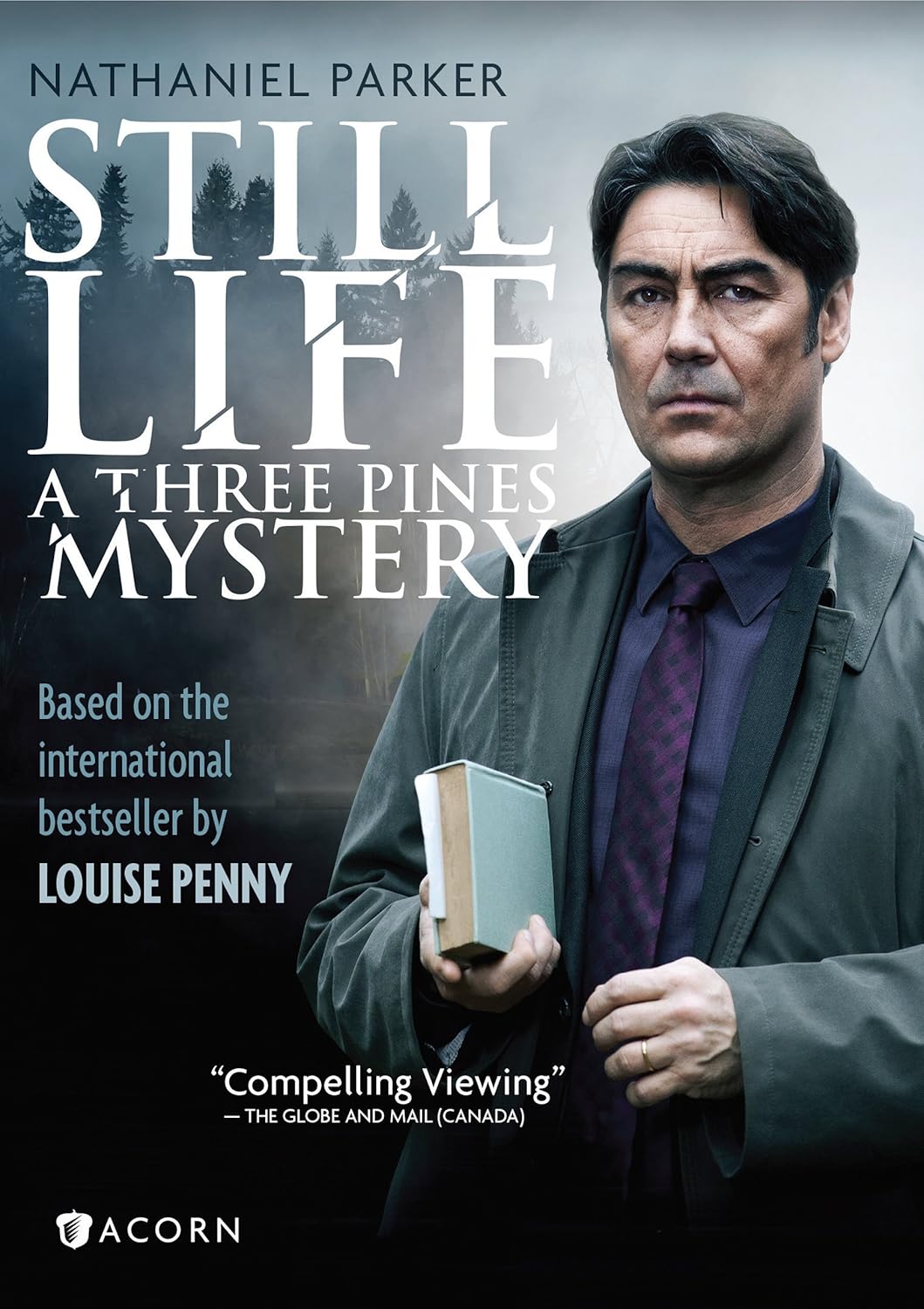
Review: Still Life - A Three Pines Mystery (TV)

Still Life: A Three Pines Mystery (2013)
based upon the debut novel by Louise Penny

Reviewed by Craig Sisterson

Chief Inspector Armand Gamache of the Sûreté du Québec and his team are called in to the scene of a suspicious death in a rural village south of Montréal and yet a world away. A long-time resident of Three Pines has been found dead in the woods. The locals are certain it's a tragic hunting accident but Gamache smells something foul this holiday season…

Canadian author Louise Penny, who'd previously grabbed notice via the CWA Debut Dagger, which recognises outstanding unpublished crime writers, made a real splash in the crime fiction world with her subsequent debut novel, STILL LIFE (St Martins, 2005). That award-hoarding debut (it won Dagger, Arthur Ellis, Barry, Anthony, and Dilys Awards) introduces engaging French-Canadian detective Armand Gamache and his team, and launched a popular series that catapulted Penny into the upper echelons of the genre.

I've heard good things about Penny's writing for years, and have several of her Gamache books on my TBR bookcases, but must embarrassingly confess I haven't yet read them. So when I stumbled upon the recent television adaptation of STILL LIFE on British television this week, I was keen to give it a watch.

The Canadian production has a very British rather than American feel to it, other than several accents, which seem a strange mix of American rather than French-Canadian, with some British ones thrown in. As an aside, at first I was a little put off by Chief Inspector Armande Gamache speaking with a very posh British accent, which rang false to me (having not read the books), but this is explained well a little later.

In a way the television production reminded me a lot of Midsomer Murders in style and cinematography as well as pacing and storytelling. There's a definite 'classic British cosy' vibe, just in a Quebec setting, which I actually really enjoyed. Almost like a modern Murder, She Wrote, but in Canada. There's something comfortingly familiar and enjoyable about that tone and atmosphere; it's certainly a refreshing change from the quick-cutting, glossy, forensic-heavy crime shows that dominate TV channels nowadays.

Gamache and his team are called to Three Pines, a quaint rural village near Montreal populated by artistic, outdoorsy and carefree types who live a different kind of life to the big city. When the body of a beloved villager is found shot dead in the woods, no one wants to believe it's anything other than a tragic accident. But there are plenty of puzzling aspects, and the reactions of some in the victim's circle are suspicious.

Louise Penny and Nathaniel Parker
(Armande Gamache) on set
Once I got past the accent, I really enjoyed British actor Nathaniel Parker's performance as Armand Gamache, as well as the interactions between his team as the stresses of the case unfold. Inspector Jean-Guy Beauvoir (Anthony Lemke) and Inspector Yvette Nichol are both very intriguing foils, particular the latter, with her abrupt manner and inability to see past her own conclusions, which nevertheless can be correct.

The mystery itself unfolds largely as any fan of classic cosies would expect - clues point in different directions, there are suspects who seem like the culprit before being discarded, we're left wondering what has really gone on or whether our heroic cops will come to the right conclusions (if we've already got ahead of them in some ways). I liked the incorporation of both artistic and hunting aspects of the rural life into the tale, and felt that the setting and the wider cast of characters were all pretty interesting and nicely evoked.

Overall this is a good television film, nicely enjoyable, without being in any way groundbreaking or 'wow'. I would certainly watch more TV adaptations of Penny's novels, and it has underlined for me that I really should read some of her books themselves. In particular, Gamache and his team offer a lot of intriguing possibilities, in terms of character development along the course of a series. I liked the languid pace, the way things unfolded, rather than being rushed, and particularly the 'old-school' investigation that involved more deductions by the detectives than some modern cop shows that just follow the evidence.

If you like modern takes on the classic murder mystery formula, Still Life is a very nice way to spend an hour and a half or so of your time.

Wednesday, September 23, 2015

Review: NEVER SAW IT COMING

NEVER SAW IT COMING by Linwood Barclay (Orion, 2013)

Reviewed by Craig Sisterson

A good story from a great writer about a scam artist who gets more than she bargained for with her latest psychic reading

Linwood Barclay is possibly the best in the business when it comes to 'suburban noir' - for several years he's been crafting exciting tales of ordinary people (well, interesting people with somewhat ordinary occupations or lives) who get caught up in danger and intrigue.

Often the person has the danger thrust into their lives by others, unwittingly, but in the case of NEVER SAW IT COMING, Barclay's central character Keisha Ceylon brings the trouble upon herself.

Keisha is a psychic. That's what she tells the grieving families she 'helps' with her gift, helping them out of plenty of money at the same time. In reality, she's a scam artist, scouring the news for potential victims, inserting herself into their lives at their most vulnerable moments, offering comfort, an explanation, closure, even hope. For a fee, of course.

But when Keisha targets a man she sees distraught on TV after his wife disappeared for a big payday, he sees right through her act, and that reality now puts Keisha in grave danger, having to rely on former co-conspirators and an untrustworthy layabout of a boyfriend to survive. Karma for the con artist...

This is another slick and smoothly told tale from Barclay, who draws us into Keisha's world and creates a great 'I want to know what happens' narrative drive despite a rather dislikable cast of characters. A converted novella, NEVER SAW IT COMING is a lot shorter than Barclay's usual fare, and perhaps for that reason it at times seems a little shallower than his other works when it comes to character and setting. There is plenty of action and intrigue, and some colourful characters, without quite delving to his usual depth.

I was certainly absorbed by this tale, but it never quite gelled for me, perhaps because of the high standards I usually expect from Barclay. Good rather than great, compared to his other work, although there was a lot I liked about NEVER SAW IT COMING - it is an enjoyable read. Keisha is a rather well-drawn character, and there is no reason that less than likable characters can't be the spine of a great story. Most of the time, she works well as the centrepiece - although she's a scam artist and a bit of a scumbag, we can also feel for her and understand why she does what she does, trying to care for her son and scrabble for a better life.

But for whatever reason, I never felt fully engaged with her plight, as I have with Barclay's other novels. The tale has plenty of exciting and surprising twists, and delivers on a number of levels, but for me it's more of a double than a home run, from an author who's a big-time home run hitter.

Worth a read as a fun palate cleanser between his meatier tales.

I originally read this book back in 2013, and have reviewed it here on Crime Watch now as part of an ongoing project of longer, more in-depth reviews of books I've covered in shorter form elsewhere. 

Sunday, August 2, 2015

Review: ONE NIGHT IN MISSISSIPPI

ONE NIGHT IN MISSISSIPPI by Craig Shreve (Thomas Allen, 2015)

Reviewed by Craig Sisterson

Fifty years ago, the American South was aflame, as the growing Civil Rights movement clashed with bigotry, hatred, and violence from too many in local communities that had been raised to assume the colour of someone's skin said more about who they were and what they were capable of than their actions or what was in their heart. Fear of the unknown, of change, of an upturning of the "way things have always been," fuelled prejudice and lead to horrific atrocities.

Canadian author Craig Shreve delves into this turbulent time, and its ongoing impact, in his novel ONE NIGHT IN MISSISSIPPI, an assured debut that's both tender and brutal, thought-provoking and heart-breaking. An absorbing story of two brothers: one who tries to "accept his place" and enjoy life, another who strives to change things for the better.

Warren Williams is a drifter, an itinerant soul troubled by his past. But a half century ago he was a young boy trying to survive in the rough and tumble world of rural Mississippi, working hard to help his father on the family cotton farm. Proud, but realistic, he was bemused, inspired, and annoyed by his younger brother Graden's attempts to better himself intellectually, to forge a life beyond a hand-to-mouth blue-collar existence. Shreve nicely captures the mixture of sibling bond and rivalry, as he bounces between contemporary times and the brothers' life growing up in 1960s Mississippi.

As Graden grows into a young man at the time of the Civil Rights movement, he's inspired by the likes of Dr Martin Luther King Jr, and looks to galvanise local black people to take a stand. His efforts are cut short when he's lynched.

Corroded by guilt, Warren sees the perpetrators walk free from court; a shameful sign of the times. Years later when the US Justice Department begins reopening cases, he finds purpose in helping bring Graden's killers to justice, building to a surprising showdown in northern Ontario with the last killer standing, Earl, who was just a boy himself at the time.

ONE NIGHT IN MISSISSIPPI is a short but powerful novel. Shreve does a great job evoking 1960s life in the changing rural scene, and giving us insights into characters that are more complex and layered than just, pardon the pun, black and white.

We see things through the eyes of Warren, but also Earl, two men who've lived with the guilt and consequences of an abominable tragedy that occurred when they were mere boys. We scratch behind the images from history to see something of the personal stories and perspectives, the complex nature of the times. Were white northerners coming to the South full of good intentions to help black people secure voting rights a good thing, or horribly naïve? Did the black community muzzle and frustrate some of their own leaders just as much as vocal and violent rednecks?

Shreve, who is a descendant of a nineteenth-century anti-slaving activist and was born and raised in North Buxton, an Ontario town that provided a safe end-point for slaves escaping on the famed Underground Railroad, raises plenty of thought-provoking questions while delivering a page-turning tale, and avoiding falling into caricatures or cliché.


At times confronting, ONE NIGHT IN MISSISSIPPI is reminiscent of excellent screen stories like Ghosts of Mississippi and Mississippi Burning, while still being a unique, valuable tale in its own right. Shreve does a great job at unpacking some of the layers beneath the headlines and historical footnotes, and makes us care about his characters.

I reviewed this book for Reviewing the Evidence, a terrific crime fiction review website
This fine debut novel is also my 'Mississippi' book for the USA Fiction Challenge.