Showing posts with label rural noir. Show all posts

Tuesday, April 28, 2026

"Visceral, powerful, finely crafted" - review of BEARTOOTH

BEARTOOTH by Callan Wink (Spiegel & Grau, April 2026)

Reviewed by Craig Sisterson

Thad and Hazen live off the grid, struggling with debt after the death of their father. Thad, the elder brother, is the capable one, while Hazen is a dreamer, more in tune with the wilderness than with people. Then a shadowy out-of-towner called the Scot appears—dressed in a kilt and with a mysterious young woman in tow. He makes the brothers a proposition that is both lucrative and a federal crime—removing resources from Yellowstone National Park, a scheme that becomes more appealing when their long-gone mother shows up, raising troubling questions about the past. 

A contemporary tale with a timeless feel, Beartooth explores the bonds between brothers, the natural world versus society, and what happens when everything you believed to be true is turned on its head—for worse and for better. 

There’s a deep contrast between the stark beauty of Callan Wink’s writing and the visceral nature of what he describes at times in his sublime novel Beartooth. A literary rural noir centred on the (mis)adventures of a pair of backwoods brothers, we initially meet Thad, the relative brains of the duo, and younger Hazen, the intuitive one, as they’re elbows deep in an eviscerated bear. Freshly poached, emitting smells “with a flavour of nightmare”; the brothers are willing to get bloody as they grasp for the golf-ball sized gall bladders that can bring in as much cash as ten truckloads of firewood.

But how much would they risk in order to preserve their family home and way of life? 

Initially Thad doesn’t entertain the notion put forward by their menacing buyer, ‘the Scot’ to surreptitiously enter Yellowstone National Park to harvest elk antler sheds. Federal land and felony crimes = big time prison time. But as things worsen, Thad and Hazen must make some tough choices, that could have deadly consequences.

Those who enjoy ‘grit lit’ are likely to love Beartooth. 

It’s an atmospheric, vivid and finely crafted tale of family relationships, desperation and death set against a ruggedly magnificent backdrop. Wink, a fly-fishing guide in Montana as well as literary starlet, expertly soaks readers in “nature, red in tooth and claw”. 

Compact and powerful.

Craig Sisterson is a lawyer turned writer, editor, podcast host, awards judge, and event chair. He's the founder of the Ngaio Marsh Awards, co-founder of Rotorua Noir, author of Macavity and HRF Keating Award-shortlisted non-fiction work SOUTHERN CROSS CRIME, editor of the DARK DEEDS DOWN UNDER anthology series, and writes about books for magazines and newspapers in several countries.

Thursday, November 20, 2025

“Unique, enthralling mystery" - review of THE NANCYS AND THE CASE OF THE MISSING NECKLACE

THE NANCYS AND THE CASE OF THE MISSING NECKLACE by RWR McDonald (Orenda Books, Nov 2025)

Reviewed by Craig Sisterson

Eleven-year-old Tippy’s uncle and his boyfriend turn up in her small New Zealand town to look after her when his mother is away over Christmas, but when her schoolteacher is found dead and her best friend has a near-fatal accident, the trio turns detective, dubbing themselves The Nancys, and launching a chaotic, hilarious investigation.

I don't know if I've grinned as much reading a crime novel for quite a long time. There's such a lovely sense of exuberance to Melbourne-based Kiwi author RWR McDonald's debut mystery, which is set in a fictional small town in the deep south of New Zealand.

Delightful, charming, heartfelt, exuberant; they're not usually the words that come top of mind when musing on a crime novel, but they absolutely fit for The Nancys and the Case of the Missing Necklace, which has an adolescent heroine but is very much an adult mystery novel (not a young adult or juvenile mystery).

I can certainly see why the then-unpublished manuscript was highly commended in the Victorian Premier's Literary Awards (a pipeline that has highlighted the likes of The Dry by Jane Harper, The Rosie Project by Graeme Simsion, and The Nowhere Child by Christian White).

There's just something, well, je ne sais quoi, about The Nancys and the Case of the Missing Necklace that makes it quite different to much of the great rural and small-town crime writing coming out of Australia and New Zealand in recent years. While it has some of the quirky local characters and secrets-behind-closed-doors you'd expect with 'rural noir', there's a different energy and tone, delightfully so.

At its heart, and the book has a big one, The Nancys and the Case of the Missing Necklace centres on the misadventures of an unlikely investigating trio and the colourful South Otago townsfolk they encounter. along the way.

Tippy Chan is an eleven-year-old Riverstone local delighted by a visit from her beloved Uncle Pike, a Sydney hairdresser who could body double for Santa Claus. Pike has returned to the riverside town he fled years before - "the town that style forgot", as the blurb aptly describes - with his fashionista boyfriend Devon in tow, to look after Tippy while her mother goes on a cruise.

It's been a tough time for the Chan family, with Tippy's father passing away in the past year and even more stress heaped on her mother, Pike's sister, who could do with a good break away. Tippy loves her uncle’s old Nancy Drew books, and when her best friend falls off a bridge and then her teacher’s body is found near the town's only traffic light, the trio see a chance to solve a mystery for real. At the same time they're juggling other local adventures, including a surprising makeover of a glum teenage neighbour for a local show, and Pike dealing with his past history in the town.

Overall The Nancys and the Case of the Missing Necklace is a real delight, a charming mystery that is much more than charm, packed with lovably unruly characters and chaotic events and perfectly seasoned with humour and heart. First-time novelist McDonald has opened his account with a real belter, a unique and enthralling tale.

[I originally reviewed this book for the New Zealand Listener and this blog on its original Australian and New Zealand release a few years ago. Today a newly edited and updated version, The Nancys and the Case of the Missing Necklace has been published for the first time for UK, USA & global market

Craig Sisterson is a lawyer turned writer, editor, podcast host, awards judge, and event chair. He's the founder of the Ngaio Marsh Awards, co-founder of Rotorua Noir, author of Macavity and HRF Keating Award-shortlisted non-fiction work SOUTHERN CROSS CRIME, editor of the DARK DEEDS DOWN UNDER anthology series, and writes about books for magazines and newspapers in several countries.

Friday, January 3, 2025

"A character centric ride through modern America" - review of GUIDE ME HOME

GUIDE ME HOME by Attica Locke (Viper, 2024)

Reviewed by Craig Sisterson

Texas Ranger Darren Mathews has handed in his badge. A choice made three years before, which served justice if not the law, means that he may now stand trial. And his mother - an intermittent and destructive force in his life - is the cause of his fall from grace.

And yet it is his mother's reappearance that may also be his salvation. A black girl at an all-white sorority at a nearby college is missing, her belongings tossed in a dumpster. Her sorority sisters, the college police, even the girl's own family, deny that she has disappeared, but Sera Fuller is nowhere to be found. A bloodstained shirt discovered in a woodland clearing may be the last trace of her. And Darren's mother wants her son to work the case.

Disillusioned by an America forever changed by the presidency of Donald Trump, Darren reluctantly agrees. Yet as he sets out to find a girl whose family don't want her found, it is his own family's history that may be brought painfully into the light. And a reckoning with his past may finally show Darren the future he can build.

For me, Texas-born Attica Locke's superb 2017 thriller Bluebird, Bluebird, the first in her series starring black Texas Ranger Darren Mathews, may be one of the best novels of the past decade, with its rich storytelling and incisive observations about dangerous rhetoric emboldening a white supremacist underbelly desperately clinging on in America.

Five years after its excellent sequel, Heaven My Home, we now have a fitting finale to an outstanding ‘Highway 59’ trilogy. With the legal consequences of past choices still hanging over him like a sword of Damocles, a bourbon-soaked Mathews hands in his badge. Then his mother, who’s played a key role in his many troubles, reappears. Apparently sober, wanting his help to find what’s happened to a black girl missing from the all-white sorority where Darren’s mother now works.

Disillusioned by how law and justice are being twisted in Trump’s America, Mathews reluctantly agrees, only to uncover a snake’s den of deceit, and discover far more about his own family history.

Locke once again soaks readers in the East Texas setting, and the humanity and frustrations of good people trying to live and operate in an unjust world. Mathews is confronted not only by the mystery of a missing girl who everyone – even her family – seems to insist is okay, but the mystery of his mother, and his accepted narrative of his own past. 

Locke takes readers on an emotional, character-centric ride through a slice of modern America, where the prejudices and divisions of the past are stirred up and shaken out in various ways in the present.

While it's a little disappointing Locke has said that Guide Me Home will be the final Darren Mathews tale, for the foreseeable future at least - after originally planning a longer running series - overall it is an excellent read and a fitting finale to a terrific trilogy that captures, all to scarily, some of the simmering realities of a nation changed, or perhaps just revealed, by Trump's 'MAGA' inciting runs for President. 

Top shelf. 

Craig Sisterson is a lawyer turned writer, editor, podcast host, awards judge, and event chair. He's the founder of the Ngaio Marsh Awards, co-founder of Rotorua Noir, author of Macavity and HRF Keating Award-shortlisted non-fiction work SOUTHERN CROSS CRIME, editor of the DARK DEEDS DOWN UNDER anthology series, and writes about books for magazines and newspapers in several countries.

Tuesday, August 9, 2022

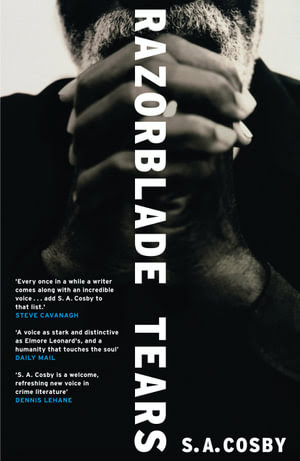
Review: RAZORBLADE TEARS

RAZORBLADE TEARS by SA Cosby (Headline, 2021)

Reviewed by Craig Sisterson

A black father and a white father join forces on a crusade for revenge against the people who murdered their gay sons, by S.A. Cosby, the award-winning author of Blacktop Wasteland.

Back in the first year of the pandemic, 2020, heist thriller-cum-rural noir BLACKTOP WASTELAND was arguably the crime novel of the year (later reinforced by it winning numerous awards in 2021) and its author SA Cosby the breakout star. It was deservedly feted across the world by readers, critics, and awards judges as heralding the arrival of a striking voice. But Cosby was no overnight success, he'd been working on his craft for twenty years before the wider reading world began to take big notice. 

BLACKTOP WASTELAND was a superb, snarling tale, bringing a fresh perspective to rural noir and infused with striking characters, plenty of action, and important underlying themes. It did leave a big question though – what would the blue-collar Virginia author do next, now he’d set the bar so high? 

Last year we got our answer, and somehow, incredibly, RAZORBLADE TEARS was even better. 

Quite simply, it's an astonishing novel. A tour de force of crime storytelling. 

Ike Randolph and Buddy Lee are two quite different men in the rural South, though they’ve a few things in common: they both know what it’s like behind bars, and they’re both fathers to gay sons who they loved but struggled to fully accept. A black man and a white man brought together by the murder of their boys, who’d married each other, Ike and Buddy Lee embark on a no-holds-barred search for those responsible. And are forced to confront their own prejudices along with those of others.

This is a Southern Gothic revenge thriller of the most outstanding kind: violent, thoughtful, emotionally hard-hitting, and brilliant. Cosby writes with a poetic ferocity, and RAZORBLADE TEARS is a modern masterpiece. Run don't walk to get it from your local bookshop or library, if you haven't devoured it already. I'll be pre-ordering anything Cosby writes in future. 

We're witnessing the ascent of a bright new star in our genre. 

Craig Sisterson is a lawyer turned features writer who's interviewed hundreds of crime writers and talked about the genre on national radio, top podcasts, and onstage at festivals on three continents. He's been a judge of Australian, Scottish, and NZ crime writing awards, and is co-founder of Rotorua Noir. He's the author of the HRF Keating award-shortlisted non-fiction book SOUTHERN CROSS CRIME, and the series editor of acclaimed anthology DARK DEEDS DOWN UNDER. You can heckle him on Twitter. 

Friday, August 5, 2022

Review: DON'T KNOW TOUGH

DON'T KNOW TOUGH by Eli Cranor (Soho Press, 2022)

Reviewed by Craig Sisterson

Friday Night Lights meets Southern Gothic, this thrilling debut is for readers of Megan Abbott and Wiley Cash. In Denton, Arkansas, the fate of the high school football team rests on the shoulders of Billy Lowe, a volatile but talented running back. Billy comes from an extremely troubled home: a trailer park where he is terrorized by his unstable mother’s abusive boyfriend. Billy takes out his anger on the field, but when his savagery crosses a line, he faces suspension.

Without Billy Lowe, the Denton Pirates can kiss their playoff bid goodbye. But the head coach, Trent Powers, who just moved from California with his wife and two children for this job, has more than just his paycheck riding on Billy’s bad behavior. As a born-again Christian, Trent feels a divine calling to save Billy—save him from his circumstances, and save his soul.

Then Billy’s abuser is found murdered in the Lowe family trailer, and all evidence points toward Billy. Now nothing can stop an explosive chain of violence that could tear the whole town apart on the eve of the playoffs.

It’s the voice that grabs you first in Arkansas teacher and former quarterback Eli Cranor’s astonishing debut novel. Billy Lowe, a tough teen who shoulders the dreams of many in the backwater of Denton, Arkansas. A high school running back who lives in a trailer park and gets his neck used as an ashtray by the abusive boyfriend of his mother, who unleashes his rage on the football field. And sometimes off.

California high school coach Trent Powers didn’t envisage Denton in his plans, a town of poultry farms and trailer parks. But after he was banished by his father-in-law, it may be his last-chance saloon. His wife Marley wants a state title even more than he does: it’s their ticket to escape, to reclaim some of what they should have had. Billy’s a simmering volcano, but they need him. He crosses the line, but Trent takes him into his home, seeking redemption as well as wins. Then the rotting body of Billy’s abuser is found. Everyone has secrets, and is scrabbling to survive. Not all will.

Cranor delivers a powerful tale full of darkness, desperation, and humanity. 

DON'T KNOW TOUGH is an exceptional slice of Southern Gothic that heralds the arrival of a terrific new voice in rural noir. Cranor takes readers into the grimy underbelly of high school sports, but this tale is about far more than football. A clash of values and principles, between characters and within them. Evocative prose throughout, and an extraordinary first-person voice in Billy’s passages. 

A triumph of a debut.

Craig Sisterson is a lawyer turned features writer who's interviewed hundreds of crime writers and talked about the genre on national radio, top podcasts, and onstage at festivals on three continents. He's been a judge of Australian, Scottish, and NZ crime writing awards, and is co-founder of Rotorua Noir. He's the author of the HRF Keating award-shortlisted non-fiction book SOUTHERN CROSS CRIME, and the series editor of acclaimed anthology DARK DEEDS DOWN UNDER. You can heckle him on Twitter. 

Tuesday, August 2, 2022

Review: REMEMBER ME

REMEMBER ME by Charity Norman (Allen & Unwin, 2022)

Reviewed by Craig Sisterson

They never found Leah Parata. Not a boot, not a backpack, not a turquoise beanie. After she left me that day, she vanished off the face of the earth.

A close-knit community is ripped apart by disturbing revelations that cast new light on a young woman's disappearance twenty-five years ago.

After years of living overseas, Emily Kirkland returns to New Zealand to care for her father, Felix, who suffers from dementia. As his memory fades and his guard slips, she begins to understand him for the first time - and to glimpse shattering truths about his past. Truths she'd rather were kept buried.

Recently I was interviewed by the New Zealand Listener (a turnabout - I'm usually the one doing the interviewing) about the 'Books of My Life' - various books that have had an impact on me in childhood and as an adult. 

One of the questions was: "Which was the last book that made you laugh or cry?" The answer on the 'cry' front was this outstanding novel: REMEMBER ME by Charity Norman, a Ugandan-born storyteller who grew up among UK vicarages and has lived the past two decades in rural New Zealand. 

After Norman's tense London-set hostage thriller THE SECRETS OF STRANGERS, which was shortlisted for Best International Crime Fiction at the Ned Kelly Awards and Best Novel at the Ngaio Marsh Awards, Norman now ‘returns home’, taking readers deep into the small towns and wild landscapes of central Hawke’s Bay. REMEMBER ME is an eloquent, heart-breaking tale that meshes family drama with rural suspense. Children’s illustrator Eliza Kirkland returns from London to help her aging father, a retired doctor whose personality is now melting away. The culprit: Alzheimer’s.

Back in her childhood home in the foothills of the Ruahine Ranges, Eliza is assaulted by memories, past tragedies, and secrets. A quarter century ago she was the last person to see neighbour Leah Parata before the young PhD scientist vanished. Norman takes readers on an emotional journey as Eliza deals with her father’s disease, family strife, and stumbles over troubling connections to Leah among her father’s possessions. Has this stoic man, who helped lead the search team that combed the mountains for Leah, been keeping a horrible secret for 25 years? 

Norman does a terrific job immersing readers in Eliza's upturned life, and the landscapes of rural Hawke's Bay. REMEMBER ME is an absorbing, slow-burn thriller-cum-family drama that's beautifully written and evocative. A terrific read from a master storyteller. Highly recommended. 

Craig Sisterson is a lawyer turned features writer who's interviewed hundreds of crime writers and talked about the genre on national radio, top podcasts, and onstage at festivals on three continents. He's been a judge of Australian, Scottish, and NZ crime writing awards, and is co-founder of Rotorua Noir. He's the author of the HRF Keating award-shortlisted non-fiction book SOUTHERN CROSS CRIME, and the series editor of acclaimed anthology DARK DEEDS DOWN UNDER. You can heckle him on Twitter. 

Friday, July 29, 2022

Review: IT DIES WITH YOU

IT DIES WITH YOU by Scott Blackburn (Crooked Lane Books, 2022)

Reviewed by Craig Sisterson

For nearly a decade, twenty-nine-year-old Hudson Miller has made his living in the boxing ring, but a post-fight brawl threatens to derail his career. Desperate for money, Hudson takes a gig as a bouncer at a dive bar. That’s when life delivers him another hook to the jaw: his estranged father, Leland, has been murdered in what appears to be a robbery-gone-bad at his salvage yard, Miller’s Pull-a-Part.

Soon after his father’s funeral, Hudson learns he’s inherited the salvage yard, and he returns to his Bible-belt hometown of Flint Creek, North Carolina, to run the business. But the business is far more than junk cars and scrap metal. It was the site of an illegal gun-running ring. And the secrets don’t end there; a grisly discovery is made at the yard that thrusts Hudson into the fight of his life.

North Carolina author Scott Blackburn pulls a nifty feint with his gritty, character-centric rural noir tale It Dies With You: he’s a first-time novelist but if you didn’t know that you’d swear you were in the hands of someone with plenty of books under their belt.

Hudson Miller is a boxer who can’t box, relegated to bouncing at a dive bar thanks to a post-fight brawl that threatens his living. The punches keep coming when Hudson learns his estranged father Leland has been shot in the back of the head at his scrapyard. The cops think it’s a robbery gone wrong. Having been arrested at his father’s wedding, Hudson is surprised to find he’s inherited some rental trailer homes and the scrapyard. Returning to his Bible-belt hometown of Flint Creek, he’s unprepared for all he’ll uncover. Was his father part of an illegal gun-running ring? Then, a grisly discovery.

Forming an unlikely trio with his father’s crotchety employee, Charlie, who’s closer to 80 than 60, and sparkplug teenager Lucy Reyes who’s seeking justice for a death in her own family, Hudson peels the skin from what’s really been going on in Flint Creek. 

Marvellous storytelling with terrific characters and a strong voice. 

If you’re a reader who enjoys the ‘grit lit’ of authors like Wiley Cash, David Joy, or Brian Panowich, this is a must-have for your shelves. More please.

Craig Sisterson is a lawyer turned features writer who's interviewed hundreds of crime writers and talked about the genre on national radio, top podcasts, and onstage at festivals on three continents. He's been a judge of Australian, Scottish, and NZ crime writing awards, and is co-founder of Rotorua Noir. He's the author of the HRF Keating award-shortlisted non-fiction book SOUTHERN CROSS CRIME, and the series editor of acclaimed anthology DARK DEEDS DOWN UNDER. You can heckle him on Twitter. 

Wednesday, December 15, 2021

Review: WHEN GHOSTS COME HOME

WHEN GHOSTS COME HOME by Wiley Cash (William Morrow, 2021)

Reviewed by Craig Sisterson

When the roar of a low-flying plane awakens him in the middle of the night, Sheriff Winston Barnes knows something strange is happening at the nearby airfield on the coast of North Carolina. But nothing can prepare him for what he finds: a large airplane has crash-landed and is now sitting sideways on the runway, and there are no signs of a pilot or cargo. When the body of a local man is discovered—shot dead and lying on the grass near the crash site—Winston begins a murder investigation that will change the course of his life and the fate of the community that he has sworn to protect.

Everyone is a suspect, including the dead man. As rumors and accusations fly, long-simmering racial tensions explode overnight, and Winston, whose own tragic past has followed him like a ghost, must do his duty while facing the painful repercussions of old decisions. Winston also knows that his days as sheriff may be numbered. He’s up for re-election against a corrupt and well-connected challenger, and his deputies are choosing sides. As if these events weren’t troubling enough, he must finally confront his daughter Colleen, who has come home grieving a shattering loss she cannot fully articulate.

As an unabashed fan of Wiley Cash’s earlier Southern noir tales of broken and bedraggled people clawing for something better for themselves or those they care about in the contradictory gumbo of small-town North Carolina, it’s been a long seven-year wait since his CWA Gold Dagger-winning This Dark Road to Mercy (punctuated by Cash’s historical tale, The Last Ballad, entwined with 1920s union conflict).

In When Ghosts Come Home, Sheriff Winston Barnes and his cancer-battling wife are woken by a plane coming in low over their home in coastal North Carolina. It’s the 1980s, the town has a small airstrip, but no one should be landing at night. When Sheriff Barnes, who’s in the final days of an election fight he’s destined to lose, discovers a large plane crashed yet completely empty, and the body of a local black man shot dead nearby, he embarks on an investigation that will forever alter him and his community. As rumours fly and tensions crackle, Barnes also has to deal with a visiting FBI specialist and his own daughter, who’s made a surprise visit home from Texas as she continues to grieve a heart-breaking loss.
 
Trauma weighs down many characters in Cash’s latest novel, which sings along on lyrical prose, rich characters, and an exquisite sense of place. Can Sheriff Barnes find the killer before he’s kicked out of office by local developer Bradley Frye, who seems more interested in power than justice? Will the racial tensions in town explode as Confederate flag-waving trucks terrorize the Black neighbourhoods?

Cash weaves a rather wonderful tale - and for much of the story When Ghosts Come Home threatens to match or somehow better the layered and lyrical brilliance of A Land More Kind Than Home and This Dark Road to Mercy. But Cash set the bar very high with his first two crime novels, and perhaps here he wobbles it rather than clearing it clean. Some events may divide or dismay readers (and there’s perhaps a shade too much ‘author hand’ to deliver a desired effect here and there). But overall, Cash has once again delivered an exceptionally fine novel. 

When Ghosts Come Home is something to savour.

Note: this is a lightly edited version of a review first published in the Fall 2021 issue of Mystery Scene magazine in the United States. 

Craig Sisterson is a lawyer turned writer, editor, podcast host, awards judge, and event chair. He's the founder of the Ngaio Marsh Awards, co-founder of Rotorua Noir, author of Macavity and HRF Keating Award-shortlisted non-fiction work SOUTHERN CROSS CRIME, and writes about books for magazines and newspapers in several countries.

Saturday, April 10, 2021

Review: THE LAST CHILD

THE LAST CHILD by John Hart (John Murray, 2009)

Reviewed by Craig Sisterson

Thirteen-year-old Johnny Merrimon has to face things no boy his age should face. In the year since his twin sister's abduction his world has fallen apart: his father has disappeared and his fragile mother is spiralling into ever deeper despair. Johnny keeps strong. Armed with a map, a bike and a flashlight, he stalks the bad men of Raven County. The police might have given up on Alyssa; he never will. Someone, somewhere, knows something they're not telling.

Only one person looks out for Johnny. Detective Clyde Hunt shares his obsession with the case. But when Johnny witnesses a hit-and-run and insists the victim was killed because he'd found Alyssa, even Hunt thinks he's lost it.

And then another young girl goes missing ..

So here we are - the 100th day of the year, and the 100th day of the #100Days100Books challenge I set myself to start 2021, a bounce-back from my posting on Crime Watch being very sporadic last year.

I hope you've enjoyed some of the books covered, and the 14 editions of 9mm interviews that were woven throughout the challenge as well. I really enjoyed talking to these fantastic crime writers. 

I've gone back and forth on what to include here as the 100th and final book/author in this wee mini-challenge to myself. I felt it should be something special. Perhaps the new Penguin Classics edition of a Chester Himes book, that I read this week? I was even tempted when I woke up this morning and saw my Nelsonian booklover and blogger Alyson Baker - who regularly contributes to Crime Watch as a reviewer - had posted a review of my own book SOUTHERN CROSS CRIME, to maybe use that... 

In the end, I've instead decided to revisit and highlight a really superb novel that was one of my very, very favourites from my first few years of being a magazine/newspaper reviewer and blogger. A book that I'd been thinking about a fair bit lately, even though it came out 12 years ago. 

As I mentioned last week, recently I've been thinking about the best books of not just a single year, but an entire decade - thanks in part to a series that highly regarded book blogger Grab This Book (aka Gordon) has started, getting reviewers and writers to share books they'd add to a library of great tales.

Attorney-turned-author John Hart's third novel, THE LAST CHILD, would be one of my top contenders for best novel of the 2000s decade. To be honest, his second novel DOWN RIVER may be in the mix as well. He had an extraordinary start to his career, being shortlisted for the Edgars for each of his first three books, winning the Edgar for Best Novel twice (a rarity), for consecutive books.

In THE LAST CHILD, Johnny Merrimon is a thirteen-year-old boy who looks ten but has seen and endured more than most sixty-year-olds. His twin sister disappeared a year ago, his father cracked under the pressure and left, and his mother has given up; turning to drugs and a relationship with a rich but abusive man. A burnt-out cop tries to help but has his own issues, and Johnny finds himself alone on a vigilante mission. Then another young girl goes missing, and a dying man’s last words fuel Johnny’s long-held hope. Could the disappearances be linked? 

Can he finally find answers and heal his broken family? 

Sometimes when I read a novel that has received a lot of praise, I can be left a bit underwhelmed, even if I enjoy the story overall. That's happened again and again over the past 13 years of writing reviews for magazines and more. It's almost as if the expectations are raised too high, and the author has to knock it far out of the park to even make par (okay, mixed sporting metaphor there). 

But put simply, THE LAST CHILD is an exceptional novel; a literary crime thriller that is as much about its rich cast of layered, authentic and damaged characters as its intelligent and engrossing storyline. Hart writes beautifully, evoking aspects of the human condition alongside echoes of the Southern Gothic tradition, building his tale towards a surprising yet most fitting conclusion.

Huckleberry Finn meets James Lee Burke, all in a strong and unique narrative voice.

When I first read THE LAST CHILD over a decade ago, I thought it was a masterpiece. Revisiting it having read more than a thousand books since, it remains a standout crime novel. In the years since, Hart has produced several other terrific novels, and even revisited the characters of Johnny Merrimon and Jack Cross as young men in THE HUSH, a rural thriller with a touch of magic realism. 

For my money, John Hart is one of the finest crime writers in the game. He's not a book every year kind of author, but each of his novels has been well worth the wait. Go back to the beginning and try KING OF LIES, DOWN RIVER, and then THE LAST CHILD. If you like lyrical crime writing with chasm-deep characters, drenched in a Southern Gothic setting, you just may become a very big fan. Like me. 


Craig Sisterson is a lawyer turned features writer from New Zealand, now living in London. He’s interviewed hundreds of crime writers and talked about the genre on national radio, top podcasts, and onstage at festivals on three continents. He's been a judge of Australian, Scottish, and NZ crime writing awards, and is co-founder of Rotorua Noir. His first non-fiction book, SOUTHERN CROSS CRIME, was published in 2020. You can heckle him on Twitter. 

Saturday, January 23, 2021

Review: LIKE LIONS

LIKE LIONS by Brian Panowich (Minotaur Books, 2019)

Reviewed by Craig Sisterson

Clayton Burroughs is a small-town Georgia sheriff, a new father, and, improbably, the heir apparent of Bull Mountain’s most notorious criminal family.

As he tries to juggle fatherhood, his job and his recovery from being shot in the confrontation that killed his two criminally-inclined brothers last year, he’s doing all he can just to survive. Yet after years of carefully toeing the line between his life in law enforcement and his family, he finally has to make a choice.

When a rival organization makes a first foray into Burroughs territory, leaving a trail of bodies and a whiff of fear in its wake, Clayton is pulled back into the life he so desperately wants to leave behind. Revenge is a powerful force, and the vacuum left by his brothers’ deaths has left them all vulnerable. With his wife and child in danger, and the way of life in Bull Mountain under siege for everyone, Clayton will need to find a way to bury the bloody legacy of his past once and for all. 

I've long been a fan of the 'grit lit' tales and rural noir of the American South - particularly enjoying the likes of John Hart, James Lee Burke, Wiley Cash, and James Sallis, among others - so I'd been curious for a while about Brian Panowich's crime writing set in the wild mountains of Georgia. I'd heard some very good things about his debut BULL MOUNTAIN (2015), but ended up reading this sequel first.

Put simply, it's terrific.

There's a mix of lyricism and stark violence in Panowich's storytelling, which gives this tale a sort of mesmerising grittiness and hooked me on several levels from the earliest pages. Clayton Burroughs is an intriguing character - a lawman who comes from a family more comfortable on the other side of the law. He's burdened by many things that have happened in the past (both in BULL MOUNTAIN and before), as well as an assortment of troubles in the present. 

Thanks to Panowich's fine prose and storytelling Clayton's descent into pills and booze as he struggles to deal with things feels human and heart-aching rather than a crime novel cliché. 

Panowich lured me in with both his style and his story. LIKE LIONS is a crime tale that bubbles away like a backwater still, creating and concentrating into something that packs quite the hefty punch.

But the real heart and deep richness of this novel is in the characters who live on this wild mountain in Georgia - their struggles and choices and the consequences that follow from what they do and don't. 


LIKE LIONS is excellent rural crime fiction: an emotionally charged novel that's full of drama and caries a deep understanding of people and place. A hard-hitting combination of family drama and crime, wonderfully written by a strong voice. How much did I like it? As soon as I finished I immediately went and got myself a copy of BULL MOUNTAIN.

Among my favourite reads of recent years. 

Craig Sisterson is a lawyer turned features writer from New Zealand, now living in London. In recent years he’s interviewed hundreds of crime writers and talked about the genre on national radio, top podcasts, and onstage at books festivals on three continents. He has been a judge of the Ned Kelly Awards and the McIlvanney Prize, and is founder of the Ngaio Marsh Awards and co-founder of Rotorua Noir. His first non-fiction book, SOUTHERN CROSS CRIME, was published in 2020. You can heckle him on Twitter. 


Tuesday, November 10, 2020

Review: PEACE

PEACE by Garry Disher (Viper Books, 2020)

Reviewed by Craig Sisterson

Constable Paul Hirschhausen runs a one-cop station in the dry farming country south of the Flinders Ranges. He's still new in town but his community work - welfare checks and a light touch - is starting to pay off. Now Christmas is here and, apart from a grass fire, two boys stealing a vehicle, and Brenda Flann entering the front bar of the pub without exiting her car, Hirsch's life has been peaceful.

Until he's called to an incident on Kitchener Street, a strange and vicious attack that sickens the community. And when the Sydney police ask him to look in on a family living on a forgotten back road, it doesn't look like a season of goodwill at all...

While several fresh antipodean voices have recently garnered global attention and accolades for their outstanding tales set in rural Australia - from the CWA Dagger-winning novels of Jane Harper and Chris Hammer to even more recently the likes of Gabriel Bergmoser with THE HUNTED - Garry Disher shows once again in PEACE why he’s the master who paved the way. 

Put simply - this is a superb tale where the violence simmers in a small community and the heat haze shimmers from the page. Right from the opening lines its clear you’re in the hands of a consummate storyteller. 

A couple of years ago Disher received the Ned Kelly Lifetime Achievement Award, just recognition of a rich crime writing resume, and PEACE shows he ain’t resting on his laurels. It marks the return of likable police constable Paul ‘Hirsch’ Hirschhausen from 2013’s terrific BITTER WASH ROAD, which won the German Crime Prize. 

Exiled from Adelaide to tiny Tiverton, Hirsch’s beat involves a lot of long drives, welfare calls, and dealing with drunken shenanigans. At times his biggest stress may be playing Santa or doing his share at a community work bee. But things take a far nastier turn when someone brutally attacks Nan Washburn’s horses, and then a secretive family on the outskirts of town suffers violence that brings big-city detectives to town. 

Disher delivers dirt-caked authenticity with both the countryside setting and its eclectic inhabitants. Hirsch is an engaging hero full of humanity, juggling small-town politics and trying to handle the nastiest of crimes while being marginalised by colleagues who still blame him for the fall of other cops, corrupt or not. Disher has produced another classic.


Craig Sisterson is a lawyer turned features writer from New Zealand, now living in London. In recent years he’s interviewed hundreds of crime writers and talked about the genre on national radio, top podcasts, and onstage at books festivals on three continents. He has been a judge of the Ned Kelly Awards and the McIlvanney Prize, and is founder of the Ngaio Marsh Awards and co-founder of Rotorua Noir. You can heckle him on Twitter. 

Saturday, April 20, 2019

Review: A FATAL THAW

A FATAL THAW by Dana Stabenow (1993)

Reviewed by Craig Sisterson

On her homestead in the middle of twenty million acres of national Park, Aleut PI Kate Shugak is caught up in spring cleaning, unaware that just miles away a man's sanity is breaking. When the sound of gunfire finally dies away, nine of his neighbors lie dead in the snow. But did he kill all nine, or only eight? The ninth victim was killed with a different weapon. It's up to Kate and her husky-wolf sidekick Mutt to untangle the life of the dead blonde with the tarnished past and find her killer. It won't be easy; every second Park rat had a motive. Was it one of her many spurned lovers? Was a wife looking for revenge? Or did a deal with an ivory smuggler go bad? Even Trooper Jim Chopin, the Park's resident state trooper, had a history with the victim. Kate will need every ounce of determination to find the truth before Alaska metes out its own justice....

I've been meaning to read Dana Stabenow's long-running Kate Shugak series for quite a while now, having heard good things, so when I had a wee breather between awards judging and other 'have-to' reads a little while ago, I snagged this one from my bookshelves and gave it a go. Very glad I did.

Kate Shugak is a fascinating main character. She is a native Alaskan, an Aleut, who used to work as an investigator for the District Attorney's office in Alaska's capital Anchorage before retreating from the mental, physical, and emotional wounds suffered in that job. She now calls a sprawling homestead in an Alaskan national park home, and works from there as a private investigator.

Stabenow writes a solid mystery, but the character of Shugak and the evocation of the Alaskan setting are the elements that elevate and differentiate A FATAL THAW among the crowd. As Spring blooms in Alaska, Shugak's small community is thrown into chaos when a mass shooting occurs, costing nine lives. Or that's how it seems at first - in fact one of the victims was killed by someone else.

Throughout Shugak's investigation, Stabenow brings the Alaskan setting to vivid life, both its landscapes and the people who call them home. This is a rural mystery with a real sense of frontier edge. Stabenow also does a good job taking readers into native culture with respect, alongside populating her mystery with a host of fascinating, eccentric characters you find in small towns.

Overall I really enjoyed this tale and will definitely be reading more of the Kate Shugak series.


Craig Sisterson is a lawyer turned features writer from New Zealand, now living in London. In recent years he’s interviewed hundreds of crime writers and talked about the genre on national radio, top podcasts, and onstage at books festivals on three continents. He has been a judge of the Ned Kelly Awards and the McIlvanney Prize, and is founder of the Ngaio Marsh Awards. You can heckle him on Twitter. 

Wednesday, September 5, 2018

Lobster boats and postmodern mysteries: an interview with Paul Doiron

Kia ora and haere mai, welcome to the 30th instalment of 9mm for 2018, and the 202nd overall edition of our long-running author interview series.

Thanks for reading over the years. I've had tonnes of fun chatting to some amazing  writers and bringing their thoughts and stories to you.

You can check out the full list of of past interviewees here. If you've got a favourite writer who hasn't yet been featured yet, let me know in the comments or by message, and I'll look to make that happen for you.

Today I'm very pleased to welcome Maine author Paul Doiron to Crime Watch, who is the author of the Mike Bowditch series. Bowditch is a Maine game warden who gets involved in investigations in the rural and wilderness areas of the state. I read STAY HIDDEN recently, the ninth in the series, and loved it. As I said in a review, "Among a seemingly skyrocketing trend of domestic noir, unreliable narrators, and unlikable characters ... Doiron offers something rather timeless: an engaging series centred on an honourable and interesting detective operating in a distinct and well-evoked setting."

Paul certainly has the pedigree for his great touch for the Maine outdoors settings. Paul is a Maine native and Editor Emeritus of Down East: The Magazine of Maine, having served as Editor in Chief from 2005 to 2013, before leaving to write full time. He's served on the Maine Arts Commission and Maine Humanities Council, and is a Registered Maine Guide (specialising in fly fishing). He lives by a trout stream in coastal Maine. His Mike Bowditch series has won and been shortlisted for many major crime writing awards, and is available in a dozen different languages.

But for now, Paul Doiron becomes the latest author to stare down the barrel of 9mm.


9MM: AN INTERVIEW WITH PAUL DOIRON

1. Who is your favourite recurring crime fiction hero/detective?
An early influence and enduring favorite is Dave Robicheaux, the protagonist of James Lee Burke’s signature series set in the Louisiana bayous. Dave is a recovering alcoholic with anger issues and a willingness to stand up for his peculiar old-timey values. He’s the sort of hard-ass who will see a father slap a child in a grocery store and, instead of looking the other way, will go and confront the son-of-a-bitch.

2. What was the very first book you remember reading and really loving, and why?
I can cite two: one from childhood, and one I read as a young adult. THE HOBBIT by J.R.R. Tolkien is the book that made me want to be a writer. I was swept away by the story-telling, the attention to nature, and the world-building. The second book was A FAREWELL TO ARMS. I can still read the opening paragraphs and be transported back to the young man I was when I first encountered them, trying to find my own voice, learning how to live with pain. I am an unapologetic defender of Ernest Hemingway - the early Hemingway, at least - whose flawed and wounded protagonists are far from macho stereotypes.

3. Before your debut crime novel, what else had you written (if anything) - unpublished manuscripts, short stories, articles?
I had a career as a magazine journalist at “Down East: The Magazine of Maine." It was the perfect preparation for writing my books in that I got to know every corner of the state. Being a journalist was also helpful in three other ways for life as a novelist. It trained me to sit down and write on command. It made me unafraid to call experts with stupid research questions. And it thickened my skin against criticism.

4. Outside of writing, touring and promotional commitments, what do you really like to do, leisure and activity-wise?
When we met, my wife-to-be made it a condition of our dating that I take up birdwatching. At the time I knew nothing about birds, but over the past twenty-two years I’ve become a yeoman birder. It’s hard for some people to reconcile that gentle pastime with my enthusiasm for bird hunting. I enjoy shooting quite a bit. My real passion is fly-fishing, but I’m not a trout snob. My favorite fish to catch is probably striped bass, especially when taken off a beach or in a tidal river.

5. What is one thing that visitors to your hometown should do, that isn't in the tourist brochures, or perhaps they wouldn’t initially consider?
The town where I currently live, Camden, Maine, is almost the stereotype of a New England tourism destination. It’s a ridiculously picturesque village with a harbor filled with windjammers and lobster boats and a lighthouse winking on an island offshore. Most of the local secrets have been spilled. I always encourage travelers to Maine to take a ride on a ferry out to one of the coastal island communities — preferably off-season when there are only islanders onboard. STAY HIDDEN paints a scary portrait of one of these places, but do not be daunted!

6. If your life was a movie, which actor could you see playing you?
Oh, boy. Recently, someone saw a picture of me and said, “You look like Stellan Skarsgard!” He is a great actor…but not a young man. I hope I look as good as Stellan, fourteen years from now, when I am sixty-seven.

7. Of your writings, which is your favourite or particularly special, and why?
That’s always a tough question. I have a lot of fondness for THE POACHER’S SON because it was my first published novel. Lately I’ve been thinking about my third book. When I was writing BAD LITTLE FALLS, I tried to subvert a lot of the expectations we all have about mysteries. I took plenty of chances, some of which paid off. Years later, I stumbled across the critic Ted Gioia’s essay “The Eight Memes of The Postmodern Mystery,” and I think I said aloud, “Huh! Seven of those describe BAD LITTLE FALLS.”

8. What was your initial reaction, and how did you celebrate, when you were first accepted for publication? Or when you first saw your debut story in book form on a bookseller’s shelf?
I was at work at the magazine when my agent called to tell me that St. Martin’s Press had put in a preemptive bid on THE POACHER’S SON and two additional novels. I hadn’t even known she was sending the book out to editors yet, and here I was with a three-book contract. It took a lot of self-restraint to keep from shouting for joy in my busy workplace. Later, I treated myself to my first nice watch, an Omega Seamaster, and that seems to have become a personal tradition (of which my wife disapproves).

9. What is the strangest or most unusual experience you have had at a book signing, author event, or literary festival?

Nevada Barr sat in my lap fifteen minutes after meeting me at a book festival in Florida. I don’t remember how that happened or what she was doing there, but I have the photograph to prove it. Nevada is great.


Thanks for taking the time to chat to Crime Watch Paul, we appreciate it!

You can read more about Paul Doiron and his mysteries at his website, and can follow him on Twitter

Tuesday, September 4, 2018

Review: LEAVE NO TRACE

LEAVE NO TRACE by Mindy Mejia (Quercus, 2018)

Reviewed by Craig Sisterson

There is a place in Minnesota with hundreds of miles of glacial lakes and untouched forests called the Boundary Waters. Ten years ago a man and his son trekked into this wilderness and never returned.

Search teams found their campsite ravaged by what looked like a bear. They were presumed dead until a decade later...the son appeared. Discovered while ransacking an outfitter store, he was violent and uncommunicative and sent to a psychiatric facility. Maya Stark, the assistant language therapist, is charged with making a connection with their high-profile patient. No matter how she tries, however, he refuses to answer questions about his father or the last ten years of his life

But Maya, who was abandoned by her own mother, has secrets, too. And as she’s drawn closer to this enigmatic boy who is no longer a boy, she’ll risk everything to reunite him with his father who has disappeared from the known world.

Mindy Mejia garnered global acclaim last year with her outstanding rural noir THE LAST ACT OF HATTIE HOFFMAN (the US version was entitled EVERYTHING YOU WANT ME TO BE), which was one of my top reads of 2017. Sometimes after a big hit like that, some authors struggle with their next book, so I was curious about and keen to read LEAVE NO TRACE on several fronts.

I needn't have worried; from the first pages, it's clear that Mejia hasn't suffered any sequel swoon. Not that this is a sequel, instead another compelling standalone tale set among rural Minnesota.

This is a terrific page-turner, with depth. A one-night kind of read that still has plenty of layers.

Ten years after a boy and his father vanish into the forest-rimmed lakes of the wild 'Boundary Waters' near Lake Superior, Lucas Blackthorn reemerges, a wild and violent young man. A ravaged campsite, perhaps evidence of a bear attack, had led most to think Lucas and his father Josiah were dead.

Speech therapist Maya Stark is tasked to giving voice to Lucas, and trying to uncover what he's been doing for the last decade. What happened to him and his father, and where is his father now?

His violent reintroduction to society sees Lucas become a celebrity patient at Congdon Mental Institution in Duluth, with Maya trying to cajole secrets from him in the very place she was hospitalised herself as a teenager. Lucas isn't the only one with a very troubled past. Two people who suffered as children and have plenty of secrets between them must learn to work together, even as all the rules seem to get in the way. Can Maya bring Lucas out, and what will happen if she does?

Mejia keeps a page-whirring pace while threading depth and a real sense of humanity into this tale. It's clear how much she loves the state she calls home, and particular its countryside wilder areas. She brings a really strong atmosphere to LEAVE NO TRACE - both in terms of place and the people who populate it. There are fresh turns of phrase and little touches that elevate the prose to a higher level without putting on the handbrake, coupled with keen insights into the messy relationships people can have with others, and themselves. A cracking good read from a talented author.


Craig Sisterson is a lawyer turned features writer from New Zealand, now living in London. In recent years he’s interviewed hundreds of crime writers and talked about the genre on national radio, top podcasts, and onstage at books festivals on three continents. He has been a judge of the Ned Kelly Awards and the McIlvanney Prize, and is founder of the Ngaio Marsh Awards. You can heckle him on Twitter. 

Wednesday, August 29, 2018

Bubbling dreams and party-busting bears: an interview with Christine Carbo

Kia ora and haere mai, welcome to the 29th instalment of 9mm for 2018, and the 201st overall edition of our long-running author interview series.

We celebrated a bit of a big milestone a couple of weeks ago, but there are still so many fantastic crime and mystery writers to meet. So on we go. Thanks for reading over the years. I've had tonnes of fun chatting to some amazing  writers and bringing their thoughts and stories to you.

You can check out the full list of of past interviewees here. If you've got a favourite writer who hasn't yet been featured yet, let me know in the comments or by message, and I'll look to make that happen for you.

Today I'm very pleased to welcome Montana author Christine Carbo to Crime Watch. I first came across Christine's mysteries earlier this year with the release of A SHARP SOLITUDE, her fourth novel set in her adopted home state. I really loved that book - I'm a big fan of good mysteries set in the wilder natural parts of the world, and was curious about A SHARP SOLITUDE as I'd travelled through Whitefish and Glacier National Park a few years ago (terrific region I'll return to one day).

It more than delivered on the promise of the blurb. As I said in a review back in June, A SHARP SOLITUDE is"a fascinating tale that blends a tight mystery storyline with a great sense of the Montana setting - the place and the people... character-centric crime fiction, seasoned with plenty of interesting psychological and societal issues". How much did I like the book? I immediately went and ordered Christine's prior three tales. I've since read and loved her debut, THE WILD INSIDE, and am really looking forward to getting to the other two books. They won't be on my TBR shelf for long.

Christine was born in Florida but swapped sandy beaches for spectacular mountains when her family moved to the Flathead Valley in Montana when she was 12. She led an interesting life before becoming a published novelist in recent years, including studying in Norway, working as a flight attend to save for graduate school, being an English teacher at community college, and owner of a Pilates studio. Christine's Montana mysteries have won the the Womens’ National Book Association Pinckley Prize, the Silver Falchion Award, and the High Plains Book Award.

But for now, Christine Carbo becomes the latest author to stare down the barrel of 9mm.

9MM INTERVIEW WITH CHRISTINE CARBO

1. Who is your favourite recurring crime fiction hero/detective?
I’m a sucker for Mo Hayder’s mysteries, which are often dark, edgy and sometimes downright frightening, so I can’t resist DI Caffery. He’s the sexy, quintessential bad boy, and I suppose since he’s fictional, he’s safe to have a thing for; no healthy woman would ever want to actually get involved with a guy like him! He’s a flawed character who will even break the law if he needs to, but he does it for the right reasons, and deep down, he’s got a big heart.

2. What was the very first book you remember reading and really loving, and why?
I remember Little House on the Prairie by Laura Ingalls Wilder as one of my early reads, but the Nancy Drew Series by Carolyn Keene really caught my interest at a very young age. I loved the mystery, the atmosphere, and a young female protagonist who is smart, self-assured, strong-willed, and independent.

3. Before your debut crime novel, what else had you written (if anything) - unpublished manuscripts, short stories, articles?
I wrote two fully-completed manuscripts that are stored on some dusty hard-drive. I’m not sure I’d even know how to access them at this point. They were non-genre literary novels that I had visions of becoming Oprah Book Club picks because that was a huge deal at the time I wrote them in the late 1990s, early 2000s. When I finished the first, snail-mail was still the mode of querying agents, and it was a very painful process: sending queries and waiting, checking the mailbox, finally getting a letter and having it be a rejection. After a few of those rejections, I decided I should consider my first a practice novel and started another non-genre manuscript. The second took me half the time to complete, but when I finished it, life blew up a bit for me. I went through a divorce and dove into single-mom survival mode and decided to put creative writing aside. I told myself it was only a pipe-dream and that I needed to focus on realistic endeavors. But, as dreams often do – the desire to write and publish began to bubble back up ten years later (after those initial non-genre manuscripts). It was then that I decided to write creatively again, but this time, I chose the genre I love to read, crime fiction. Luckily, I had success in getting an agent and contracts.

4. Outside of writing, touring and promotional commitments, what do you really like to do, leisure and activity-wise?
I’m a full-fledged Montanan at this point, even though I’m actually a Florida native. I moved to Montana with my family when I was in middle school. I hated it at first – leaving the sunny beaches and my friends – but by the following summer, I fell in love with the mountains and still feel that way. So, besides reading, writing and promo activities, I hike in Glacier National Park and other surrounding areas, downhill and cross-country ski, play golf and squash every once in a while, and simply go boating and sometimes fishing on some of the gorgeous mountain lakes in the area I live. However, I do have to say that I did a lot more of these activities before I became published in 2015. The publishing business is a very busy world – and I love it, but it has put a dent in the time I spend recreating in Montana.

5. What is one thing that visitors to your hometown should do, that isn't in the tourist brochures, or perhaps they wouldn’t initially consider?
That’s a tough one, because to this day, my favorite place remains Glacier National Park even though it is mobbed by tourists in the summer. But, another awesome area is the Jewel Basin – a gorgeous national forest in the Columbia Mountain range. If you enjoy winter, another fun thing to do is to go dog-sledding. There’s an outfit north of Whitefish that takes you on awesome sledding trips, and you get to see how the dogs work and how fast you fly when behind a team of well-trained sled-dogs.

6. If your life was a movie, which actor could you see playing you?
This is quite the question! I don’t actually think my life would be interesting at all in either memoir or movie form! But, since you asked, I’m going to selfishly say Charlize Theron because she’s very talented and I think she’s gorgeous (and who wouldn’t want to have that factor on the big screen!). She was amazing in Monster! She could probably take my fairly boring life and find a way to make it interesting!

7. Of your writings, which is your favourite or particularly special, and why?
I think most authors have a special place in their hearts for the first published book because it’s the one that breaks them into the industry. It’s a time when you feel all the heightened excitement and vulnerability that goes with getting a work in front of readers – a place you’ve always dreamed about. However, most of us also realize that the more books you put out, the better the writer you become, so it’s usually difficult to choose between the latest on the market and that first. And sometimes, it’s one in between that maybe didn’t do as well, but you think it’s your best. So, it’s really hard to say, but The Wild Inside remains particularly special because it was my first published and also because it featured a magnificent grizzly bear that still lives on in my mind and heart today.

8. What was your initial reaction, and how did you celebrate, when you were first accepted for publication? Or when you first saw your debut story in book form on a bookseller’s shelf?
I milked it with my family for sure – several celebratory dinners and lots of champagne! The Wild Inside came out in June of 2015 and June is my birthday month, so by the end of the month, I’m pretty sure all the reasons I needed celebratory dinners and champagne might have been wearing thin! But, really, to finally reach that dream is so incredibly gratifying, and it is a time that should be celebrated. I remember being a little shy about all of it at first and didn’t want to make too big of a deal about it. Then I realized, you’re only published for the first time once, so try to relax and enjoy the ride in spite of the bashful or vulnerable feelings!

9.What is the strangest or most unusual experience you have had at a book signing, author event, or literary festival?
I’ve been lucky to not have anything too strange happen yet at any of my events, but I can tell you about the time I flew to Florida for an event with my husband. We left our teenage kids in charge of the house and the pets and naively told them not to have any friends over or have any parties. When we returned, they had taken the trash out to the curb already (first clue that something wasn’t right since they never take the trash to the curb without being asked) and then, here’s the strange part… a black bear decided to get into the bin and drag all the beer bottles out around the same time we returned. My son tells all his friends at college in Los Angeles that he’s the only kid who has probably ever been busted for a party because of a bear!


Thanks Christine, we appreciate you chatting to Crime Watch!

You can read more about Christine Carbo and her Montana mysteries at her website, and follow her on Twitter. 

Sunday, July 8, 2018

Review: STAY HIDDEN

STAY HIDDEN by Paul Doiron (Minotaur, 2018)

Reviewed by Craig Sisterson

A woman has been shot to death by a deer hunter on an island off the coast of Maine. To newly promoted Warden Investigator Mike Bowditch, the case seems open and shut. But as soon as he arrives on remote Maquoit Island he discovers mysteries piling up one on top of the other. 

The hunter now claims he didn’t fire the fatal shot and the ballistic evidence proves he’s telling the truth. Bowditch begins to suspect the secretive community might be covering up the identity of whoever killed Ariel Evans. The controversial author was supposedly writing a book about the island's notorious hermit. So why are there no notes in her rented cottage? 

The biggest blow comes the next day when the weekly ferry arrives and off steps the dead woman herself ...

Among a seemingly skyrocketing trend of domestic noir, unreliable narrators, and unlikable characters, Maine author Paul Doiron offers something rather timeless: an engaging series centred on an honourable and interesting detective operating in a distinct and well-evoked setting.

STAY HIDDEN is the ninth Mike Bowditch mystery, and it sees the Maine game warden finding his feet in his new role of Warden Investigator. Doiron, who was a longtime magazine editor in Maine and is a keen outdoorsman (fisherman) himself, has a really great touch for the rural and wilderness setting of his home state. This is not your fictional Maine of Jessica Fletcher and Murder, She Wrote fame - it is wilder, grittier, filled with more struggle among some spectacular scenery.

Bowditch is flown to remote Maquoit Island off the Maine coast following the fatal shooting of a controversial journalist during hunting season. He's still dealing with debris from a broken relationship, making the journey tougher given his ex's father is also on board. What Bowditch and his superiors first think is an open-and-shut hunting accident turns into anything but, especially when the purported culprit turns out to just be a witness. So a killer is still at large. Things get even more complicated when the dead woman later arrives on the island ferry, planning to interview a notorious hermit who fled his Hollywood lifestyle many years ago following his wife's suspicious death.

So who pulled the trigger and killed the victim, and who was the victim?

Hemmed in by feuding islanders and a building media furore - not to mention his bosses back on the mainland who are keen for a quick resolution that doesn't create too much hassle - Bowditch struggles to prove himself in his new role, stumbling through the fog, figuratively and literally.

This is an intriguing and clever mystery that flows along wonderfully. Throughout the unfolding story, Doiron fashions a really exquisite portrait of isolated communities on the Atlantic seaboard, island towns full of lobstering families and traditions who face many challenges while leading a modern frontier lifestyle. You can feel the salt spray, the ruggedness of the landscapes and the people who populate them. Strong and nuanced characterisation blends with a striking sense of place.

This is the first Mike Bowditch mystery I've read, but it certainly won't be the last. Doiron is a great storyteller, and this is astute and multifaceted crime writing. Recommended.


Craig Sisterson is a lawyer turned features writer. He’s interviewed hundreds of crime writers and talked about the genre on national radio, top podcasts, and onstage at books festivals on three continents. He's been a judge of the Ned Kelly Awards, the McIlvanney Prize, and is founder of the Ngaio Marsh Awards. You can heckle him on Twitter

Saturday, June 16, 2018

Review: A SHARP SOLITUDE

A SHARP SOLITUDE by Christine Carbo (Atria, 2018)

Reviewed by Craig Sisterson

In the darkening days of autumn, in a remote region near the Canadian border, a journalist has been murdered. Anne Marie Johnson was last seen with Reeve Landon, whose chocolate Labrador was part of an article she had been writing about a scientific canine research program. Now Landon is the prime suspect. Intensely private and paranoid, in a panic that he'll be wrongfully arrested, he ventures deep into in the woods. Even as he evades the detective, Landon secretly feels the whole thing is somehow deserved, a karmic punishment for a horrifying crime he committed as a young boy.

While Montana FBI investigator Ali Paige is not officially assigned to the case, Landon—an ex-boyfriend and the father of her child—needs help. Ali has only one objective for snooping around the edges of an investigation she’s not authorized to pursue: to save her daughter the shame of having a father in jail and the pain of abandonment she endured as a child. As the clock ticks and the noose tightens around Landon's neck, Ali isn’t sure how far she will go to find out the truth. And what if the truth is not something she wants to know?

Two stoic individuals who share traumatic childhoods and fiercely independent streaks, as well as a daughter from their brief relationship, rally the narrative duties back and forth in Carbo's fourth mystery set against the spectacular backdrop of the Glacier National Parks and rural Montana.

Reeve Landon became an unwanted poster boy for changes to gun laws in Florida after a childhood accident with his best friend. He went off the rails as a teenager, before finding some degree of salvation in the Montana wilderness. He spends most of his time with his dog, searching for signs of wildlife, and living in a cabin. It's a quiet, mainly solitary life. The way he likes it.

But then a journalist is found dead. Anne Marie Johnson said she came to Glacier to interview Reeve about the canine research programme he and McKay, his chocolate lab, were part of. But she was asking an awful lot of questions about gun laws and gun deaths, tempering Reeve's attraction.

Tabbed by authorities as the last to see Anne Marie, Reeve quickly becomes the prime suspect. Which is a huge problem for FBI investigator Ali Paige. Like Reeve she left a troubled past behind on the East Coast, and enjoys the space and solitude offered in Montana. She's a mother to Emily, but keeps her private life private. Can she keep doing that when her daughter's father is a murder suspect?

Carbo delivers a fascinating tale that blends a tight mystery storyline with a great sense of the Montana setting - the place and the people. A SHARP SOLITUDE is character-centric crime fiction, seasoned with plenty of interesting psychological and societal issues. Challenges for individuals and the broader community. There's a really nice balance - the story feels 'well-rounded' for want of a better phrase: strong mystery, good characters that are interesting and have depth, great setting.

The narrative switches between Reeve and Ali's perspectives, building tension and deepening characterisation along the way. Carbo brings rural Montana to vivid life (I've visited for a few days on my travels, and things rang very true for me, as well as deepening my perspective on the region).

There are a few 'what the?' moments along the way, where characters make some poor choices, but rather than feeling like dropped notes or 'author hand' clunkiness to force a story, these end up fitting with their characters and the world Carbo has crafted. There's a messy humanity to it all. An authenticity that deepens our understanding of angst-ridden characters scrabbling through life.

This is the kind of book you can just sit back and enjoy as the tale unfolds, but will have you thinking too. And caring. There's some nice texture and depth as well as plenty of intrigue in the storyline.

It was a couple of sittings read for me, a book I kept wanting to get back to. And when I closed the back cover, I immediately wanted to read more of Carbo's Glacier Mysteries.

So I went and bought books one to three.


Craig Sisterson is a lawyer turned features writer. He’s interviewed hundreds of crime writers and talked about the genre on national radio, top podcasts, and onstage at books festivals on three continents. He's been a judge of the Ned Kelly Awards, the McIlvanney Prize, and is founder of the Ngaio Marsh Awards. You can heckle him on Twitter